




Articles about Humanitarian

20 June 2025
Courage Against the Odds: Natasa’s Fight for Safe Motherhood
15-year-old Natasa (pseudonym), a young Roma girl, is one of millions of people forced to flee Ukraine because of the devastating war - causing the largest humanitarian crisis in Europe since WWII. Seeking safety and shelter in Hungary with her mother, Natasa instead encountered a different kind of struggle: systemic neglect, discrimination, and institutional violence. Shortly after arriving, Natasa discovered she was pregnant. It was her second pregnancy — her first had ended in miscarriage. She and her mother, living in precarious conditions under a government rent subsidy program, were referred to EMMA — a maternal health and rights advocacy organization — by a housing service provider. During their first meeting, EMMA provided Natasa with non-judgmental counselling on her options, including both continuing the pregnancy and abortion care. EMMA also arranged for a pregnancy test at a public health center. But instead of compassionate care, Natasa was met with suspicion and coercion. A doctor insisted on a vaginal ultrasound despite her fears that it might cause another miscarriage. The doctor then openly disapproved of her decision to continue the pregnancy, making Natasa unwilling to return. EMMA immediately referred her to a trauma-informed gynaecological clinic, where she finally received respectful and supportive prenatal care. For a time, things were going well. Natasa attended regular check-ups, engaged in childbirth preparation, and received psychosocial support. But the sense of safety she had begun to regain was once again shattered when her landlord evicted her due to her pregnancy, and her partner became abusive. With intervention from a specialist in domestic violence, Natasa’s home environment became once more stable. At 35 weeks of pregnancy, Natasa was hospitalized due to a suspected rupture of the amniotic sac. Once again, her voice and autonomy were ignored. Her refusal of a vaginal examination was ignored, and she was treated disrespectfully, leading her to leave the hospital against medical advice. A private physician later confirmed there was no rupture and advised a follow-up. When she returned to the hospital, the abuse escalated. Doctors attempted another vaginal exam without her consent, prevented her from contacting her mother, and conducted the procedure without the presence of a legal guardian. As a result, her cervix was damaged and she began to bleed. She was urgently transferred to another hospital. There, finally, she was treated with the dignity and care she deserved and safely gave birth to a healthy baby girl. What Natasa endured is gynecological and obstetric violence — a violation of human rights rooted in racism, sexism, and ageism. Following the birth, Natasa and her mother received daily emotional support from EMMA. Legal aid was arranged, and she was connected with professionals to explore justice and accountability to reclaim her voice. Two months on from the delivery, Natasa and her daughter are doing well. Natasa has received evidence-based contraceptive care counselling and made an informed choice to have an IUD inserted. Natasa’s story is not unique, but it is urgent. The fact that Natasa repeatedly faced a lack of compassion and even violence from medical staff speaks volumes about how widespread the problem truly is. Underage refugee women, particularly from marginalized groups like the Roma community, face intersecting forms of violence when accessing sexual and reproductive healthcare. Their safety, dignity, and rights must be non-negotiable. Due to the work of organisations such as EMMA everyone, regardless of their background, age, legal status, or financial means, can receive respectful care that prioritizes their well-being and autonomy.
20 May 2025
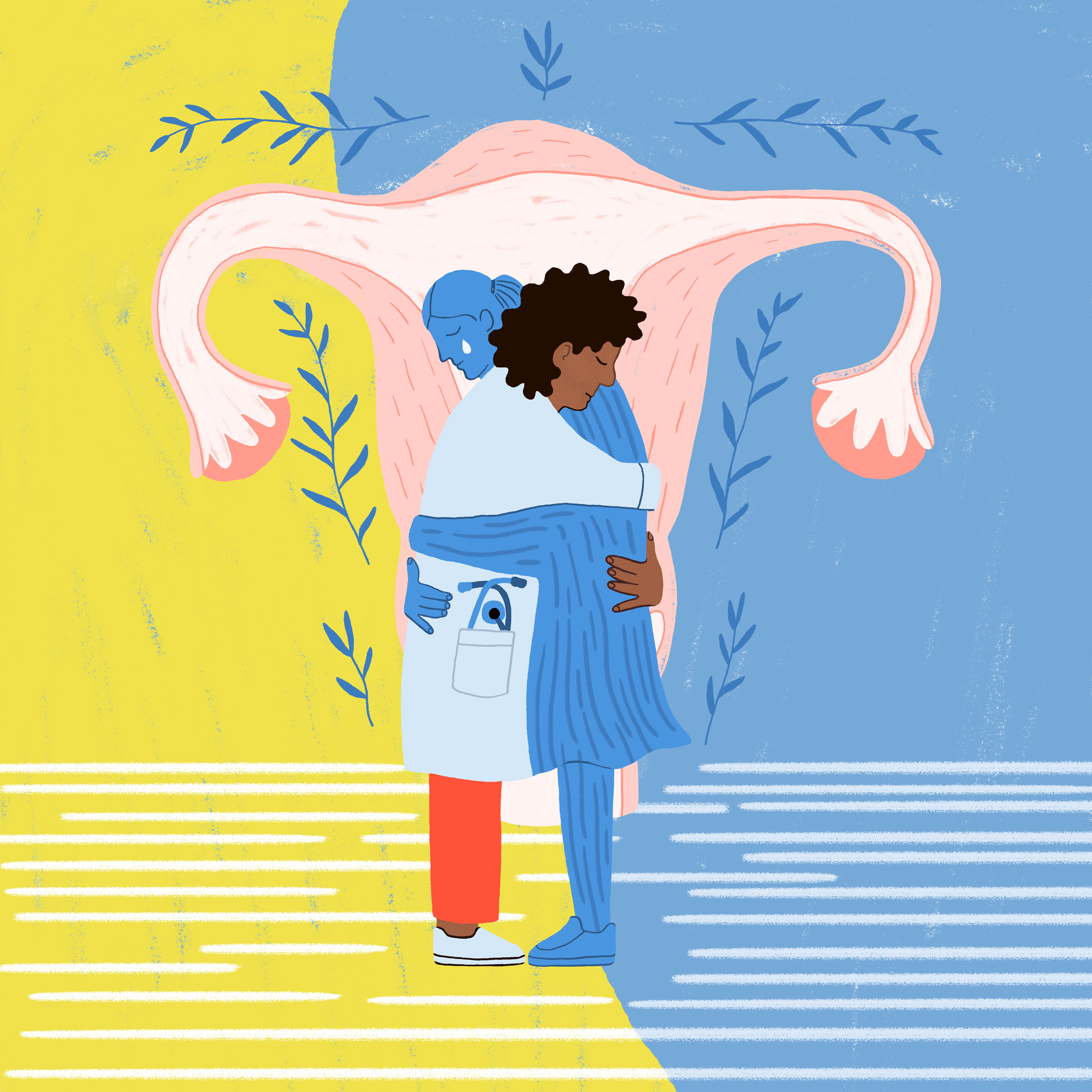
Listening Can Save Lives: Empowering Family Doctors in Ukraine to Support Women Facing Violence
Since the onset of the Russian invasion, countless people in Ukraine have faced not only the trauma of war, but the increased threat and terrifying reported incidence of abuse, sexual and gender-based violence (SGBV) and trafficking. Amid this humanitarian crisis, Women’s Health and Family Planning - Ukraine (WHFP) has remained steadfast in its mission to restore access to lifesaving sexual and reproductive health (SRH) and gender-based violence (SGBV) services for those most at risk. Amid the terrifying devastation experienced through a humanitarian crisis, people need first and foremost safety and protection. In 2024, WHFP, in partnership with the Public Health Centre, launched an innovative online training course for healthcare professionals: “Comprehensive Medical Care for Survivors of Sexual and Gender-Based Violence.” The course is a vital tool to equip doctors with the skills they need to recognize signs of abuse, respond with compassion, and offer concrete support—often becoming the first lifeline for survivors.

06 April 2022
Ukraine: putting sexual and reproductive health and rights at the heart of the EU response
Since the outbreak of the war in Ukraine on 24th February 2022, humanitarian needs have been increasing by the hour. Millions of people across Ukraine are fighting for their lives. As of 6th April 2022, around 11.4 million people have been forcibly displaced, with 7.1 million internally displaced persons (IDPs) and nearly 4.3 million who have fled the country, seeking a safe haven in neighbouring countries. The majority of displaced people and refugees are women and children. The EU must put SRHR and protection from sexual and gender-based violence at the heart of its response to the crisis, in order to respond to the SRHR needs of Ukrainian people, especially of all women, girls and vulnerable and marginalized populations fleeing the war, whether they are in third countries or in EU Member States. Our brief includes recommendations that the EU can adopt within external and internal action in order to deliver on the sexual and reproductive health and rights of refugees and displaced persons. Credit photo: Fine Acts

18 March 2022
Ukraine crisis: sexual and reproductive health and rights are non-negotiable and lifesaving
Since the outbreak of the war in Ukraine on 24th February 2022, humanitarian needs have been increasing by the hour. Millions of people across Ukraine are fighting for their lives. Anyone who has been forced to flee or who lives in an area of active fighting is particularly vulnerable, even more so women and girls. People’s access to health services may be suspended or the quality may be low, and they will not have access to lifesaving reproductive health care. They are in a dire state of emergency and further exposed to risk of sexual violence, sexually transmitted infections including HIV and unintended pregnancies. Amid the terrifying devastation experienced through a humanitarian crisis, people need first and foremost safety and protection. Sexual and reproductive health (SRH) services can save lives and prevent further suffering. Read below about the urgent actions to be taken by European humanitarian donors and actors.

17 March 2022
Call To Action On Ukraine
In a Call to Action, IPPF EN joined more than 90 human rights organizations to urge the European Union, Member State governments, the United Nations, other donor governments, and the broader international community to urgently implement measures protecting the sexual and reproductive health and rights of people fleeing the war in Ukraine. The Call to Action urges European decisionmakers to include SRHR services, such as maternal health care, emergency contraception, and medication abortion in their measures to meet the needs of people in Ukraine and refugees in five neighboring countries. In Hungary, Poland, Romania and Slovakia a range of pre-existing legal and policy restrictions on SRHR and cost barriers are severely impeding access to urgent and essential sexual and reproductive health care for those fleeing Ukraine. In particular, these barriers are undermining access to emergency contraception and other contraceptive methods, abortion care including medical abortion, antenatal care, post-exposure prophylaxis, STI treatment and antenatal care.

03 March 2022
Statement on the growing humanitarian crisis in Ukraine
Over the past few days, the world has watched in horror and disbelief at the events unfolding in Ukraine. It is estimated that over 500,000 people have now fled – many of whom are women and children – into neighbouring countries such as Poland, Hungary and Romania. The UN anticipates 4 million refugees by July 2022. During Humanitarian crises, sexual and reproductive healthcare is often overlooked. But the reality is daily sexual and reproductive healthcare needs such as essential care for pregnant people, access to menstruation products for people who menstruate, as well as ensuring people who need sexual and reproductive health assistance have access to the right information, remains an urgent priority. IPPF is working with partners on the ground in Poland to link those fleeing the conflict with critical sexual and reproductive health services as well as provide them with essential items. Julie Taft, Director of Humanitarian for the International Planned Parenthood Federation, said:

24 February 2022
Statement on the escalating conflict in Ukraine
Following the disturbing reports coming out of Ukraine, IPPF has released a media statement on behalf of the Federation and its Member Association in Ukraine. Despite the fact that sexual and reproductive healthcare (SRHR) needs increase significantly during conflict and humanitarian situations, the significant vulnerabilities of affected populations and displaced people are often overlooked, especially the experiences of women, girls and marginalised populations who are at increased risk of unintended pregnancy, sexually transmitted infections and sexual and gender-based violence. IPPF’s Director-General, Dr Alvaro Bermejo, said: "The International Planned Parenthood Federation (IPPF) is deeply concerned about the escalation of conflict in Ukraine. We take our responsibility to preserve the enormous gains made in life-saving sexual and reproductive healthcare across the country very seriously, especially for women, girls and marginalised populations, whose vulnerability and experiences are so often overlooked in humanitarian situations. For 20 years, IPPF has consistently worked to strengthen and protect the reproductive rights of people in Ukraine, working in the frontline conflict zones of Lugansk and Donetsk since 2014, training medical specialists to provide life-saving reproductive healthcare, psychosocial support and quality care to survivors of sexual and gender-based violence. Our teams are now contingency planning across the region to address not only the needs of those still in Ukraine, but also the millions who are likely to be displaced by the conflict and who will require critical support to continue accessing healthcare. We will work closely with partners and other NGOs to ensure the least possible disruption to services. IPPF stands in solidarity with the international community and the brave people of Ukraine who for the last eight years have faced terrifying and difficult circumstances that nobody should ever have to suffer through.

18 June 2018
SRH care services during humanitarian crisis in Eastern Europe and Central Asia
The Minimum Initial Service Package (MISP) for reproductive health (RH) is a coordinated set of priority activities designed to prevent excess morbidity and mortality, particularly among women and girls at the onset of humanitarian emergencies. This report shows the overall results regarding the MISP for reproductive health preparedness in Eastern Europe and Central Asia as of today compared with 2014. The main results show that there has been a significant improvement in the region from a fair level of preparedness in 2014 to a good level of preparedness in 2017. The most important achievements are linked to the establishment of national SRH working groups, which now exist in 16 countries. This is an extraordinary achievement, as this was one of the weakest areas in 2014. Improved coordination at the national level had an impact on several other areas, and the overall results reflect the importance of having coordination in place so as to be better prepared. For the future, it will be essential to maintain this momentum and continue improving SRH preparedness in the region. The report includes some recommendations in this direction. As the authors point out, we are also living at a unique time, when a light has been shone on sexual harassment and sexual violence against women and girls in developed and developing countries. In addition, refugees and migrants continue to arrive in Europe, fleeing war-ravaged countries. Although they are disappearing from the news, their situation has not improved enough in the region. Ensuring access to priority SRH services in every humanitarian crisis means making sure that everybody can receive life-saving SRH services. This includes preventing sexual violence and taking care of survivors. To ensure comprehensiveness, preparedness activities have to be enhanced to include, in a more systematic manner, adolescent girls and young female adults, unaccompanied children, LGBTI people and women and girls with disabilities or living with HIV, in line with the SDG pledge to “leave no one behind”.
20 June 2025
Courage Against the Odds: Natasa’s Fight for Safe Motherhood
15-year-old Natasa (pseudonym), a young Roma girl, is one of millions of people forced to flee Ukraine because of the devastating war - causing the largest humanitarian crisis in Europe since WWII. Seeking safety and shelter in Hungary with her mother, Natasa instead encountered a different kind of struggle: systemic neglect, discrimination, and institutional violence. Shortly after arriving, Natasa discovered she was pregnant. It was her second pregnancy — her first had ended in miscarriage. She and her mother, living in precarious conditions under a government rent subsidy program, were referred to EMMA — a maternal health and rights advocacy organization — by a housing service provider. During their first meeting, EMMA provided Natasa with non-judgmental counselling on her options, including both continuing the pregnancy and abortion care. EMMA also arranged for a pregnancy test at a public health center. But instead of compassionate care, Natasa was met with suspicion and coercion. A doctor insisted on a vaginal ultrasound despite her fears that it might cause another miscarriage. The doctor then openly disapproved of her decision to continue the pregnancy, making Natasa unwilling to return. EMMA immediately referred her to a trauma-informed gynaecological clinic, where she finally received respectful and supportive prenatal care. For a time, things were going well. Natasa attended regular check-ups, engaged in childbirth preparation, and received psychosocial support. But the sense of safety she had begun to regain was once again shattered when her landlord evicted her due to her pregnancy, and her partner became abusive. With intervention from a specialist in domestic violence, Natasa’s home environment became once more stable. At 35 weeks of pregnancy, Natasa was hospitalized due to a suspected rupture of the amniotic sac. Once again, her voice and autonomy were ignored. Her refusal of a vaginal examination was ignored, and she was treated disrespectfully, leading her to leave the hospital against medical advice. A private physician later confirmed there was no rupture and advised a follow-up. When she returned to the hospital, the abuse escalated. Doctors attempted another vaginal exam without her consent, prevented her from contacting her mother, and conducted the procedure without the presence of a legal guardian. As a result, her cervix was damaged and she began to bleed. She was urgently transferred to another hospital. There, finally, she was treated with the dignity and care she deserved and safely gave birth to a healthy baby girl. What Natasa endured is gynecological and obstetric violence — a violation of human rights rooted in racism, sexism, and ageism. Following the birth, Natasa and her mother received daily emotional support from EMMA. Legal aid was arranged, and she was connected with professionals to explore justice and accountability to reclaim her voice. Two months on from the delivery, Natasa and her daughter are doing well. Natasa has received evidence-based contraceptive care counselling and made an informed choice to have an IUD inserted. Natasa’s story is not unique, but it is urgent. The fact that Natasa repeatedly faced a lack of compassion and even violence from medical staff speaks volumes about how widespread the problem truly is. Underage refugee women, particularly from marginalized groups like the Roma community, face intersecting forms of violence when accessing sexual and reproductive healthcare. Their safety, dignity, and rights must be non-negotiable. Due to the work of organisations such as EMMA everyone, regardless of their background, age, legal status, or financial means, can receive respectful care that prioritizes their well-being and autonomy.
20 May 2025
Listening Can Save Lives: Empowering Family Doctors in Ukraine to Support Women Facing Violence
Since the onset of the Russian invasion, countless people in Ukraine have faced not only the trauma of war, but the increased threat and terrifying reported incidence of abuse, sexual and gender-based violence (SGBV) and trafficking. Amid this humanitarian crisis, Women’s Health and Family Planning - Ukraine (WHFP) has remained steadfast in its mission to restore access to lifesaving sexual and reproductive health (SRH) and gender-based violence (SGBV) services for those most at risk. Amid the terrifying devastation experienced through a humanitarian crisis, people need first and foremost safety and protection. In 2024, WHFP, in partnership with the Public Health Centre, launched an innovative online training course for healthcare professionals: “Comprehensive Medical Care for Survivors of Sexual and Gender-Based Violence.” The course is a vital tool to equip doctors with the skills they need to recognize signs of abuse, respond with compassion, and offer concrete support—often becoming the first lifeline for survivors.
06 April 2022
Ukraine: putting sexual and reproductive health and rights at the heart of the EU response
Since the outbreak of the war in Ukraine on 24th February 2022, humanitarian needs have been increasing by the hour. Millions of people across Ukraine are fighting for their lives. As of 6th April 2022, around 11.4 million people have been forcibly displaced, with 7.1 million internally displaced persons (IDPs) and nearly 4.3 million who have fled the country, seeking a safe haven in neighbouring countries. The majority of displaced people and refugees are women and children. The EU must put SRHR and protection from sexual and gender-based violence at the heart of its response to the crisis, in order to respond to the SRHR needs of Ukrainian people, especially of all women, girls and vulnerable and marginalized populations fleeing the war, whether they are in third countries or in EU Member States. Our brief includes recommendations that the EU can adopt within external and internal action in order to deliver on the sexual and reproductive health and rights of refugees and displaced persons. Credit photo: Fine Acts
18 March 2022
Ukraine crisis: sexual and reproductive health and rights are non-negotiable and lifesaving
Since the outbreak of the war in Ukraine on 24th February 2022, humanitarian needs have been increasing by the hour. Millions of people across Ukraine are fighting for their lives. Anyone who has been forced to flee or who lives in an area of active fighting is particularly vulnerable, even more so women and girls. People’s access to health services may be suspended or the quality may be low, and they will not have access to lifesaving reproductive health care. They are in a dire state of emergency and further exposed to risk of sexual violence, sexually transmitted infections including HIV and unintended pregnancies. Amid the terrifying devastation experienced through a humanitarian crisis, people need first and foremost safety and protection. Sexual and reproductive health (SRH) services can save lives and prevent further suffering. Read below about the urgent actions to be taken by European humanitarian donors and actors.
17 March 2022
Call To Action On Ukraine
In a Call to Action, IPPF EN joined more than 90 human rights organizations to urge the European Union, Member State governments, the United Nations, other donor governments, and the broader international community to urgently implement measures protecting the sexual and reproductive health and rights of people fleeing the war in Ukraine. The Call to Action urges European decisionmakers to include SRHR services, such as maternal health care, emergency contraception, and medication abortion in their measures to meet the needs of people in Ukraine and refugees in five neighboring countries. In Hungary, Poland, Romania and Slovakia a range of pre-existing legal and policy restrictions on SRHR and cost barriers are severely impeding access to urgent and essential sexual and reproductive health care for those fleeing Ukraine. In particular, these barriers are undermining access to emergency contraception and other contraceptive methods, abortion care including medical abortion, antenatal care, post-exposure prophylaxis, STI treatment and antenatal care.
03 March 2022
Statement on the growing humanitarian crisis in Ukraine
Over the past few days, the world has watched in horror and disbelief at the events unfolding in Ukraine. It is estimated that over 500,000 people have now fled – many of whom are women and children – into neighbouring countries such as Poland, Hungary and Romania. The UN anticipates 4 million refugees by July 2022. During Humanitarian crises, sexual and reproductive healthcare is often overlooked. But the reality is daily sexual and reproductive healthcare needs such as essential care for pregnant people, access to menstruation products for people who menstruate, as well as ensuring people who need sexual and reproductive health assistance have access to the right information, remains an urgent priority. IPPF is working with partners on the ground in Poland to link those fleeing the conflict with critical sexual and reproductive health services as well as provide them with essential items. Julie Taft, Director of Humanitarian for the International Planned Parenthood Federation, said:
24 February 2022
Statement on the escalating conflict in Ukraine
Following the disturbing reports coming out of Ukraine, IPPF has released a media statement on behalf of the Federation and its Member Association in Ukraine. Despite the fact that sexual and reproductive healthcare (SRHR) needs increase significantly during conflict and humanitarian situations, the significant vulnerabilities of affected populations and displaced people are often overlooked, especially the experiences of women, girls and marginalised populations who are at increased risk of unintended pregnancy, sexually transmitted infections and sexual and gender-based violence. IPPF’s Director-General, Dr Alvaro Bermejo, said: "The International Planned Parenthood Federation (IPPF) is deeply concerned about the escalation of conflict in Ukraine. We take our responsibility to preserve the enormous gains made in life-saving sexual and reproductive healthcare across the country very seriously, especially for women, girls and marginalised populations, whose vulnerability and experiences are so often overlooked in humanitarian situations. For 20 years, IPPF has consistently worked to strengthen and protect the reproductive rights of people in Ukraine, working in the frontline conflict zones of Lugansk and Donetsk since 2014, training medical specialists to provide life-saving reproductive healthcare, psychosocial support and quality care to survivors of sexual and gender-based violence. Our teams are now contingency planning across the region to address not only the needs of those still in Ukraine, but also the millions who are likely to be displaced by the conflict and who will require critical support to continue accessing healthcare. We will work closely with partners and other NGOs to ensure the least possible disruption to services. IPPF stands in solidarity with the international community and the brave people of Ukraine who for the last eight years have faced terrifying and difficult circumstances that nobody should ever have to suffer through.
18 June 2018
SRH care services during humanitarian crisis in Eastern Europe and Central Asia
The Minimum Initial Service Package (MISP) for reproductive health (RH) is a coordinated set of priority activities designed to prevent excess morbidity and mortality, particularly among women and girls at the onset of humanitarian emergencies. This report shows the overall results regarding the MISP for reproductive health preparedness in Eastern Europe and Central Asia as of today compared with 2014. The main results show that there has been a significant improvement in the region from a fair level of preparedness in 2014 to a good level of preparedness in 2017. The most important achievements are linked to the establishment of national SRH working groups, which now exist in 16 countries. This is an extraordinary achievement, as this was one of the weakest areas in 2014. Improved coordination at the national level had an impact on several other areas, and the overall results reflect the importance of having coordination in place so as to be better prepared. For the future, it will be essential to maintain this momentum and continue improving SRH preparedness in the region. The report includes some recommendations in this direction. As the authors point out, we are also living at a unique time, when a light has been shone on sexual harassment and sexual violence against women and girls in developed and developing countries. In addition, refugees and migrants continue to arrive in Europe, fleeing war-ravaged countries. Although they are disappearing from the news, their situation has not improved enough in the region. Ensuring access to priority SRH services in every humanitarian crisis means making sure that everybody can receive life-saving SRH services. This includes preventing sexual violence and taking care of survivors. To ensure comprehensiveness, preparedness activities have to be enhanced to include, in a more systematic manner, adolescent girls and young female adults, unaccompanied children, LGBTI people and women and girls with disabilities or living with HIV, in line with the SDG pledge to “leave no one behind”.