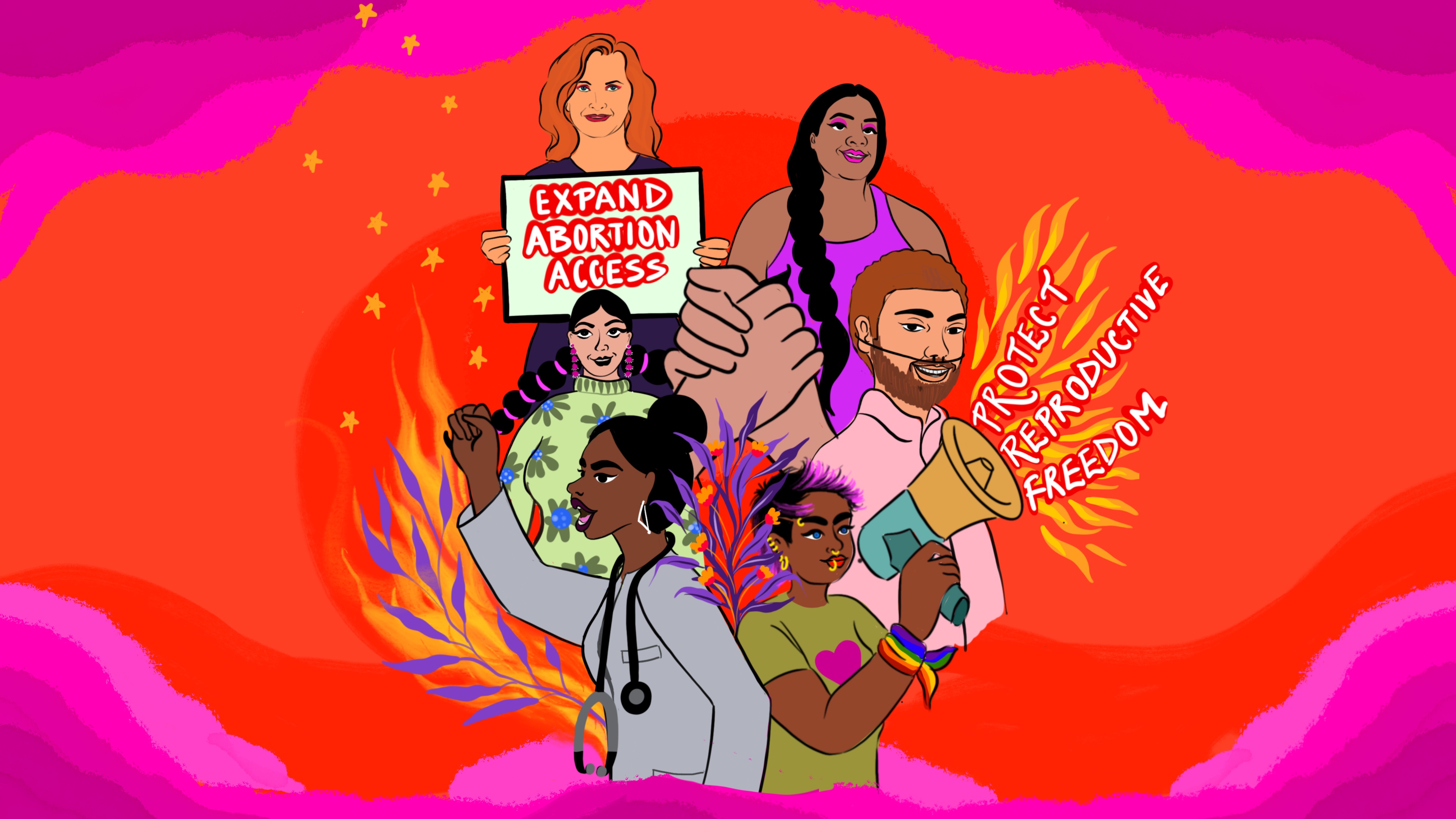




Today, the European Commission has responded positively to the My Voice, My Choice European Citizens’ Initiative. This decision demonstrates that when citizens mobilise at scale, the European Union can act to advance fundamental rights.
We congratulate the activists and citizens who made this achievement possible. More than one million people across Europe raised their voices, supported by 170 civil society organisations, a clear majority of the European Parliament, and 10 Member States calling for concrete EU action to reduce inequalities in access to essential healthcare. This unprecedented mobilisation sends a powerful and unmistakable message: access to safe abortion care is a matter of fundamental rights, safety and dignity and requires European action.
Micah Grzywnowicz, IPPF EN Regional Director, said:
“This is a historic step forward for women across Europe. When access to abortion care depends on where you live or what resources you have, the harm is real and entirely preventable — and it has no place in a Union founded on equality, dignity and human rights. The European Commission has now set out a clear path for Member States to act using EU funds. Today’s decision is encouraging, and we will continue working with the Commission and Member States to make it a reality.”
While the European Commission did not propose a new dedicated funding mechanism, it has, for the first time, clarified that Member States may use an EU budgetary instrument to fund abortion care. This clarification confirms that supporting access to abortion care falls within EU competence. Through existing allocations under the European Social Fund+ (ESF+), women would be able to access abortion care, including support for travel and accommodation costs where needed. This has the potential to make a tangible difference in women’s lives.
To deliver on the promise of today’s decision, the Commission must now move swiftly to implementation. This requires clear guidance to Member States on how ESF+ funding can be used for cross-border abortion care. We also hope the Commission will follow through on its commitment to facilitate exchanges of good practices between Member States, enabling effective and consistent use of this funding opportunity.
However, the Commission’s response falls short in one critical respect: it does not allocate any additional resources, instead relying solely on already limited ESF+ funding. Redirecting existing funds is not sufficient. People across Europe deserve a serious and adequately resourced commitment to ensuring access to safe and legal abortion care. We therefore call on Member States and the European Parliament to ensure that additional resources are allocated to the future ESF in the next Multiannual Financial Framework.
It is now time to turn citizens’ voices into concrete EU action. We urge all Member States to take up the path laid out by the European Commission and make full use of this opportunity. With political will and proper funding, this historic step can significantly improve access to essential healthcare for women across Europe.
We also look ahead to the forthcoming Gender Equality Strategy and hope it will include concrete actions to strengthen women’s sexual and reproductive health and rights across the European Union.
Media contact: [email protected]
when
region
European Network
Subject
Abortion Care