
- - -

Articles about Germany

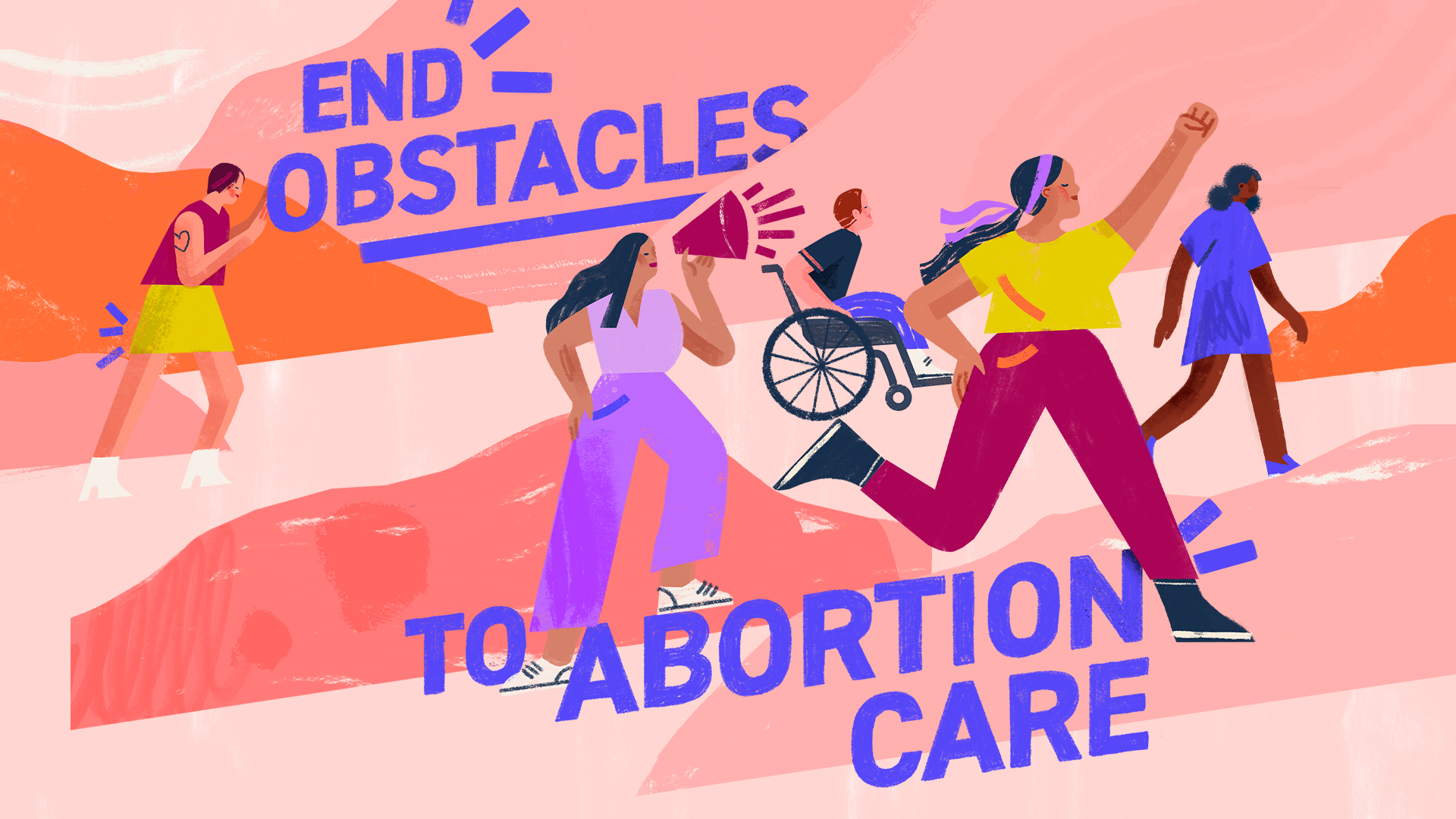
Illustration: End obstacles to abortion care
27 September 2024

Germany's archaic abortion law creates huge burden for people needing care

For a country long reputed to have one of the more progressive healthcare systems in Europe, Germany’s law on abortion – a health issue affecting millions of people – remains firmly stuck in the past. “The law has negative impacts, and [these] are not accidental side-effects that need to be adjusted – they’re intentional,” says Stephanie Schlitt, board member of Pro Familia, an SRHR counselling and advocacy organisation and IPPF’s German Member Association. “By compelling women to do certain things, the law enforces abortion stigma.” Germany’s archaic law has a long and messy past, in which the trampling of women’s rights to reproductive justice has been a common thread. Abortion has been criminalised since 1871 and remains punishable with prison sentences for those obtaining and providing abortions (though prosecutions are rare). Exceptions are made up to 12 weeks of pregnancy under strict conditions, or where there is a medical necessity, or in cases of rape. The state’s longstanding treatment of abortion as a criminal rather than health issue has devastating repercussions. For people needing abortions, strict legislation makes accessing care a fraught process, involving high costs, complex paperwork, fear of criminalisation, and stigma. For doctors, the legal red tape, threat of prosecution, and growing harassment by anti-rights campaigners create “a huge disincentive for the provision of care”, Stephanie says. “What’s happening here simply isn’t good enough, because it goes completely against the needs of the people concerned and those who want to support them professionally – doctors and counsellors,” Stephanie says. “We can’t be surprised if, as a result of this law, [abortion] healthcare provision is difficult. Of course it will be – it’s geared towards making it difficult.” Outdated laws crush women’s rights    “Some of the barriers flow directly from the law as it’s framed, and some flow from the practice that results from that law,” Stephanie explains. Firstly, people seeking abortion care must undergo mandatory counselling at state-certified centres or online, and receive a certificate to present to their gynaecologist. Following counselling, there is a mandatory and medically unnecessary three-day waiting period – a delay that can affect treatment options for such a time-critical procedure and exacerbate stress. Making counselling a legal requirement creates difficult conditions for counsellor and client, Stephanie explains. Women “feel under pressure to justify themselves” during an already stressful period, while for counsellors, these conditions are “a huge burden because counselling should only happen on a voluntary basis.” Mandatory counselling and waiting periods contravene World Health Organization (WHO) advice on abortion care, and Germany is one of the few EU countries to impose both. “The point is that this law creates hurdles to good healthcare and actually makes the whole experience much more difficult than it needs to be,” Stephanie says. “An abortion needn’t be so emotionally, financially and socially burdensome.”

young people
16 November 2020

With and for young people: how to amplify youth voices - part 2

IPPF European Network has developed a youth-centred approach (YCA) toolkit with the aim of improving the confidence and capacity of young people and adults to implement, upgrade and expand youth participation in our members.  Here’s what Nika, former volunteer for pro familia’s youth network (pro familia in action), IPPF member in Germany – who coached member associations from Spain and Ireland, had to say about their experience working on the youth-centred approach. Having freedom and responsibility as a young person I became involved in the project with pro familia as a youth volunteer and coach for the youth-centred approach. I remember having a lot of freedom, responsibility and the opportunity to hold myself accountable. Although it was a little bit overwhelming, I liked working as part of a team and being encouraged to explore this new role. Agents of change I was so happy to see that the toolkit gave so much importance to having young people as agents of change. Seeing it in a written form really touched me, and I found it so powerful. I also like the fact that the toolkit addresses various key players, on one hand empowering young people and on the other hand trying to convey this vision – of youth at the center – to people in decision-making positions within organisations. Coaching other members The experience was very enriching, it’s worthwhile investing time and energy in it, and as a young person also overcoming fear and insecurities. After the coaching session I felt there was more interest in youth participation. It felt like there was momentum and opportunity for member associations to take more young people on board. I felt change was happening. The youth-centred approach represented for pro familia and its youth network a great opportunity. I felt empowered by the growth I saw in pro familia and by what I gained on a personal level. Key take-aways for a successful approach It’s really important to look for allies, for people who are open to listen to you and to your ideas, to find people who are welcoming ideas coming from youth. Speaking of SRHR, it’s crucial to reflect and acknowledge one’s position in society and the privileges that come with that. It’s also key to let people with diverse experiences speak for themselves. We all need to look at power dynamics through a critical lens and this doesn’t just concern age, but also race, gender identity, socioeconomic background, (dis)ability and many more categories. Reproductive justice means much more than fighting for policy changes; it implies that each and everyone of us addresses own biases and stereotypes surrounding bodies, gender, sex and relationships.   Interview conducted by Manon Kayser, IPPF EN

Pro Familia - Germany

Pro familia advocates for the rights to individual self-determination in sexuality and family planning and is committed nationally and internationally to sexual and reproductive health and rights. For pro familia, sexual and reproductive rights and health rank among human rights.

pro familia is the leading professional association on sexuality and partnership in Germany. With information and counselling services, pro familia wants to contribute to women, men and young people being able to live their sexuality and sexual orientation in a self-determined way, to parenthood being a free decision and to a satisfying sexual life without fear of unwanted pregnancies or sexually transmitted infections, including HIV, and to people being able to participate in scientific progress.

The services offered in the 180 counselling centres nationwide include counselling, information and age-appropriate sex education on partnership, sexuality, sexual orientation, contraception, pregnancy, family, unfulfilled desire to have children and reproductive medicine, prenatal diagnostics, birth, financial support, unwanted pregnancy as well as separation and divorce.

Pro familia publishes information brochures for clients and specialist publications for doctors, counsellors and educators, organises specialist conferences, lobbies for sexual and reproductive health and rights and offers a wide range of further and advanced training. In the field of sexual education, it is committed to human rights education.

Contact: Twitter

Illustration: End obstacles to abortion care
27 September 2024

Germany's archaic abortion law creates huge burden for people needing care

For a country long reputed to have one of the more progressive healthcare systems in Europe, Germany’s law on abortion – a health issue affecting millions of people – remains firmly stuck in the past. “The law has negative impacts, and [these] are not accidental side-effects that need to be adjusted – they’re intentional,” says Stephanie Schlitt, board member of Pro Familia, an SRHR counselling and advocacy organisation and IPPF’s German Member Association. “By compelling women to do certain things, the law enforces abortion stigma.” Germany’s archaic law has a long and messy past, in which the trampling of women’s rights to reproductive justice has been a common thread. Abortion has been criminalised since 1871 and remains punishable with prison sentences for those obtaining and providing abortions (though prosecutions are rare). Exceptions are made up to 12 weeks of pregnancy under strict conditions, or where there is a medical necessity, or in cases of rape. The state’s longstanding treatment of abortion as a criminal rather than health issue has devastating repercussions. For people needing abortions, strict legislation makes accessing care a fraught process, involving high costs, complex paperwork, fear of criminalisation, and stigma. For doctors, the legal red tape, threat of prosecution, and growing harassment by anti-rights campaigners create “a huge disincentive for the provision of care”, Stephanie says. “What’s happening here simply isn’t good enough, because it goes completely against the needs of the people concerned and those who want to support them professionally – doctors and counsellors,” Stephanie says. “We can’t be surprised if, as a result of this law, [abortion] healthcare provision is difficult. Of course it will be – it’s geared towards making it difficult.” Outdated laws crush women’s rights    “Some of the barriers flow directly from the law as it’s framed, and some flow from the practice that results from that law,” Stephanie explains. Firstly, people seeking abortion care must undergo mandatory counselling at state-certified centres or online, and receive a certificate to present to their gynaecologist. Following counselling, there is a mandatory and medically unnecessary three-day waiting period – a delay that can affect treatment options for such a time-critical procedure and exacerbate stress. Making counselling a legal requirement creates difficult conditions for counsellor and client, Stephanie explains. Women “feel under pressure to justify themselves” during an already stressful period, while for counsellors, these conditions are “a huge burden because counselling should only happen on a voluntary basis.” Mandatory counselling and waiting periods contravene World Health Organization (WHO) advice on abortion care, and Germany is one of the few EU countries to impose both. “The point is that this law creates hurdles to good healthcare and actually makes the whole experience much more difficult than it needs to be,” Stephanie says. “An abortion needn’t be so emotionally, financially and socially burdensome.”

young people
16 November 2020

With and for young people: how to amplify youth voices - part 2

IPPF European Network has developed a youth-centred approach (YCA) toolkit with the aim of improving the confidence and capacity of young people and adults to implement, upgrade and expand youth participation in our members.  Here’s what Nika, former volunteer for pro familia’s youth network (pro familia in action), IPPF member in Germany – who coached member associations from Spain and Ireland, had to say about their experience working on the youth-centred approach. Having freedom and responsibility as a young person I became involved in the project with pro familia as a youth volunteer and coach for the youth-centred approach. I remember having a lot of freedom, responsibility and the opportunity to hold myself accountable. Although it was a little bit overwhelming, I liked working as part of a team and being encouraged to explore this new role. Agents of change I was so happy to see that the toolkit gave so much importance to having young people as agents of change. Seeing it in a written form really touched me, and I found it so powerful. I also like the fact that the toolkit addresses various key players, on one hand empowering young people and on the other hand trying to convey this vision – of youth at the center – to people in decision-making positions within organisations. Coaching other members The experience was very enriching, it’s worthwhile investing time and energy in it, and as a young person also overcoming fear and insecurities. After the coaching session I felt there was more interest in youth participation. It felt like there was momentum and opportunity for member associations to take more young people on board. I felt change was happening. The youth-centred approach represented for pro familia and its youth network a great opportunity. I felt empowered by the growth I saw in pro familia and by what I gained on a personal level. Key take-aways for a successful approach It’s really important to look for allies, for people who are open to listen to you and to your ideas, to find people who are welcoming ideas coming from youth. Speaking of SRHR, it’s crucial to reflect and acknowledge one’s position in society and the privileges that come with that. It’s also key to let people with diverse experiences speak for themselves. We all need to look at power dynamics through a critical lens and this doesn’t just concern age, but also race, gender identity, socioeconomic background, (dis)ability and many more categories. Reproductive justice means much more than fighting for policy changes; it implies that each and everyone of us addresses own biases and stereotypes surrounding bodies, gender, sex and relationships.   Interview conducted by Manon Kayser, IPPF EN

Pro Familia - Germany

Pro familia advocates for the rights to individual self-determination in sexuality and family planning and is committed nationally and internationally to sexual and reproductive health and rights. For pro familia, sexual and reproductive rights and health rank among human rights.

pro familia is the leading professional association on sexuality and partnership in Germany. With information and counselling services, pro familia wants to contribute to women, men and young people being able to live their sexuality and sexual orientation in a self-determined way, to parenthood being a free decision and to a satisfying sexual life without fear of unwanted pregnancies or sexually transmitted infections, including HIV, and to people being able to participate in scientific progress.

The services offered in the 180 counselling centres nationwide include counselling, information and age-appropriate sex education on partnership, sexuality, sexual orientation, contraception, pregnancy, family, unfulfilled desire to have children and reproductive medicine, prenatal diagnostics, birth, financial support, unwanted pregnancy as well as separation and divorce.

Pro familia publishes information brochures for clients and specialist publications for doctors, counsellors and educators, organises specialist conferences, lobbies for sexual and reproductive health and rights and offers a wide range of further and advanced training. In the field of sexual education, it is committed to human rights education.

Contact: Twitter