



Spotlight
A selection of resources from across the Federation

Resource
Report: Youth Preferences for Sexuality Education
This research report, led by IPPF EN's youth network YSAFE, highlights what young people in Europe and Central Asia really want from comprehensive sexuality education.
Most Popular This Week

Resource
|
Report: Youth Preferences for Sexuality Education
The YSAFE network — IPPF EN's youth activists for sexual and reproductive health and rights in Europe and Central Asia — led a research project into what

Resource
|
Defending civic space, rights and EU values
Across Europe, civil society organisations play a vital role in defending democracy, human rights and equality.

Resource
|
Sexuality education, gender equality & SGBV - a study of knowledge and attitudes in Portugal
Sexual and gender-based violence (SGBV) has profound implications for human development and the protection of fundamental rights.

Resource
|
IPPF EN’s contribution to the EU Gender Equality Strategy beyond 2025
IPPF EN welcomes the European Commission’s commitment to renew the EU Gender Equality Strategy for the next five years.

Resource
|
2024 IPPF EN Annual Report
Against a turbulent global backdrop of continued crisis and conflict, 2024 stood out as a year of political transition in Europe and Central Asia, with national elections held in numerous countries

Resource
|
Abortion Care and Costs in Europe and Central Asia
IPPF EN carried out research* via our network of national Member Associations and Collaborative Partners in Europe and Central Asia on access to abortion care in their countries**, with a particula

Resource
|
The upcoming Presidencies An opportunity for gender equality and SRHR
Over the last few years, the EU has been facing many challenges in the realization of its core values: the rule of law, democracy, human rights, equality, especially gender equality, and women’s ri
European Network

Resource
|
Startup toolkit for MEPs: championing sexual and reproductive safety
Sexual and reproductive health and rights (SRHR) encompass all rights related to sexuality and parenthood.
Filter our resources by:

Resource
| 16 April 2021
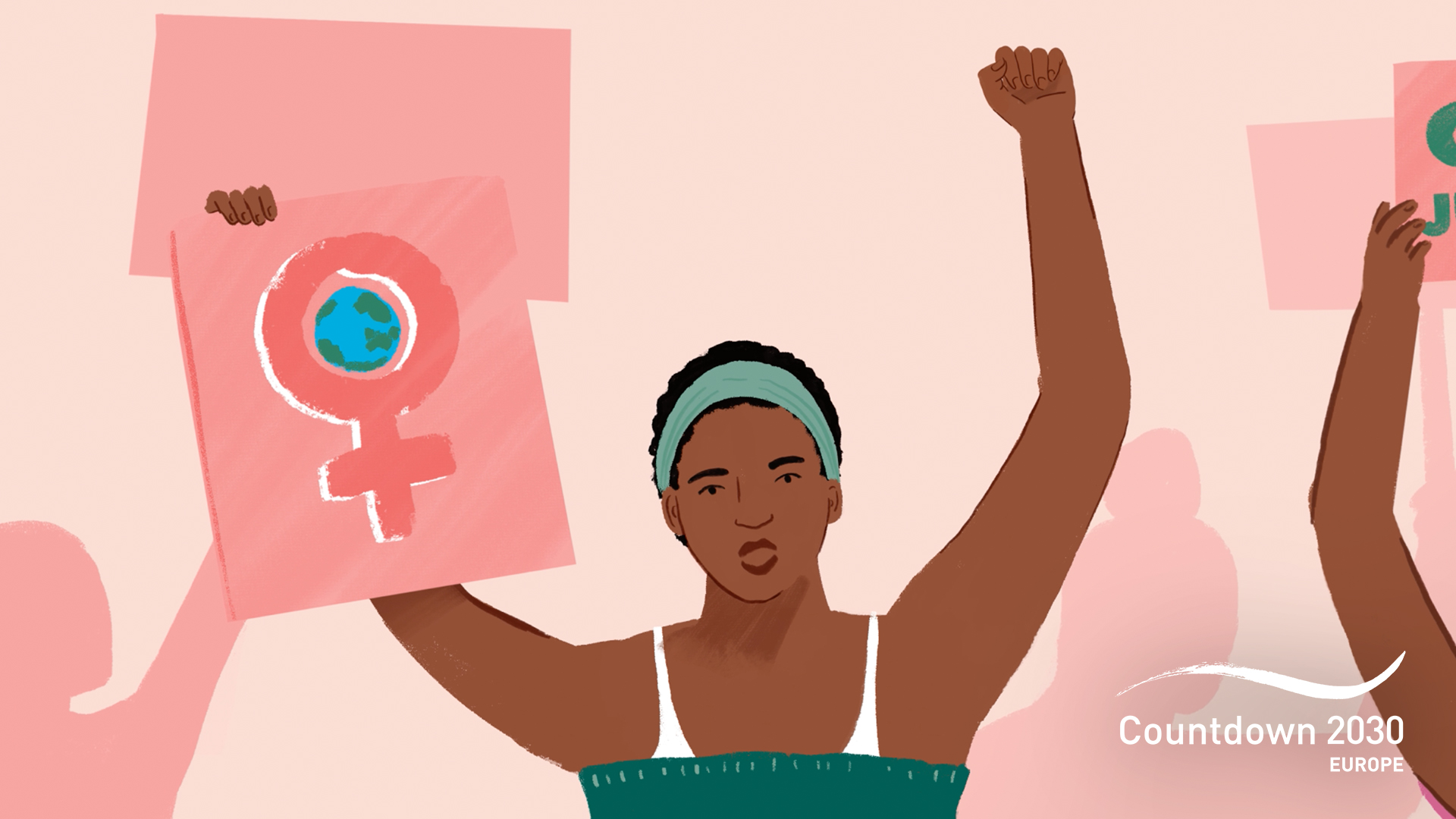
The link between sexual and reproductive health and rights and the climate crisis
The climate crisis is one of the greatest challenges of our time. It threatens our planet, society, and economy. Climate-related emergencies, such as extreme weather conditions are increasing, which tend to hit women and girls harder because of gender discrimination and harmful social norms. In the aftermath of a disaster, there is a risk that girls are pulled from school to take care of the household, and when there is food stress or water shortage people will marry younger, with a higher percentage of girls ending up in early, forced, and child marriages. Rural women and girls, who are usually given the task of fetching water have to travel further to collect it. Increasing their already heavy workload and putting them at greater risk of gender-based violence. Healthcare is disrupted by erratic weather, eroding the advancement of sexual and reproductive health and rights, making women and girls more vulnerable to the impacts of the climate crisis. Sexual and reproductive health and rights play a crucial role in improving wellbeing, overcoming marginalisation and advancing gender equality. When women and girls have access to sexual and reproductive health and rights they have control over their bodies, and they can address unfair power relations in their lives and lead the response to the climate crisis. If we want to achieve climate justice, sexual and reproductive health and rights and gender equality have to be prioritised. Read our factsheet on the linkages between sexual and reproductive health and rights (SRHR) and the issues included in the European Green Deal.
Resource
| 16 April 2021
The link between sexual and reproductive health and rights and the climate crisis
The climate crisis is one of the greatest challenges of our time. It threatens our planet, society, and economy. Climate-related emergencies, such as extreme weather conditions are increasing, which tend to hit women and girls harder because of gender discrimination and harmful social norms. In the aftermath of a disaster, there is a risk that girls are pulled from school to take care of the household, and when there is food stress or water shortage people will marry younger, with a higher percentage of girls ending up in early, forced, and child marriages. Rural women and girls, who are usually given the task of fetching water have to travel further to collect it. Increasing their already heavy workload and putting them at greater risk of gender-based violence. Healthcare is disrupted by erratic weather, eroding the advancement of sexual and reproductive health and rights, making women and girls more vulnerable to the impacts of the climate crisis. Sexual and reproductive health and rights play a crucial role in improving wellbeing, overcoming marginalisation and advancing gender equality. When women and girls have access to sexual and reproductive health and rights they have control over their bodies, and they can address unfair power relations in their lives and lead the response to the climate crisis. If we want to achieve climate justice, sexual and reproductive health and rights and gender equality have to be prioritised. Read our factsheet on the linkages between sexual and reproductive health and rights (SRHR) and the issues included in the European Green Deal.

Resource
| 29 March 2021
A digital transformation that leaves no one behind
Digitalisation offers amazing opportunities for health and empowerment around the world, but ensuring equitable participation in the internet age throws up many challenges, and the stakes are highest in vulnerable and underserved communities, particularly for women and girls. More here.
Resource
| 29 March 2021
A digital transformation that leaves no one behind
Digitalisation offers amazing opportunities for health and empowerment around the world, but ensuring equitable participation in the internet age throws up many challenges, and the stakes are highest in vulnerable and underserved communities, particularly for women and girls. More here.

Resource
| 14 December 2020
Concerns regarding the rule of law and human rights in Poland (letter to the European Commission)
Civil society sent a letter to EU Commissioners to raise concerns regarding the deterioration of the rule of law and fundamental rights in Poland. In light of recent developments and continued and persistent attacks against the rule of law and human rights in Poland, we believe it is critical for the European Commission to issue an update to its Reasoned Proposal under Article 7(1) of the Treaty on European Union (TEU) expanding the scope of the ongoing procedure to include violations of EU values as set out in Article 2 TEU. We commend the European Commission’s efforts to hold the Polish government to account for violations of EU law. Further action, however, is urgently needed, on account of the continued deterioration of the rule of law and fundamental rights in Poland, and repeated failures by the Polish government to comply with the Commission’s Recommendations and with the decisions of the Court of Justice of the European Union (CJEU). We now respectfully request the European Commission to: issue an update to its Reasoned Proposal of December 2017 to extend EU scrutiny to recent developments and all Article 2 TEU violations; urge the Council to move forward with the ongoing procedure under Article 7(1) TEU, as requested also by the European Parliament in its September 2020 resolution;[1] call on Poland to implement all previous Commission Recommendations and CJEU decisions, and to restore the independence and legitimacy of the Polish judiciary, including the Constitutional Tribunal, without further delay. For more information on the context in Poland please read the full letter above and the related content. [1] European Parliament resolution of 17 September 2020 on the proposal for a Council decision on the determination of a clear risk of a serious breach by the Republic of Poland of the rule of law (COM(2017)0835 – 2017/0360R(NLE)), https://www.europarl.europa.eu/doceo/document/TA-9-2020-0225_EN.pdf.
Resource
| 14 December 2020
Concerns regarding the rule of law and human rights in Poland (letter to the European Commission)
Civil society sent a letter to EU Commissioners to raise concerns regarding the deterioration of the rule of law and fundamental rights in Poland. In light of recent developments and continued and persistent attacks against the rule of law and human rights in Poland, we believe it is critical for the European Commission to issue an update to its Reasoned Proposal under Article 7(1) of the Treaty on European Union (TEU) expanding the scope of the ongoing procedure to include violations of EU values as set out in Article 2 TEU. We commend the European Commission’s efforts to hold the Polish government to account for violations of EU law. Further action, however, is urgently needed, on account of the continued deterioration of the rule of law and fundamental rights in Poland, and repeated failures by the Polish government to comply with the Commission’s Recommendations and with the decisions of the Court of Justice of the European Union (CJEU). We now respectfully request the European Commission to: issue an update to its Reasoned Proposal of December 2017 to extend EU scrutiny to recent developments and all Article 2 TEU violations; urge the Council to move forward with the ongoing procedure under Article 7(1) TEU, as requested also by the European Parliament in its September 2020 resolution;[1] call on Poland to implement all previous Commission Recommendations and CJEU decisions, and to restore the independence and legitimacy of the Polish judiciary, including the Constitutional Tribunal, without further delay. For more information on the context in Poland please read the full letter above and the related content. [1] European Parliament resolution of 17 September 2020 on the proposal for a Council decision on the determination of a clear risk of a serious breach by the Republic of Poland of the rule of law (COM(2017)0835 – 2017/0360R(NLE)), https://www.europarl.europa.eu/doceo/document/TA-9-2020-0225_EN.pdf.

Resource
| 09 December 2020
Girls connect to shape the EU-Africa partnership
Covid-19 didn’t stop us! This year, we did things slightly differently, we’ll did it the youth’s way! To mark the International Day of the Girl (11th October) our coalition of nine Civil Society Organisations joined forces for the eighth time, bringing together a group of close to 30 young advocates, from Europe and Africa, who connected online to share their recommendations with European Union decision-makers. This year’s EWAG focused on the relationship between the European Union (EU) and Africa. In the framework of EWAG the young advocates were provided a platform to speak out about how the EU-Africa partnership can reflect their aspirations and unlock their potential. The partnership reflected the points of views of both regions, allowing for mutual learning and joint and coordinated actions, especially on issues that affect girls and young women both in the EU and the Africa – such as sexual and gender-based violence (SGBV), Sexual and Reproductive Health and Rights (SRHR), Education and Economic Empowerment and Political Participation. Over the summer of 2020 the EWAG young advocates connected on several occasions to define their recommendations to the EU in four key areas. Throughout the course of October, in light of the International Day of the Girl, they spoke out to EU decision-makers on distinct challenges girls face based on their age and gender and how they believe the EU-Africa Partnership could address their concerns to make sure it truly makes a contribution to girls’ lives and their futures. These are their asks.
Resource
| 09 December 2020
Girls connect to shape the EU-Africa partnership
Covid-19 didn’t stop us! This year, we did things slightly differently, we’ll did it the youth’s way! To mark the International Day of the Girl (11th October) our coalition of nine Civil Society Organisations joined forces for the eighth time, bringing together a group of close to 30 young advocates, from Europe and Africa, who connected online to share their recommendations with European Union decision-makers. This year’s EWAG focused on the relationship between the European Union (EU) and Africa. In the framework of EWAG the young advocates were provided a platform to speak out about how the EU-Africa partnership can reflect their aspirations and unlock their potential. The partnership reflected the points of views of both regions, allowing for mutual learning and joint and coordinated actions, especially on issues that affect girls and young women both in the EU and the Africa – such as sexual and gender-based violence (SGBV), Sexual and Reproductive Health and Rights (SRHR), Education and Economic Empowerment and Political Participation. Over the summer of 2020 the EWAG young advocates connected on several occasions to define their recommendations to the EU in four key areas. Throughout the course of October, in light of the International Day of the Girl, they spoke out to EU decision-makers on distinct challenges girls face based on their age and gender and how they believe the EU-Africa Partnership could address their concerns to make sure it truly makes a contribution to girls’ lives and their futures. These are their asks.

Resource
| 08 September 2020
Women's access to abortion care under threat in Slovakia
111 organizations express deep concern regarding current threats to reproductive rights in Slovakia. The Slovak Parliament is currently debating draft legislation that if adopted would impose new barriers to accessing lawful abortion care, harm women’s health and well-being, and undermine their decision-making and privacy. It would also force doctors to act in conflict with their professional obligations to their patients. The draft legislation seeks to double the medically unnecessary mandatory waiting period currently required before accessing abortion on request and extend its application, impose a new layer of medical authorization requirements for abortion on health grounds, and introduce a requirement forcing women to state the reasons for seeking an abortion and to provide other private information when requesting an abortion. The draft legislation also seeks to restrict the information that medical professionals can provide publicly about abortion care, and to strengthen the dissuasive nature of the mandatory information doctors are required to provide to women seeking abortion. Together with other civil society organisations, we call on all Members of Parliament to reject this regressive and harmful legislative proposal and to refrain from further attempts to restrict women’s reproductive rights in Slovakia.
Resource
| 08 September 2020
Women's access to abortion care under threat in Slovakia
111 organizations express deep concern regarding current threats to reproductive rights in Slovakia. The Slovak Parliament is currently debating draft legislation that if adopted would impose new barriers to accessing lawful abortion care, harm women’s health and well-being, and undermine their decision-making and privacy. It would also force doctors to act in conflict with their professional obligations to their patients. The draft legislation seeks to double the medically unnecessary mandatory waiting period currently required before accessing abortion on request and extend its application, impose a new layer of medical authorization requirements for abortion on health grounds, and introduce a requirement forcing women to state the reasons for seeking an abortion and to provide other private information when requesting an abortion. The draft legislation also seeks to restrict the information that medical professionals can provide publicly about abortion care, and to strengthen the dissuasive nature of the mandatory information doctors are required to provide to women seeking abortion. Together with other civil society organisations, we call on all Members of Parliament to reject this regressive and harmful legislative proposal and to refrain from further attempts to restrict women’s reproductive rights in Slovakia.

Resource
| 04 September 2020
Because She Counts
Our #BecauseSheCounts social media campaign asks decision-makers to put universal health care, human rights and equality at the core of all public policy and funding decision, amid the pandemic and always. To join our campaign, share our #BecauseSheCounts messages and visuals and tag us @C2030Europe! Ask your governments to continue to prove that solidarity goes beyond borders and should not be limited to European Union countries. Find our social media campaign package here.
Resource
| 04 September 2020
Because She Counts
Our #BecauseSheCounts social media campaign asks decision-makers to put universal health care, human rights and equality at the core of all public policy and funding decision, amid the pandemic and always. To join our campaign, share our #BecauseSheCounts messages and visuals and tag us @C2030Europe! Ask your governments to continue to prove that solidarity goes beyond borders and should not be limited to European Union countries. Find our social media campaign package here.
Resource
| 16 April 2021
The link between sexual and reproductive health and rights and the climate crisis
The climate crisis is one of the greatest challenges of our time. It threatens our planet, society, and economy. Climate-related emergencies, such as extreme weather conditions are increasing, which tend to hit women and girls harder because of gender discrimination and harmful social norms. In the aftermath of a disaster, there is a risk that girls are pulled from school to take care of the household, and when there is food stress or water shortage people will marry younger, with a higher percentage of girls ending up in early, forced, and child marriages. Rural women and girls, who are usually given the task of fetching water have to travel further to collect it. Increasing their already heavy workload and putting them at greater risk of gender-based violence. Healthcare is disrupted by erratic weather, eroding the advancement of sexual and reproductive health and rights, making women and girls more vulnerable to the impacts of the climate crisis. Sexual and reproductive health and rights play a crucial role in improving wellbeing, overcoming marginalisation and advancing gender equality. When women and girls have access to sexual and reproductive health and rights they have control over their bodies, and they can address unfair power relations in their lives and lead the response to the climate crisis. If we want to achieve climate justice, sexual and reproductive health and rights and gender equality have to be prioritised. Read our factsheet on the linkages between sexual and reproductive health and rights (SRHR) and the issues included in the European Green Deal.
Resource
| 16 April 2021
The link between sexual and reproductive health and rights and the climate crisis
The climate crisis is one of the greatest challenges of our time. It threatens our planet, society, and economy. Climate-related emergencies, such as extreme weather conditions are increasing, which tend to hit women and girls harder because of gender discrimination and harmful social norms. In the aftermath of a disaster, there is a risk that girls are pulled from school to take care of the household, and when there is food stress or water shortage people will marry younger, with a higher percentage of girls ending up in early, forced, and child marriages. Rural women and girls, who are usually given the task of fetching water have to travel further to collect it. Increasing their already heavy workload and putting them at greater risk of gender-based violence. Healthcare is disrupted by erratic weather, eroding the advancement of sexual and reproductive health and rights, making women and girls more vulnerable to the impacts of the climate crisis. Sexual and reproductive health and rights play a crucial role in improving wellbeing, overcoming marginalisation and advancing gender equality. When women and girls have access to sexual and reproductive health and rights they have control over their bodies, and they can address unfair power relations in their lives and lead the response to the climate crisis. If we want to achieve climate justice, sexual and reproductive health and rights and gender equality have to be prioritised. Read our factsheet on the linkages between sexual and reproductive health and rights (SRHR) and the issues included in the European Green Deal.
Resource
| 29 March 2021
A digital transformation that leaves no one behind
Digitalisation offers amazing opportunities for health and empowerment around the world, but ensuring equitable participation in the internet age throws up many challenges, and the stakes are highest in vulnerable and underserved communities, particularly for women and girls. More here.
Resource
| 29 March 2021
A digital transformation that leaves no one behind
Digitalisation offers amazing opportunities for health and empowerment around the world, but ensuring equitable participation in the internet age throws up many challenges, and the stakes are highest in vulnerable and underserved communities, particularly for women and girls. More here.
Resource
| 14 December 2020
Concerns regarding the rule of law and human rights in Poland (letter to the European Commission)
Civil society sent a letter to EU Commissioners to raise concerns regarding the deterioration of the rule of law and fundamental rights in Poland. In light of recent developments and continued and persistent attacks against the rule of law and human rights in Poland, we believe it is critical for the European Commission to issue an update to its Reasoned Proposal under Article 7(1) of the Treaty on European Union (TEU) expanding the scope of the ongoing procedure to include violations of EU values as set out in Article 2 TEU. We commend the European Commission’s efforts to hold the Polish government to account for violations of EU law. Further action, however, is urgently needed, on account of the continued deterioration of the rule of law and fundamental rights in Poland, and repeated failures by the Polish government to comply with the Commission’s Recommendations and with the decisions of the Court of Justice of the European Union (CJEU). We now respectfully request the European Commission to: issue an update to its Reasoned Proposal of December 2017 to extend EU scrutiny to recent developments and all Article 2 TEU violations; urge the Council to move forward with the ongoing procedure under Article 7(1) TEU, as requested also by the European Parliament in its September 2020 resolution;[1] call on Poland to implement all previous Commission Recommendations and CJEU decisions, and to restore the independence and legitimacy of the Polish judiciary, including the Constitutional Tribunal, without further delay. For more information on the context in Poland please read the full letter above and the related content. [1] European Parliament resolution of 17 September 2020 on the proposal for a Council decision on the determination of a clear risk of a serious breach by the Republic of Poland of the rule of law (COM(2017)0835 – 2017/0360R(NLE)), https://www.europarl.europa.eu/doceo/document/TA-9-2020-0225_EN.pdf.
Resource
| 14 December 2020
Concerns regarding the rule of law and human rights in Poland (letter to the European Commission)
Civil society sent a letter to EU Commissioners to raise concerns regarding the deterioration of the rule of law and fundamental rights in Poland. In light of recent developments and continued and persistent attacks against the rule of law and human rights in Poland, we believe it is critical for the European Commission to issue an update to its Reasoned Proposal under Article 7(1) of the Treaty on European Union (TEU) expanding the scope of the ongoing procedure to include violations of EU values as set out in Article 2 TEU. We commend the European Commission’s efforts to hold the Polish government to account for violations of EU law. Further action, however, is urgently needed, on account of the continued deterioration of the rule of law and fundamental rights in Poland, and repeated failures by the Polish government to comply with the Commission’s Recommendations and with the decisions of the Court of Justice of the European Union (CJEU). We now respectfully request the European Commission to: issue an update to its Reasoned Proposal of December 2017 to extend EU scrutiny to recent developments and all Article 2 TEU violations; urge the Council to move forward with the ongoing procedure under Article 7(1) TEU, as requested also by the European Parliament in its September 2020 resolution;[1] call on Poland to implement all previous Commission Recommendations and CJEU decisions, and to restore the independence and legitimacy of the Polish judiciary, including the Constitutional Tribunal, without further delay. For more information on the context in Poland please read the full letter above and the related content. [1] European Parliament resolution of 17 September 2020 on the proposal for a Council decision on the determination of a clear risk of a serious breach by the Republic of Poland of the rule of law (COM(2017)0835 – 2017/0360R(NLE)), https://www.europarl.europa.eu/doceo/document/TA-9-2020-0225_EN.pdf.
Resource
| 09 December 2020
Girls connect to shape the EU-Africa partnership
Covid-19 didn’t stop us! This year, we did things slightly differently, we’ll did it the youth’s way! To mark the International Day of the Girl (11th October) our coalition of nine Civil Society Organisations joined forces for the eighth time, bringing together a group of close to 30 young advocates, from Europe and Africa, who connected online to share their recommendations with European Union decision-makers. This year’s EWAG focused on the relationship between the European Union (EU) and Africa. In the framework of EWAG the young advocates were provided a platform to speak out about how the EU-Africa partnership can reflect their aspirations and unlock their potential. The partnership reflected the points of views of both regions, allowing for mutual learning and joint and coordinated actions, especially on issues that affect girls and young women both in the EU and the Africa – such as sexual and gender-based violence (SGBV), Sexual and Reproductive Health and Rights (SRHR), Education and Economic Empowerment and Political Participation. Over the summer of 2020 the EWAG young advocates connected on several occasions to define their recommendations to the EU in four key areas. Throughout the course of October, in light of the International Day of the Girl, they spoke out to EU decision-makers on distinct challenges girls face based on their age and gender and how they believe the EU-Africa Partnership could address their concerns to make sure it truly makes a contribution to girls’ lives and their futures. These are their asks.
Resource
| 09 December 2020
Girls connect to shape the EU-Africa partnership
Covid-19 didn’t stop us! This year, we did things slightly differently, we’ll did it the youth’s way! To mark the International Day of the Girl (11th October) our coalition of nine Civil Society Organisations joined forces for the eighth time, bringing together a group of close to 30 young advocates, from Europe and Africa, who connected online to share their recommendations with European Union decision-makers. This year’s EWAG focused on the relationship between the European Union (EU) and Africa. In the framework of EWAG the young advocates were provided a platform to speak out about how the EU-Africa partnership can reflect their aspirations and unlock their potential. The partnership reflected the points of views of both regions, allowing for mutual learning and joint and coordinated actions, especially on issues that affect girls and young women both in the EU and the Africa – such as sexual and gender-based violence (SGBV), Sexual and Reproductive Health and Rights (SRHR), Education and Economic Empowerment and Political Participation. Over the summer of 2020 the EWAG young advocates connected on several occasions to define their recommendations to the EU in four key areas. Throughout the course of October, in light of the International Day of the Girl, they spoke out to EU decision-makers on distinct challenges girls face based on their age and gender and how they believe the EU-Africa Partnership could address their concerns to make sure it truly makes a contribution to girls’ lives and their futures. These are their asks.
Resource
| 08 September 2020
Women's access to abortion care under threat in Slovakia
111 organizations express deep concern regarding current threats to reproductive rights in Slovakia. The Slovak Parliament is currently debating draft legislation that if adopted would impose new barriers to accessing lawful abortion care, harm women’s health and well-being, and undermine their decision-making and privacy. It would also force doctors to act in conflict with their professional obligations to their patients. The draft legislation seeks to double the medically unnecessary mandatory waiting period currently required before accessing abortion on request and extend its application, impose a new layer of medical authorization requirements for abortion on health grounds, and introduce a requirement forcing women to state the reasons for seeking an abortion and to provide other private information when requesting an abortion. The draft legislation also seeks to restrict the information that medical professionals can provide publicly about abortion care, and to strengthen the dissuasive nature of the mandatory information doctors are required to provide to women seeking abortion. Together with other civil society organisations, we call on all Members of Parliament to reject this regressive and harmful legislative proposal and to refrain from further attempts to restrict women’s reproductive rights in Slovakia.
Resource
| 08 September 2020
Women's access to abortion care under threat in Slovakia
111 organizations express deep concern regarding current threats to reproductive rights in Slovakia. The Slovak Parliament is currently debating draft legislation that if adopted would impose new barriers to accessing lawful abortion care, harm women’s health and well-being, and undermine their decision-making and privacy. It would also force doctors to act in conflict with their professional obligations to their patients. The draft legislation seeks to double the medically unnecessary mandatory waiting period currently required before accessing abortion on request and extend its application, impose a new layer of medical authorization requirements for abortion on health grounds, and introduce a requirement forcing women to state the reasons for seeking an abortion and to provide other private information when requesting an abortion. The draft legislation also seeks to restrict the information that medical professionals can provide publicly about abortion care, and to strengthen the dissuasive nature of the mandatory information doctors are required to provide to women seeking abortion. Together with other civil society organisations, we call on all Members of Parliament to reject this regressive and harmful legislative proposal and to refrain from further attempts to restrict women’s reproductive rights in Slovakia.
Resource
| 04 September 2020
Because She Counts
Our #BecauseSheCounts social media campaign asks decision-makers to put universal health care, human rights and equality at the core of all public policy and funding decision, amid the pandemic and always. To join our campaign, share our #BecauseSheCounts messages and visuals and tag us @C2030Europe! Ask your governments to continue to prove that solidarity goes beyond borders and should not be limited to European Union countries. Find our social media campaign package here.
Resource
| 04 September 2020
Because She Counts
Our #BecauseSheCounts social media campaign asks decision-makers to put universal health care, human rights and equality at the core of all public policy and funding decision, amid the pandemic and always. To join our campaign, share our #BecauseSheCounts messages and visuals and tag us @C2030Europe! Ask your governments to continue to prove that solidarity goes beyond borders and should not be limited to European Union countries. Find our social media campaign package here.
