



Articles about Disability

02 December 2014
How sexuality education is empowering young people with learning disabilities in Bulgaria
The town of Kazanlak, at the foot of the Balkan Mountains, is the centre of Bulgaria’s famous rose oil industry. Maria Gineva and Veska Marakjieva run four centres there for young people with special needs, including learning disabilities. Both have taken part in training sessions on sexuality education organised by IPPF’s Bulgarian member association BFPA as part of the ‘Keep me Safe’ project. Maria tells the story of a teenage couple with learning disabilities who were in love. “They didn’t really know about sex, about how it worked, and how to protect themselves. So we started to work with them, discussing sexuality, feelings and how and where it’s appropriate to express them. “Previously they had been kissing all the time in public spaces. After these sessions we agreed on rules on where they could go, and gave them a private space. Their parents hadn’t talked to them at all about sex. We spoke to the parents too, to encourage them to speak to their children and respect their need for space. The project is helping us find the right way to talk to these young people.” Maria and Veska believe that the project can make real changes to the lives of young people with learning disabilities by equipping them and their parents, as well as others involved in their care, to navigate the tricky waters of puberty and developing sexuality. Before Keep Me Safe, explains Veska, “we didn’t focus on these issues, even though the young people were literally growing up before our eyes.” The staff of the centers had tried instinctively to talk to them about issues like personal boundaries and masturbation in communal spaces, and there was some work on preventing sexual abuse. “But we hadn’t thought of it as something where we needed a concrete policy,” adds Maria. This has now changed, and a new policy is being rolled out. It is clear from the experiences of Maria and Veska and other professionals caring for young people with learning disabilities in Bulgaria that parents have a crucial role to play in empowering them when it comes to sexuality and prevention of sexual abuse. But this is also an extremely difficult subject to broach in a country where discussing sexuality in general is taboo, and sexuality education for mainstream children is woefully inadequate. Reactions from parents of young people with learning disabilities to the prospect of sexuality education workshops have ranged from questioning the need to discuss sex with their children, to embarrassment, curiosity and gratitude. One mother who attended a BFPA workshop in the town of Lovech described herself as “very happy – this will give me the confidence to talk to my son about these issues. He is 21. Before he didn’t know who he could talk to when he was in love, he was looking for information on the internet.” Veska, herself the mother of a child with a learning disability, recalls the first session she ran with parents. “We advised them to try and give their children more privacy, and stop hugging them like they are toddlers when some of them are 30 years old. We tried to make them understand that this puts their children at risk because they think hugging all the time is the norm.” She laughs as she adds that she is trying to get into the habit of just kissing her son on the cheek. “The impact on the young people themselves can be greater happiness,” says BFPA Executive Director Radosveta Stamenkova, when asked what the project will mean in the longer term. She has been pleasantly surprised by the strong demand from organisations involved in the direct care of these youngsters, travelling with the BFPA team to different towns around the country to lead additional workshops. Radosveta believes that Keep me Safe’s visual tools with their simple language can also be useful for reaching out to other vulnerable groups, e.g. younger children in the mainstream, new waves of refugees escaping conflict in the Middle East, and Bulgaria’s Roma community, of which 20% is illiterate. Veska confirms that in Kazanlak, which has a large Roma population, the project is already being used more broadly: “We did several sessions with teenage mums, mainly Roma, and we realised that they just didn’t know their own bodies at all, didn’t know the risks of early pregnancy, could not make a proper assessment of healthy behaviour and risks.” But a recurring theme in conversations with all those who are excited about the potential of Keep me Safe in Bulgaria is the lack of mandatory comprehensive sexuality education in mainstream schools. “We have been fighting for this for 20 years. It pains me physically that it is still not there,” adds Radosveta, citing a recent case that reached notoriety when a teenage mother in Kazanlak dumped her baby in a dustbin. When the media interviewed an adolescent boy who went to the same school and asked him to name one sexually transmitted infection, he said “Ebola”. --- Keep me Safe is a two-year project that aims to empower young people with learning disabilities across Europe to protect themselves against sexual abuse and violence. It is funded by the European Commission Daphne III Programme. You can read more about the work in Bulgaria here.

06 March 2014
Upholding the sexual rights of young people with disabilities
IPPF EN considers people with disabilities a highly vulnerable group needing special attention when it comes to sexual and reproductive health and rights. Member Associations have increasingly been called on to address these unique sexual health needs, so IPPF EN has developed a series of initiatives to increase the network’s capacity to protect the sexual rights of people with disabilities, including a regional capacity-building initiative and an EU-funded project involving 13 European countries. The EU-funded ‘Keep me Safe’ project empowers young people with learning disabilities to protect themselves from violence and sexual abuse in at least seven European countries using the expertise of five IPPF EN Member Associations. Peter and Sophia are two young people with learning disabilities living in different sections of the same institution. Peter is 25 and has been staying at the institution for three weeks, and not much is known about him. Previously, he was in another institution, but there they could not give him the support and guidance he needed. Sophia is a vulnerable girl of 15 years old. She has been living in the institution for over a year. She’s reached puberty and is very much interested in everything to do with boys and sex. They were discovered having sex in the bushes by a visitor. Sophia was yelling “No, stop. I don’t want to,” but Peter wouldn’t stop. In recent years, several IPPF EN Member Associations have been contacted by institutions, organizations and individuals asking for support in responding to incidents of inappropriate sexual behaviour by people with learning disabilities or cases of sexual violence and abuse that young people with disabilities are exposed to. Not all the Member Associations were able to respond to these requests for support. Member Associations are experts when it comes to providing sexuality education to young people, but talking to young people with learning disabilities about sex and sexuality requires a different approach that is tailored to this group’s unique needs. However, some IPPF EN Member Associations can draw on years of experience to provide assistance on sexuality education for young people with disabilities and/or support institutions to respond to cases of sexual violence and abuse. For instance, the UK Family Planning Association (FPA) is running a very successful programme and has won several awards for its innovative, interactive educational tool ‘All about us’ (http://www.fpa.org.uk/product/all-about-us-dvd-rom). The success of this work inspired IPPF EN to start an initiative that would enable UK FPA Northern Ireland to coach other Member Associations in this field. In 2009, Georgie McCormick and Mark Breslin from UK FPA Northern Ireland trained representatives from Latvia, Denmark, the Republic of Macedonia and Israel, all of whom returned home and successfully set up programmes for young people with learning disabilities with support from UK FPA. A review of available expertise among IPPF EN Member Associations revealed that UK FPA is not the only one with years of relevant experience, as several Member Associations have eagerly responded to the pressing needs of young people with learning disabilities in their countries. With funding from the European Commission Daphne III programme, IPPF EN has been able to expand its efforts in building the network’s capacity to support young people with learning disabilities in the EU countries most in need. With this EC-funded ‘Keep me Safe’ project, we are empowering young people with learning disabilities to protect themselves from violence and sexual abuse in Spain, Cyprus, Bulgaria, Romania, Latvia, Macedonia and Denmark. The Member Associations from these countries are currently receiving training, mentoring and support from their colleagues in Belgium, Germany, Ireland, the Netherlands and the UK. All young people have sexual rights Returning to the incident described above: how can such incidents be prevented? Young people with learning disabilities are rarely considered to be sexual beings with sexual wishes and a need for intimacy, sexual affection and love like any other young person. Moreover, family members and carers often feel deeply uncomfortable talking about these subjects with young people, and even more so with young people with learning disabilities. The major taboo around sex and a lack of sexuality education and information for young people with learning disabilities make them extremely vulnerable to violence and sexual abuse. If no one ever talks openly to them about sex and sexuality in a positive way, about their and others’ sexual rights and responsibilities, about their and other people’s boundaries and about social norms, it may result in inappropriate sexual behaviour, violence and abuse. On the one hand, society wishes to protect children, young people and adults with learning disabilities; however, on the other hand, it tends to see them as asexual, which exposes them to much higher risks of abuse and suffering. Young people with learning disabilities are sexual beings and have a right to sexuality information and education tailored to their specific needs. Parents, carers and policymakers have the responsibility to uphold this right, and Member Associations are taking up their responsibility to support them in this task. Providing support to institutions, day care centres and families to respond to these incidents is often a first step in raising awareness of the need to prevent these incidents from happening in the future. Even more important, this is a first step towards improving the quality of their sexual lives by recognizing that young people with learning disabilities are sexual beings with sexual rights that are to be respected and fulfilled just like anyone else’s. By Marieka Vandewiele, Senior Programme Adviser, IPPF European Network

03 December 2016
Moldova: Persons with disabilities must not be discriminated against when they want to form relationships, families and have children
Today, on December 3, the UN celebrates the International Day of Persons with Disabilities. The theme for this year’s International Day is “Achieving 17 Goals for the Future We Want”. This theme notes the recent adoption of the 17 Sustainable Development Goals (SDGs) and the role of these goals in building a more inclusive and equitable world for persons with disabilities. This year’s objectives include assessing the current status of the Convention on the Rights of Persons with Disabilities (CRPD) and SDGs and laying the foundation for a future of greater inclusion for persons with disabilities. The Reproductive Health Training Center in the Republic of Moldova is celebrating this important day by launching the report “Assessing the issues confronting women and girls with locomotor disability in Moldova in exercising their sexual and reproductive rights”. The report is the outcome of the activities conducted during the project “All Equal, All Healthy: Empowering Women and Girls with Disabilities in Moldova to Exercise their Sexual and Reproductive Rights” /”Toți egali, toți sănătoși: Abilitarea femeilor și fetelor cu dizabilități din Moldova să își exercite drepturile sexuale și reproductive”. The project is funded by the Embassy of Finland in Bucharest, as part of the Fund for Local Cooperation and is carried out between July 2016 and June 2017. Persons with a disability must be able to enjoy all sexual and reproductive rights guaranteed by international legal instruments and national policies. By ratifying the UN human rights conventions, especially the Convention on the Rights of Persons with Disabilities, the Republic of Moldova has assumed their responsibility to ensure the enactment and guarantee of the observance of the rights of people with disabilities – including sexual and reproductive rights. The total number of persons with disabilities in the Republic of Moldova is 184.3 thousand, according to the National Statistical Bureau (BNS[1] ) which represents 5.2% of the country’s total population. Moreover, 48% of the total number of people with disabilities in the Republic of Moldova are women, with 62% of persons with disabilities living in rural areas. The rate of disability in rural areas is 547 people with a disability out of ten thousand inhabitants, compared to 472 people with a disability out of ten thousand inhabitants in urban areas. The total number of people with disability has seen a 10% continuous increase over the last decade, and a 5% growth in the case of women. International data shows girls and women with a disability face many obstacles exercising their sexual and reproductive rights, are often subject to stigma, discrimination and forced to make decisions regarding their private life, sexuality, sexual and reproductive health, couple relationships and childbearing.[2] Approaching sexual and reproductive rights of people with a disability is a new experience for Moldova, therefore the Reproductive Health Training Center has conducted a situational analysis. The present report evinces the interview analysis results, specifying the findings and recommendations for both respondents and the working group. Almost all women believe sexual and reproductive rights include the right to decide whether to have children or not, including with whom and when, the right to be informed about methods of contraception and their utilization, the right to information and education, as well as the right to access sexual and reproductive health services. “All women have the right to family life, have the right to be mothers, and disability should not be a reason for depriving us from this right,” says a 28-year-old women with special needs. One third of the women interviewed believed that in addition to the aforementioned rights, sexual and reproductive rights also include the decision to engage in sexual life, the right to marry or not, including with whom and when, the right to terminate an unwanted pregnancy, as well as the right to be protected against sexual violence. ”We are all equal and have rights to have a family and to be happy; to have a beautiful life, just as all people do,” a 21-year-old woman with special needs told us in an interview. The conviction of all women is that they can have a family and give birth to children, and problems with mobility should not be a barrier to achieving these rights. ”Family planning is a right and it would be correct that young people who are healthy and also have a disability should be informed about the importance of contraception, planning a pregnancy with all necessary medical checkups, excluding afflictions by treating diseases so as to have a healthy body and a healthy family,” believes a 42-year-old woman with special needs. The results obtained will be used by government bodies to draft and improve the policies pertaining to sexual health and sexual and reproductive rights of people with disabilities in the Republic of Moldova. The results will form the foundation for the development of relevant programs by civil society and other concerned bodies, as well as serving as advocacy tools for persons with a disability and their family members. The Romanian version of the report ”Situation analysis of the issues confronting women and girls with locomotor disability in Moldova in exercising their sexual and reproductive rights” (first version) / “Analiza situațională a problemelor cu care se confruntă femeile și fetele cu dizabilități locomotorii din Moldova în exercitarea drepturilor sexuale și reproductive” (prima versiune) can be found here: Raport_Analiza-situationala-DSR-persoane-cu-dizabilitati_Versiunea-I.pdf *** For additional information: Rodica Comendant, Director: [email protected] Ludmila Sîrbu, Proiect Coordinator: [email protected] Centrul de Instruire in Domeniul Sănătății Reproductive (CIDSR): 373 69139878 [1] http://www.statistica.md/newsview.php?l=ro&idc=168&id=4976 [2]ICPD Beyond 2014, International Conference, Issues Paper The Sexual and Reproductive Rights of Women and Girls with Disabilities, pg. 2

05 June 2016
Marian and Nicoleta
Meet Marian and Nicoleta. Their unique love story highlights the importance of ensuring that everyone, everywhere has the love and happiness they deserve.

13 May 2016
Eugenia's Story
Meet Eugenia Behar, a clinical psychologist working with young people with learning difficulties in Romania, a country where there is still no obligatory sexuality education across all schools, particularly for those with learning difficulties.
12 December 2014
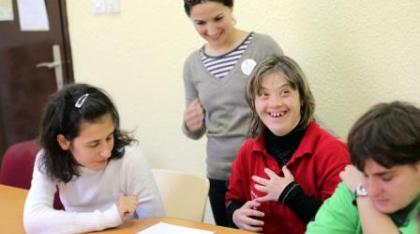
Preventing sexual abuse and violence against young people with learning disabilities - policy recommendations
People with learning disabilities have a right to be protected from sexual violence and abuse, yet 90% of them will experience sexual abuse at some point in their life, most frequently from family members or others in their close circle. Safeguarding this right can only be achieved if people with learning disabilities are empowered to protect themselves. Increasing their autonomy in relation to their sexual lives, relationships, bodies and privacy is key. But how can people with learning disabilities be expected to say no to sexual violence and abuse, if even the smallest aspects of daily life are decided for them by others? In this context, it is crucial to strengthen their overall autonomy, active participation and integration in society, and the transition from institutions to community based-care. The 2-year ‘Keep me Safe’ project aimed to empower young people with learning disabilities to protect themselves against sexual abuse and violence across Europe. It was co-funded by the European Commission Daphne III Programme. On 11-12 December 2014, IPPF Member Associations, NGOs, parents of young people with learning disabilities, decision-makers and authorities from Bulgaria, Cyprus, Germany, Ireland, Latvia, The Netherlands, Macedonia, Romania, Spain, and UK, as well as staff from the IPPF EN regional office, gathered in Madrid for its final event. Here you can download the set of Policy recommendations they developed and endorsed at the meeting.

04 March 2014
Keep Me Safe - training manual
A UN Study from 2006 suggests that 90% of people with intellectual impairments will experience sexual abuse at some point in their life, most frequently from family members or others in their close environment. Empowering young people who have a learning disability to protect themselves against sexual abuse and violence requires acknowledgement and respect of their sexuality from their carers alongside guidance on protection and appropriate behaviour. From 2013-2015, we ran a project to empower young people with learning disabilities to protect themselves against sexual abuse and violence, harnessing best practice, expertise and proven strategies from IPPF members in Europe with extensive experience in this area. The project was called 'Keep Me Safe'. This work was co-funded by the European Commission (DG Justice - Daphne III Programme). This training manual has been developed for organisations who wish to educate and sensitize staff, teachers and carers about the sexual and reproductive health and rights of young people with mild to moderate learning disabilities.
02 December 2014
How sexuality education is empowering young people with learning disabilities in Bulgaria
The town of Kazanlak, at the foot of the Balkan Mountains, is the centre of Bulgaria’s famous rose oil industry. Maria Gineva and Veska Marakjieva run four centres there for young people with special needs, including learning disabilities. Both have taken part in training sessions on sexuality education organised by IPPF’s Bulgarian member association BFPA as part of the ‘Keep me Safe’ project. Maria tells the story of a teenage couple with learning disabilities who were in love. “They didn’t really know about sex, about how it worked, and how to protect themselves. So we started to work with them, discussing sexuality, feelings and how and where it’s appropriate to express them. “Previously they had been kissing all the time in public spaces. After these sessions we agreed on rules on where they could go, and gave them a private space. Their parents hadn’t talked to them at all about sex. We spoke to the parents too, to encourage them to speak to their children and respect their need for space. The project is helping us find the right way to talk to these young people.” Maria and Veska believe that the project can make real changes to the lives of young people with learning disabilities by equipping them and their parents, as well as others involved in their care, to navigate the tricky waters of puberty and developing sexuality. Before Keep Me Safe, explains Veska, “we didn’t focus on these issues, even though the young people were literally growing up before our eyes.” The staff of the centers had tried instinctively to talk to them about issues like personal boundaries and masturbation in communal spaces, and there was some work on preventing sexual abuse. “But we hadn’t thought of it as something where we needed a concrete policy,” adds Maria. This has now changed, and a new policy is being rolled out. It is clear from the experiences of Maria and Veska and other professionals caring for young people with learning disabilities in Bulgaria that parents have a crucial role to play in empowering them when it comes to sexuality and prevention of sexual abuse. But this is also an extremely difficult subject to broach in a country where discussing sexuality in general is taboo, and sexuality education for mainstream children is woefully inadequate. Reactions from parents of young people with learning disabilities to the prospect of sexuality education workshops have ranged from questioning the need to discuss sex with their children, to embarrassment, curiosity and gratitude. One mother who attended a BFPA workshop in the town of Lovech described herself as “very happy – this will give me the confidence to talk to my son about these issues. He is 21. Before he didn’t know who he could talk to when he was in love, he was looking for information on the internet.” Veska, herself the mother of a child with a learning disability, recalls the first session she ran with parents. “We advised them to try and give their children more privacy, and stop hugging them like they are toddlers when some of them are 30 years old. We tried to make them understand that this puts their children at risk because they think hugging all the time is the norm.” She laughs as she adds that she is trying to get into the habit of just kissing her son on the cheek. “The impact on the young people themselves can be greater happiness,” says BFPA Executive Director Radosveta Stamenkova, when asked what the project will mean in the longer term. She has been pleasantly surprised by the strong demand from organisations involved in the direct care of these youngsters, travelling with the BFPA team to different towns around the country to lead additional workshops. Radosveta believes that Keep me Safe’s visual tools with their simple language can also be useful for reaching out to other vulnerable groups, e.g. younger children in the mainstream, new waves of refugees escaping conflict in the Middle East, and Bulgaria’s Roma community, of which 20% is illiterate. Veska confirms that in Kazanlak, which has a large Roma population, the project is already being used more broadly: “We did several sessions with teenage mums, mainly Roma, and we realised that they just didn’t know their own bodies at all, didn’t know the risks of early pregnancy, could not make a proper assessment of healthy behaviour and risks.” But a recurring theme in conversations with all those who are excited about the potential of Keep me Safe in Bulgaria is the lack of mandatory comprehensive sexuality education in mainstream schools. “We have been fighting for this for 20 years. It pains me physically that it is still not there,” adds Radosveta, citing a recent case that reached notoriety when a teenage mother in Kazanlak dumped her baby in a dustbin. When the media interviewed an adolescent boy who went to the same school and asked him to name one sexually transmitted infection, he said “Ebola”. --- Keep me Safe is a two-year project that aims to empower young people with learning disabilities across Europe to protect themselves against sexual abuse and violence. It is funded by the European Commission Daphne III Programme. You can read more about the work in Bulgaria here.
06 March 2014
Upholding the sexual rights of young people with disabilities
IPPF EN considers people with disabilities a highly vulnerable group needing special attention when it comes to sexual and reproductive health and rights. Member Associations have increasingly been called on to address these unique sexual health needs, so IPPF EN has developed a series of initiatives to increase the network’s capacity to protect the sexual rights of people with disabilities, including a regional capacity-building initiative and an EU-funded project involving 13 European countries. The EU-funded ‘Keep me Safe’ project empowers young people with learning disabilities to protect themselves from violence and sexual abuse in at least seven European countries using the expertise of five IPPF EN Member Associations. Peter and Sophia are two young people with learning disabilities living in different sections of the same institution. Peter is 25 and has been staying at the institution for three weeks, and not much is known about him. Previously, he was in another institution, but there they could not give him the support and guidance he needed. Sophia is a vulnerable girl of 15 years old. She has been living in the institution for over a year. She’s reached puberty and is very much interested in everything to do with boys and sex. They were discovered having sex in the bushes by a visitor. Sophia was yelling “No, stop. I don’t want to,” but Peter wouldn’t stop. In recent years, several IPPF EN Member Associations have been contacted by institutions, organizations and individuals asking for support in responding to incidents of inappropriate sexual behaviour by people with learning disabilities or cases of sexual violence and abuse that young people with disabilities are exposed to. Not all the Member Associations were able to respond to these requests for support. Member Associations are experts when it comes to providing sexuality education to young people, but talking to young people with learning disabilities about sex and sexuality requires a different approach that is tailored to this group’s unique needs. However, some IPPF EN Member Associations can draw on years of experience to provide assistance on sexuality education for young people with disabilities and/or support institutions to respond to cases of sexual violence and abuse. For instance, the UK Family Planning Association (FPA) is running a very successful programme and has won several awards for its innovative, interactive educational tool ‘All about us’ (http://www.fpa.org.uk/product/all-about-us-dvd-rom). The success of this work inspired IPPF EN to start an initiative that would enable UK FPA Northern Ireland to coach other Member Associations in this field. In 2009, Georgie McCormick and Mark Breslin from UK FPA Northern Ireland trained representatives from Latvia, Denmark, the Republic of Macedonia and Israel, all of whom returned home and successfully set up programmes for young people with learning disabilities with support from UK FPA. A review of available expertise among IPPF EN Member Associations revealed that UK FPA is not the only one with years of relevant experience, as several Member Associations have eagerly responded to the pressing needs of young people with learning disabilities in their countries. With funding from the European Commission Daphne III programme, IPPF EN has been able to expand its efforts in building the network’s capacity to support young people with learning disabilities in the EU countries most in need. With this EC-funded ‘Keep me Safe’ project, we are empowering young people with learning disabilities to protect themselves from violence and sexual abuse in Spain, Cyprus, Bulgaria, Romania, Latvia, Macedonia and Denmark. The Member Associations from these countries are currently receiving training, mentoring and support from their colleagues in Belgium, Germany, Ireland, the Netherlands and the UK. All young people have sexual rights Returning to the incident described above: how can such incidents be prevented? Young people with learning disabilities are rarely considered to be sexual beings with sexual wishes and a need for intimacy, sexual affection and love like any other young person. Moreover, family members and carers often feel deeply uncomfortable talking about these subjects with young people, and even more so with young people with learning disabilities. The major taboo around sex and a lack of sexuality education and information for young people with learning disabilities make them extremely vulnerable to violence and sexual abuse. If no one ever talks openly to them about sex and sexuality in a positive way, about their and others’ sexual rights and responsibilities, about their and other people’s boundaries and about social norms, it may result in inappropriate sexual behaviour, violence and abuse. On the one hand, society wishes to protect children, young people and adults with learning disabilities; however, on the other hand, it tends to see them as asexual, which exposes them to much higher risks of abuse and suffering. Young people with learning disabilities are sexual beings and have a right to sexuality information and education tailored to their specific needs. Parents, carers and policymakers have the responsibility to uphold this right, and Member Associations are taking up their responsibility to support them in this task. Providing support to institutions, day care centres and families to respond to these incidents is often a first step in raising awareness of the need to prevent these incidents from happening in the future. Even more important, this is a first step towards improving the quality of their sexual lives by recognizing that young people with learning disabilities are sexual beings with sexual rights that are to be respected and fulfilled just like anyone else’s. By Marieka Vandewiele, Senior Programme Adviser, IPPF European Network
03 December 2016
Moldova: Persons with disabilities must not be discriminated against when they want to form relationships, families and have children
Today, on December 3, the UN celebrates the International Day of Persons with Disabilities. The theme for this year’s International Day is “Achieving 17 Goals for the Future We Want”. This theme notes the recent adoption of the 17 Sustainable Development Goals (SDGs) and the role of these goals in building a more inclusive and equitable world for persons with disabilities. This year’s objectives include assessing the current status of the Convention on the Rights of Persons with Disabilities (CRPD) and SDGs and laying the foundation for a future of greater inclusion for persons with disabilities. The Reproductive Health Training Center in the Republic of Moldova is celebrating this important day by launching the report “Assessing the issues confronting women and girls with locomotor disability in Moldova in exercising their sexual and reproductive rights”. The report is the outcome of the activities conducted during the project “All Equal, All Healthy: Empowering Women and Girls with Disabilities in Moldova to Exercise their Sexual and Reproductive Rights” /”Toți egali, toți sănătoși: Abilitarea femeilor și fetelor cu dizabilități din Moldova să își exercite drepturile sexuale și reproductive”. The project is funded by the Embassy of Finland in Bucharest, as part of the Fund for Local Cooperation and is carried out between July 2016 and June 2017. Persons with a disability must be able to enjoy all sexual and reproductive rights guaranteed by international legal instruments and national policies. By ratifying the UN human rights conventions, especially the Convention on the Rights of Persons with Disabilities, the Republic of Moldova has assumed their responsibility to ensure the enactment and guarantee of the observance of the rights of people with disabilities – including sexual and reproductive rights. The total number of persons with disabilities in the Republic of Moldova is 184.3 thousand, according to the National Statistical Bureau (BNS[1] ) which represents 5.2% of the country’s total population. Moreover, 48% of the total number of people with disabilities in the Republic of Moldova are women, with 62% of persons with disabilities living in rural areas. The rate of disability in rural areas is 547 people with a disability out of ten thousand inhabitants, compared to 472 people with a disability out of ten thousand inhabitants in urban areas. The total number of people with disability has seen a 10% continuous increase over the last decade, and a 5% growth in the case of women. International data shows girls and women with a disability face many obstacles exercising their sexual and reproductive rights, are often subject to stigma, discrimination and forced to make decisions regarding their private life, sexuality, sexual and reproductive health, couple relationships and childbearing.[2] Approaching sexual and reproductive rights of people with a disability is a new experience for Moldova, therefore the Reproductive Health Training Center has conducted a situational analysis. The present report evinces the interview analysis results, specifying the findings and recommendations for both respondents and the working group. Almost all women believe sexual and reproductive rights include the right to decide whether to have children or not, including with whom and when, the right to be informed about methods of contraception and their utilization, the right to information and education, as well as the right to access sexual and reproductive health services. “All women have the right to family life, have the right to be mothers, and disability should not be a reason for depriving us from this right,” says a 28-year-old women with special needs. One third of the women interviewed believed that in addition to the aforementioned rights, sexual and reproductive rights also include the decision to engage in sexual life, the right to marry or not, including with whom and when, the right to terminate an unwanted pregnancy, as well as the right to be protected against sexual violence. ”We are all equal and have rights to have a family and to be happy; to have a beautiful life, just as all people do,” a 21-year-old woman with special needs told us in an interview. The conviction of all women is that they can have a family and give birth to children, and problems with mobility should not be a barrier to achieving these rights. ”Family planning is a right and it would be correct that young people who are healthy and also have a disability should be informed about the importance of contraception, planning a pregnancy with all necessary medical checkups, excluding afflictions by treating diseases so as to have a healthy body and a healthy family,” believes a 42-year-old woman with special needs. The results obtained will be used by government bodies to draft and improve the policies pertaining to sexual health and sexual and reproductive rights of people with disabilities in the Republic of Moldova. The results will form the foundation for the development of relevant programs by civil society and other concerned bodies, as well as serving as advocacy tools for persons with a disability and their family members. The Romanian version of the report ”Situation analysis of the issues confronting women and girls with locomotor disability in Moldova in exercising their sexual and reproductive rights” (first version) / “Analiza situațională a problemelor cu care se confruntă femeile și fetele cu dizabilități locomotorii din Moldova în exercitarea drepturilor sexuale și reproductive” (prima versiune) can be found here: Raport_Analiza-situationala-DSR-persoane-cu-dizabilitati_Versiunea-I.pdf *** For additional information: Rodica Comendant, Director: [email protected] Ludmila Sîrbu, Proiect Coordinator: [email protected] Centrul de Instruire in Domeniul Sănătății Reproductive (CIDSR): 373 69139878 [1] http://www.statistica.md/newsview.php?l=ro&idc=168&id=4976 [2]ICPD Beyond 2014, International Conference, Issues Paper The Sexual and Reproductive Rights of Women and Girls with Disabilities, pg. 2
05 June 2016
Marian and Nicoleta
Meet Marian and Nicoleta. Their unique love story highlights the importance of ensuring that everyone, everywhere has the love and happiness they deserve.
13 May 2016
Eugenia's Story
Meet Eugenia Behar, a clinical psychologist working with young people with learning difficulties in Romania, a country where there is still no obligatory sexuality education across all schools, particularly for those with learning difficulties.
12 December 2014
Preventing sexual abuse and violence against young people with learning disabilities - policy recommendations
People with learning disabilities have a right to be protected from sexual violence and abuse, yet 90% of them will experience sexual abuse at some point in their life, most frequently from family members or others in their close circle. Safeguarding this right can only be achieved if people with learning disabilities are empowered to protect themselves. Increasing their autonomy in relation to their sexual lives, relationships, bodies and privacy is key. But how can people with learning disabilities be expected to say no to sexual violence and abuse, if even the smallest aspects of daily life are decided for them by others? In this context, it is crucial to strengthen their overall autonomy, active participation and integration in society, and the transition from institutions to community based-care. The 2-year ‘Keep me Safe’ project aimed to empower young people with learning disabilities to protect themselves against sexual abuse and violence across Europe. It was co-funded by the European Commission Daphne III Programme. On 11-12 December 2014, IPPF Member Associations, NGOs, parents of young people with learning disabilities, decision-makers and authorities from Bulgaria, Cyprus, Germany, Ireland, Latvia, The Netherlands, Macedonia, Romania, Spain, and UK, as well as staff from the IPPF EN regional office, gathered in Madrid for its final event. Here you can download the set of Policy recommendations they developed and endorsed at the meeting.
04 March 2014
Keep Me Safe - training manual
A UN Study from 2006 suggests that 90% of people with intellectual impairments will experience sexual abuse at some point in their life, most frequently from family members or others in their close environment. Empowering young people who have a learning disability to protect themselves against sexual abuse and violence requires acknowledgement and respect of their sexuality from their carers alongside guidance on protection and appropriate behaviour. From 2013-2015, we ran a project to empower young people with learning disabilities to protect themselves against sexual abuse and violence, harnessing best practice, expertise and proven strategies from IPPF members in Europe with extensive experience in this area. The project was called 'Keep Me Safe'. This work was co-funded by the European Commission (DG Justice - Daphne III Programme). This training manual has been developed for organisations who wish to educate and sensitize staff, teachers and carers about the sexual and reproductive health and rights of young people with mild to moderate learning disabilities.