



Spotlight
A selection of resources from across the Federation

Resource
Report: Youth Preferences for Sexuality Education
This research report, led by IPPF EN's youth network YSAFE, highlights what young people in Europe and Central Asia really want from comprehensive sexuality education.
Most Popular This Week

Resource
|
Report: Youth Preferences for Sexuality Education
The YSAFE network — IPPF EN's youth activists for sexual and reproductive health and rights in Europe and Central Asia — led a research project into what

Resource
|
Defending civic space, rights and EU values
Across Europe, civil society organisations play a vital role in defending democracy, human rights and equality.

Resource
|
Sexuality education, gender equality & SGBV - a study of knowledge and attitudes in Portugal
Sexual and gender-based violence (SGBV) has profound implications for human development and the protection of fundamental rights.

Resource
|
IPPF EN’s contribution to the EU Gender Equality Strategy beyond 2025
IPPF EN welcomes the European Commission’s commitment to renew the EU Gender Equality Strategy for the next five years.

Resource
|
2024 IPPF EN Annual Report
Against a turbulent global backdrop of continued crisis and conflict, 2024 stood out as a year of political transition in Europe and Central Asia, with national elections held in numerous countries

Resource
|
Abortion Care and Costs in Europe and Central Asia
IPPF EN carried out research* via our network of national Member Associations and Collaborative Partners in Europe and Central Asia on access to abortion care in their countries**, with a particula

Resource
|
The upcoming Presidencies An opportunity for gender equality and SRHR
Over the last few years, the EU has been facing many challenges in the realization of its core values: the rule of law, democracy, human rights, equality, especially gender equality, and women’s ri
European Network

Resource
|
Startup toolkit for MEPs: championing sexual and reproductive safety
Sexual and reproductive health and rights (SRHR) encompass all rights related to sexuality and parenthood.
Filter our resources by:


Resource
| 28 June 2015
Annual Report 2014
We are proud of so many achievements in 2014. Drawing on the huge wealth of experience inside our incredibly diverse network of activists for sexual and reproductive health and rights, IPPF EN has continued our fight to bring change and new possibilities for ordinary people. For example, the groundbreaking work we are doing to empower young people with learning disabilities is changing lives in 12 countries. We have succeeded in using legal instruments to ensure people are treated with dignity and receive the services they need. We have continued challenging gender stereotypes and patriarchal social norms to help ensure that young people are able to reach their full potential. And our advocates have worked passionately to make the case for ambitious international commitments to ensuring greater equality and tackling poverty in the coming decades. Download our Annual Report to read more about our work and its impact throughout Europe and Central Asia in 2014.
Resource
| 28 June 2015
Annual Report 2014
We are proud of so many achievements in 2014. Drawing on the huge wealth of experience inside our incredibly diverse network of activists for sexual and reproductive health and rights, IPPF EN has continued our fight to bring change and new possibilities for ordinary people. For example, the groundbreaking work we are doing to empower young people with learning disabilities is changing lives in 12 countries. We have succeeded in using legal instruments to ensure people are treated with dignity and receive the services they need. We have continued challenging gender stereotypes and patriarchal social norms to help ensure that young people are able to reach their full potential. And our advocates have worked passionately to make the case for ambitious international commitments to ensuring greater equality and tackling poverty in the coming decades. Download our Annual Report to read more about our work and its impact throughout Europe and Central Asia in 2014.

Resource
| 16 March 2015
Vision 2020 Gender Report
The second report in our Vision 2020 series, this publication, "SRHR- the key to gender equality and women’s empowerment" sets out how SRHR is critical to gender equality and women’s empowerment across three dimensions. It explores how ensuring universal access to SRHR can promote economic growth, social equity and political participation. Pathways of empowerment This report examines the links between sexual and reproductive health and rights and gender equality. It explores the different pathways of empowerment that girls and women experience, and analyzes how these pathways are affected by sexual and reproductive health and rights. Policy focus and attention given to gender equality and women’s empowerment has been growing over the last decade, and there are some areas where links are established more conclusively. Although there is strong documentation on the health benefits of investment in sexual and reproductive health, until recently the non‑medical benefits, such as higher levels of social and political participation, have been largely ignored, partly because they are difficult to measure. While the social and economic implications of sexual and reproductive health and rights are often overlooked, they are no less real. More attention is needed to explore the links between sexual and reproductive health and rights and other critical areas relating to gender equality, such as the representation of women in political and public life. Methodology and priority themes For the purposes of this report, and in line with accepted wisdom on emerging areas of priority, we focus on the following core areas relating to gender equality: 1) equality in social development, 2) economic participation and 3) participation in political and public life. Within each area, we discuss key links with sexual and reproductive health and rights as well as identifying ways in which these links contribute to empowerment experienced by girls and women. IPPF carried out desk reviews of existing policy research: over 350 references were reviewed on the following focus areas: sexual and reproductive health and rights and the social development of girls and women (including health, education, and freedom from sexual and gender-based violence) sexual and reproductive health and rights and women’s economic participation sexual and reproductive health and rights and women’s participation in political and public life Resources were gathered for review using three main methods: 1) electronic database searching, 2) cross-referencing of reference lists of related articles and reviews and 3) consultation with experts in the fields of sexual and reproductive health and rights and gender equality. Papers were prioritized for inclusion if they met a number of criteria: if they appeared to provide a clear international policy overview of key review themes and evidence given from a rights-based perspective, with statistically proven linkages, case studies and/or findings from qualitative studies; were published recently, and within the last 10 years; were published in English; corresponded most closely to agreed keyword searches; and were cited widely. During the first phase, these methods were used to search the libraries of an agreed group of multi‑lateral institutions; key donors and governments; non‑governmental organizations working in the fields of sexual and reproductive health and rights, gender equality and development; and key global and regional partnerships. Findings were then verified and enriched, with gaps identified and filled, using searches in relevant public health and gender journals, along with regional and national policy reports and studies that fitted the search criteria closely and/or that came recommended.
Resource
| 16 March 2015
Vision 2020 Gender Report
The second report in our Vision 2020 series, this publication, "SRHR- the key to gender equality and women’s empowerment" sets out how SRHR is critical to gender equality and women’s empowerment across three dimensions. It explores how ensuring universal access to SRHR can promote economic growth, social equity and political participation. Pathways of empowerment This report examines the links between sexual and reproductive health and rights and gender equality. It explores the different pathways of empowerment that girls and women experience, and analyzes how these pathways are affected by sexual and reproductive health and rights. Policy focus and attention given to gender equality and women’s empowerment has been growing over the last decade, and there are some areas where links are established more conclusively. Although there is strong documentation on the health benefits of investment in sexual and reproductive health, until recently the non‑medical benefits, such as higher levels of social and political participation, have been largely ignored, partly because they are difficult to measure. While the social and economic implications of sexual and reproductive health and rights are often overlooked, they are no less real. More attention is needed to explore the links between sexual and reproductive health and rights and other critical areas relating to gender equality, such as the representation of women in political and public life. Methodology and priority themes For the purposes of this report, and in line with accepted wisdom on emerging areas of priority, we focus on the following core areas relating to gender equality: 1) equality in social development, 2) economic participation and 3) participation in political and public life. Within each area, we discuss key links with sexual and reproductive health and rights as well as identifying ways in which these links contribute to empowerment experienced by girls and women. IPPF carried out desk reviews of existing policy research: over 350 references were reviewed on the following focus areas: sexual and reproductive health and rights and the social development of girls and women (including health, education, and freedom from sexual and gender-based violence) sexual and reproductive health and rights and women’s economic participation sexual and reproductive health and rights and women’s participation in political and public life Resources were gathered for review using three main methods: 1) electronic database searching, 2) cross-referencing of reference lists of related articles and reviews and 3) consultation with experts in the fields of sexual and reproductive health and rights and gender equality. Papers were prioritized for inclusion if they met a number of criteria: if they appeared to provide a clear international policy overview of key review themes and evidence given from a rights-based perspective, with statistically proven linkages, case studies and/or findings from qualitative studies; were published recently, and within the last 10 years; were published in English; corresponded most closely to agreed keyword searches; and were cited widely. During the first phase, these methods were used to search the libraries of an agreed group of multi‑lateral institutions; key donors and governments; non‑governmental organizations working in the fields of sexual and reproductive health and rights, gender equality and development; and key global and regional partnerships. Findings were then verified and enriched, with gaps identified and filled, using searches in relevant public health and gender journals, along with regional and national policy reports and studies that fitted the search criteria closely and/or that came recommended.

Resource
| 15 January 2015
Women's access to modern contraceptive choice - Barometer 2015
A ‘Barometer’ report launched by IPPF EN in 2015 analyses how easily women in 16 EU countries can access modern contraceptives. It finds that overall, the situation in most countries has stagnated or worsened in recent years. The EU countries covered by the report are: Bulgaria, Cyprus, Czech Republic, Denmark, Finland, France, Germany, Ireland, Italy, Latvia, Lithuania, The Netherlands, Poland, Romania, Spain, and Sweden. Information on participating national partners can be found in the report. The report’s findings are based on information about the national policy landscapes provided by national experts in each of the 16 countries, using a series of policy benchmarks that are key to ensuring access to modern contraceptives. The information was collected, analysed and reviewed between May and November 2014. The report is endorsed by the European Society of Contraception and Reproductive Health (ESC) and International Centre for Reproductive Health (ICRH).
Resource
| 15 January 2015
Women's access to modern contraceptive choice - Barometer 2015
A ‘Barometer’ report launched by IPPF EN in 2015 analyses how easily women in 16 EU countries can access modern contraceptives. It finds that overall, the situation in most countries has stagnated or worsened in recent years. The EU countries covered by the report are: Bulgaria, Cyprus, Czech Republic, Denmark, Finland, France, Germany, Ireland, Italy, Latvia, Lithuania, The Netherlands, Poland, Romania, Spain, and Sweden. Information on participating national partners can be found in the report. The report’s findings are based on information about the national policy landscapes provided by national experts in each of the 16 countries, using a series of policy benchmarks that are key to ensuring access to modern contraceptives. The information was collected, analysed and reviewed between May and November 2014. The report is endorsed by the European Society of Contraception and Reproductive Health (ESC) and International Centre for Reproductive Health (ICRH).

Resource
| 10 January 2015
Call to Action: Women's access to modern contraceptive choice - Barometer 2015
We call on national decision-makers to support the implementation of a comprehensive approach to contraceptive choice in the 16 countries within a broader sexual and reproductive health and rights agenda. This is fundamental to ensuring the wellbeing of all women and girls, particularly the most vulnerable and is a crucial precondition to allowing women and couples the freedom to choose parenthood or not. It is a competence of EU Member States to formulate and implement SRHR policies at a national level. Yet when it comes to public health and non-discrimination, the EU can exercise policy-making, foster research and the exchange of best practices, and better support the implementation of SRHR at national level. Therefore, the Barometer partners call for a structured dialogue involving all relevant stakeholders at EU and national levels. Additionally, we urge the EU to make a greater investment in SRHR research and data collection.
Resource
| 10 January 2015
Call to Action: Women's access to modern contraceptive choice - Barometer 2015
We call on national decision-makers to support the implementation of a comprehensive approach to contraceptive choice in the 16 countries within a broader sexual and reproductive health and rights agenda. This is fundamental to ensuring the wellbeing of all women and girls, particularly the most vulnerable and is a crucial precondition to allowing women and couples the freedom to choose parenthood or not. It is a competence of EU Member States to formulate and implement SRHR policies at a national level. Yet when it comes to public health and non-discrimination, the EU can exercise policy-making, foster research and the exchange of best practices, and better support the implementation of SRHR at national level. Therefore, the Barometer partners call for a structured dialogue involving all relevant stakeholders at EU and national levels. Additionally, we urge the EU to make a greater investment in SRHR research and data collection.
Resource
| 12 December 2014
Preventing sexual abuse and violence against young people with learning disabilities - policy recommendations
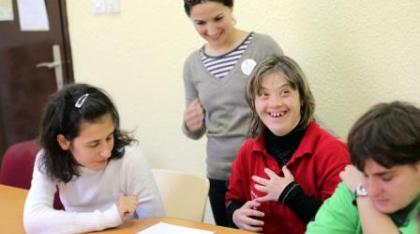
People with learning disabilities have a right to be protected from sexual violence and abuse, yet 90% of them will experience sexual abuse at some point in their life, most frequently from family members or others in their close circle. Safeguarding this right can only be achieved if people with learning disabilities are empowered to protect themselves. Increasing their autonomy in relation to their sexual lives, relationships, bodies and privacy is key. But how can people with learning disabilities be expected to say no to sexual violence and abuse, if even the smallest aspects of daily life are decided for them by others? In this context, it is crucial to strengthen their overall autonomy, active participation and integration in society, and the transition from institutions to community based-care. The 2-year ‘Keep me Safe’ project aimed to empower young people with learning disabilities to protect themselves against sexual abuse and violence across Europe. It was co-funded by the European Commission Daphne III Programme. On 11-12 December 2014, IPPF Member Associations, NGOs, parents of young people with learning disabilities, decision-makers and authorities from Bulgaria, Cyprus, Germany, Ireland, Latvia, The Netherlands, Macedonia, Romania, Spain, and UK, as well as staff from the IPPF EN regional office, gathered in Madrid for its final event. Here you can download the set of Policy recommendations they developed and endorsed at the meeting.
Resource
| 12 December 2014
Preventing sexual abuse and violence against young people with learning disabilities - policy recommendations
People with learning disabilities have a right to be protected from sexual violence and abuse, yet 90% of them will experience sexual abuse at some point in their life, most frequently from family members or others in their close circle. Safeguarding this right can only be achieved if people with learning disabilities are empowered to protect themselves. Increasing their autonomy in relation to their sexual lives, relationships, bodies and privacy is key. But how can people with learning disabilities be expected to say no to sexual violence and abuse, if even the smallest aspects of daily life are decided for them by others? In this context, it is crucial to strengthen their overall autonomy, active participation and integration in society, and the transition from institutions to community based-care. The 2-year ‘Keep me Safe’ project aimed to empower young people with learning disabilities to protect themselves against sexual abuse and violence across Europe. It was co-funded by the European Commission Daphne III Programme. On 11-12 December 2014, IPPF Member Associations, NGOs, parents of young people with learning disabilities, decision-makers and authorities from Bulgaria, Cyprus, Germany, Ireland, Latvia, The Netherlands, Macedonia, Romania, Spain, and UK, as well as staff from the IPPF EN regional office, gathered in Madrid for its final event. Here you can download the set of Policy recommendations they developed and endorsed at the meeting.

Resource
| 28 September 2014
Women's Voices on 28 September - Global day of action for access to safe and legal abortion
Every day, everywhere women have abortions. In fact, one in three women will have an abortion in their lifetime. Your sister, mother, daughter, partner, friend. Yourself. However, many countries around the world continue to restrict access to safe and legal abortion. Globally, 66 countries either prohibit abortion entirely or permit it only to save a woman's life. Approximately one quarter of the world's population resides in these countries. Too many women still do not have autonomy over their reproductive lives, and are not able to choose to end an unwanted pregnancy under safe conditions with the support of a trained provider. That is why on September 28, the Global Day of Action for Access to Safe and Legal Abortion, IPPF will join with partners across the world to call for universal access for safe and legal abortion. In our region, from Skopje to Stockholm, Tirana to Dublin, our Member Associations are marking the day with activities ranging from press conferences, advocacy workshops, public debates organised by youth activists and short movie launches to providing information and education materials to schools; dedicated social media campaigns; clinic open day with free sexual and reproductive health services, and appearing in newspapers and TV documentaries to make the case for safe and legal abortion. Criminalising abortion does not reduce the number of abortions, all it does is push abortion underground and rates of unsafe abortion increase. In fact, the lowest abortion rates in the world are in regions with some of the most liberal legal frameworks for the provision of abortion services. A woman’s right to safe, legal abortion is under threat in Europe too. The abandoning this week of a regressive anti-abortion bill in Spain is a step in the right direction and an illustration of what can be achieved through the joint action of civil society organisations. But the fact remains it should never have been on the legislature’s books in the first place. It shows that rights can be rolled back at anytime, anywhere. The women who suffer as a consequence of restrictive laws are not just numbers. Each woman who seeks an abortion does so under a unique set of circumstances. IPPF has produced a series of short films to tell the stories of some of these women. Women like Juliette from France, who just like millions of other women around the world, decided to have an abortion following an unintended pregnancy. In this video Juliette describes the challenges she faced in trying to find accurate and unbiased information about abortion, and she shares her thoughts on the role of men in the abortion process. You can watch the other videos in the series here. Unwanted pregnancies will always be a fact of life and abortions will continue. So, join us on September 28 in calling for governments to make abortion safe and legal abortion everywhere. Read a guest blog on the "state shambles" of abortion in Ireland by IFPA, IPPF's Irish Member Association here.
Resource
| 28 September 2014
Women's Voices on 28 September - Global day of action for access to safe and legal abortion
Every day, everywhere women have abortions. In fact, one in three women will have an abortion in their lifetime. Your sister, mother, daughter, partner, friend. Yourself. However, many countries around the world continue to restrict access to safe and legal abortion. Globally, 66 countries either prohibit abortion entirely or permit it only to save a woman's life. Approximately one quarter of the world's population resides in these countries. Too many women still do not have autonomy over their reproductive lives, and are not able to choose to end an unwanted pregnancy under safe conditions with the support of a trained provider. That is why on September 28, the Global Day of Action for Access to Safe and Legal Abortion, IPPF will join with partners across the world to call for universal access for safe and legal abortion. In our region, from Skopje to Stockholm, Tirana to Dublin, our Member Associations are marking the day with activities ranging from press conferences, advocacy workshops, public debates organised by youth activists and short movie launches to providing information and education materials to schools; dedicated social media campaigns; clinic open day with free sexual and reproductive health services, and appearing in newspapers and TV documentaries to make the case for safe and legal abortion. Criminalising abortion does not reduce the number of abortions, all it does is push abortion underground and rates of unsafe abortion increase. In fact, the lowest abortion rates in the world are in regions with some of the most liberal legal frameworks for the provision of abortion services. A woman’s right to safe, legal abortion is under threat in Europe too. The abandoning this week of a regressive anti-abortion bill in Spain is a step in the right direction and an illustration of what can be achieved through the joint action of civil society organisations. But the fact remains it should never have been on the legislature’s books in the first place. It shows that rights can be rolled back at anytime, anywhere. The women who suffer as a consequence of restrictive laws are not just numbers. Each woman who seeks an abortion does so under a unique set of circumstances. IPPF has produced a series of short films to tell the stories of some of these women. Women like Juliette from France, who just like millions of other women around the world, decided to have an abortion following an unintended pregnancy. In this video Juliette describes the challenges she faced in trying to find accurate and unbiased information about abortion, and she shares her thoughts on the role of men in the abortion process. You can watch the other videos in the series here. Unwanted pregnancies will always be a fact of life and abortions will continue. So, join us on September 28 in calling for governments to make abortion safe and legal abortion everywhere. Read a guest blog on the "state shambles" of abortion in Ireland by IFPA, IPPF's Irish Member Association here.
Resource
| 28 June 2015
Annual Report 2014
We are proud of so many achievements in 2014. Drawing on the huge wealth of experience inside our incredibly diverse network of activists for sexual and reproductive health and rights, IPPF EN has continued our fight to bring change and new possibilities for ordinary people. For example, the groundbreaking work we are doing to empower young people with learning disabilities is changing lives in 12 countries. We have succeeded in using legal instruments to ensure people are treated with dignity and receive the services they need. We have continued challenging gender stereotypes and patriarchal social norms to help ensure that young people are able to reach their full potential. And our advocates have worked passionately to make the case for ambitious international commitments to ensuring greater equality and tackling poverty in the coming decades. Download our Annual Report to read more about our work and its impact throughout Europe and Central Asia in 2014.
Resource
| 28 June 2015
Annual Report 2014
We are proud of so many achievements in 2014. Drawing on the huge wealth of experience inside our incredibly diverse network of activists for sexual and reproductive health and rights, IPPF EN has continued our fight to bring change and new possibilities for ordinary people. For example, the groundbreaking work we are doing to empower young people with learning disabilities is changing lives in 12 countries. We have succeeded in using legal instruments to ensure people are treated with dignity and receive the services they need. We have continued challenging gender stereotypes and patriarchal social norms to help ensure that young people are able to reach their full potential. And our advocates have worked passionately to make the case for ambitious international commitments to ensuring greater equality and tackling poverty in the coming decades. Download our Annual Report to read more about our work and its impact throughout Europe and Central Asia in 2014.
Resource
| 16 March 2015
Vision 2020 Gender Report
The second report in our Vision 2020 series, this publication, "SRHR- the key to gender equality and women’s empowerment" sets out how SRHR is critical to gender equality and women’s empowerment across three dimensions. It explores how ensuring universal access to SRHR can promote economic growth, social equity and political participation. Pathways of empowerment This report examines the links between sexual and reproductive health and rights and gender equality. It explores the different pathways of empowerment that girls and women experience, and analyzes how these pathways are affected by sexual and reproductive health and rights. Policy focus and attention given to gender equality and women’s empowerment has been growing over the last decade, and there are some areas where links are established more conclusively. Although there is strong documentation on the health benefits of investment in sexual and reproductive health, until recently the non‑medical benefits, such as higher levels of social and political participation, have been largely ignored, partly because they are difficult to measure. While the social and economic implications of sexual and reproductive health and rights are often overlooked, they are no less real. More attention is needed to explore the links between sexual and reproductive health and rights and other critical areas relating to gender equality, such as the representation of women in political and public life. Methodology and priority themes For the purposes of this report, and in line with accepted wisdom on emerging areas of priority, we focus on the following core areas relating to gender equality: 1) equality in social development, 2) economic participation and 3) participation in political and public life. Within each area, we discuss key links with sexual and reproductive health and rights as well as identifying ways in which these links contribute to empowerment experienced by girls and women. IPPF carried out desk reviews of existing policy research: over 350 references were reviewed on the following focus areas: sexual and reproductive health and rights and the social development of girls and women (including health, education, and freedom from sexual and gender-based violence) sexual and reproductive health and rights and women’s economic participation sexual and reproductive health and rights and women’s participation in political and public life Resources were gathered for review using three main methods: 1) electronic database searching, 2) cross-referencing of reference lists of related articles and reviews and 3) consultation with experts in the fields of sexual and reproductive health and rights and gender equality. Papers were prioritized for inclusion if they met a number of criteria: if they appeared to provide a clear international policy overview of key review themes and evidence given from a rights-based perspective, with statistically proven linkages, case studies and/or findings from qualitative studies; were published recently, and within the last 10 years; were published in English; corresponded most closely to agreed keyword searches; and were cited widely. During the first phase, these methods were used to search the libraries of an agreed group of multi‑lateral institutions; key donors and governments; non‑governmental organizations working in the fields of sexual and reproductive health and rights, gender equality and development; and key global and regional partnerships. Findings were then verified and enriched, with gaps identified and filled, using searches in relevant public health and gender journals, along with regional and national policy reports and studies that fitted the search criteria closely and/or that came recommended.
Resource
| 16 March 2015
Vision 2020 Gender Report
The second report in our Vision 2020 series, this publication, "SRHR- the key to gender equality and women’s empowerment" sets out how SRHR is critical to gender equality and women’s empowerment across three dimensions. It explores how ensuring universal access to SRHR can promote economic growth, social equity and political participation. Pathways of empowerment This report examines the links between sexual and reproductive health and rights and gender equality. It explores the different pathways of empowerment that girls and women experience, and analyzes how these pathways are affected by sexual and reproductive health and rights. Policy focus and attention given to gender equality and women’s empowerment has been growing over the last decade, and there are some areas where links are established more conclusively. Although there is strong documentation on the health benefits of investment in sexual and reproductive health, until recently the non‑medical benefits, such as higher levels of social and political participation, have been largely ignored, partly because they are difficult to measure. While the social and economic implications of sexual and reproductive health and rights are often overlooked, they are no less real. More attention is needed to explore the links between sexual and reproductive health and rights and other critical areas relating to gender equality, such as the representation of women in political and public life. Methodology and priority themes For the purposes of this report, and in line with accepted wisdom on emerging areas of priority, we focus on the following core areas relating to gender equality: 1) equality in social development, 2) economic participation and 3) participation in political and public life. Within each area, we discuss key links with sexual and reproductive health and rights as well as identifying ways in which these links contribute to empowerment experienced by girls and women. IPPF carried out desk reviews of existing policy research: over 350 references were reviewed on the following focus areas: sexual and reproductive health and rights and the social development of girls and women (including health, education, and freedom from sexual and gender-based violence) sexual and reproductive health and rights and women’s economic participation sexual and reproductive health and rights and women’s participation in political and public life Resources were gathered for review using three main methods: 1) electronic database searching, 2) cross-referencing of reference lists of related articles and reviews and 3) consultation with experts in the fields of sexual and reproductive health and rights and gender equality. Papers were prioritized for inclusion if they met a number of criteria: if they appeared to provide a clear international policy overview of key review themes and evidence given from a rights-based perspective, with statistically proven linkages, case studies and/or findings from qualitative studies; were published recently, and within the last 10 years; were published in English; corresponded most closely to agreed keyword searches; and were cited widely. During the first phase, these methods were used to search the libraries of an agreed group of multi‑lateral institutions; key donors and governments; non‑governmental organizations working in the fields of sexual and reproductive health and rights, gender equality and development; and key global and regional partnerships. Findings were then verified and enriched, with gaps identified and filled, using searches in relevant public health and gender journals, along with regional and national policy reports and studies that fitted the search criteria closely and/or that came recommended.
Resource
| 15 January 2015
Women's access to modern contraceptive choice - Barometer 2015
A ‘Barometer’ report launched by IPPF EN in 2015 analyses how easily women in 16 EU countries can access modern contraceptives. It finds that overall, the situation in most countries has stagnated or worsened in recent years. The EU countries covered by the report are: Bulgaria, Cyprus, Czech Republic, Denmark, Finland, France, Germany, Ireland, Italy, Latvia, Lithuania, The Netherlands, Poland, Romania, Spain, and Sweden. Information on participating national partners can be found in the report. The report’s findings are based on information about the national policy landscapes provided by national experts in each of the 16 countries, using a series of policy benchmarks that are key to ensuring access to modern contraceptives. The information was collected, analysed and reviewed between May and November 2014. The report is endorsed by the European Society of Contraception and Reproductive Health (ESC) and International Centre for Reproductive Health (ICRH).
Resource
| 15 January 2015
Women's access to modern contraceptive choice - Barometer 2015
A ‘Barometer’ report launched by IPPF EN in 2015 analyses how easily women in 16 EU countries can access modern contraceptives. It finds that overall, the situation in most countries has stagnated or worsened in recent years. The EU countries covered by the report are: Bulgaria, Cyprus, Czech Republic, Denmark, Finland, France, Germany, Ireland, Italy, Latvia, Lithuania, The Netherlands, Poland, Romania, Spain, and Sweden. Information on participating national partners can be found in the report. The report’s findings are based on information about the national policy landscapes provided by national experts in each of the 16 countries, using a series of policy benchmarks that are key to ensuring access to modern contraceptives. The information was collected, analysed and reviewed between May and November 2014. The report is endorsed by the European Society of Contraception and Reproductive Health (ESC) and International Centre for Reproductive Health (ICRH).
Resource
| 10 January 2015
Call to Action: Women's access to modern contraceptive choice - Barometer 2015
We call on national decision-makers to support the implementation of a comprehensive approach to contraceptive choice in the 16 countries within a broader sexual and reproductive health and rights agenda. This is fundamental to ensuring the wellbeing of all women and girls, particularly the most vulnerable and is a crucial precondition to allowing women and couples the freedom to choose parenthood or not. It is a competence of EU Member States to formulate and implement SRHR policies at a national level. Yet when it comes to public health and non-discrimination, the EU can exercise policy-making, foster research and the exchange of best practices, and better support the implementation of SRHR at national level. Therefore, the Barometer partners call for a structured dialogue involving all relevant stakeholders at EU and national levels. Additionally, we urge the EU to make a greater investment in SRHR research and data collection.
Resource
| 10 January 2015
Call to Action: Women's access to modern contraceptive choice - Barometer 2015
We call on national decision-makers to support the implementation of a comprehensive approach to contraceptive choice in the 16 countries within a broader sexual and reproductive health and rights agenda. This is fundamental to ensuring the wellbeing of all women and girls, particularly the most vulnerable and is a crucial precondition to allowing women and couples the freedom to choose parenthood or not. It is a competence of EU Member States to formulate and implement SRHR policies at a national level. Yet when it comes to public health and non-discrimination, the EU can exercise policy-making, foster research and the exchange of best practices, and better support the implementation of SRHR at national level. Therefore, the Barometer partners call for a structured dialogue involving all relevant stakeholders at EU and national levels. Additionally, we urge the EU to make a greater investment in SRHR research and data collection.
Resource
| 12 December 2014
Preventing sexual abuse and violence against young people with learning disabilities - policy recommendations
People with learning disabilities have a right to be protected from sexual violence and abuse, yet 90% of them will experience sexual abuse at some point in their life, most frequently from family members or others in their close circle. Safeguarding this right can only be achieved if people with learning disabilities are empowered to protect themselves. Increasing their autonomy in relation to their sexual lives, relationships, bodies and privacy is key. But how can people with learning disabilities be expected to say no to sexual violence and abuse, if even the smallest aspects of daily life are decided for them by others? In this context, it is crucial to strengthen their overall autonomy, active participation and integration in society, and the transition from institutions to community based-care. The 2-year ‘Keep me Safe’ project aimed to empower young people with learning disabilities to protect themselves against sexual abuse and violence across Europe. It was co-funded by the European Commission Daphne III Programme. On 11-12 December 2014, IPPF Member Associations, NGOs, parents of young people with learning disabilities, decision-makers and authorities from Bulgaria, Cyprus, Germany, Ireland, Latvia, The Netherlands, Macedonia, Romania, Spain, and UK, as well as staff from the IPPF EN regional office, gathered in Madrid for its final event. Here you can download the set of Policy recommendations they developed and endorsed at the meeting.
Resource
| 12 December 2014
Preventing sexual abuse and violence against young people with learning disabilities - policy recommendations
People with learning disabilities have a right to be protected from sexual violence and abuse, yet 90% of them will experience sexual abuse at some point in their life, most frequently from family members or others in their close circle. Safeguarding this right can only be achieved if people with learning disabilities are empowered to protect themselves. Increasing their autonomy in relation to their sexual lives, relationships, bodies and privacy is key. But how can people with learning disabilities be expected to say no to sexual violence and abuse, if even the smallest aspects of daily life are decided for them by others? In this context, it is crucial to strengthen their overall autonomy, active participation and integration in society, and the transition from institutions to community based-care. The 2-year ‘Keep me Safe’ project aimed to empower young people with learning disabilities to protect themselves against sexual abuse and violence across Europe. It was co-funded by the European Commission Daphne III Programme. On 11-12 December 2014, IPPF Member Associations, NGOs, parents of young people with learning disabilities, decision-makers and authorities from Bulgaria, Cyprus, Germany, Ireland, Latvia, The Netherlands, Macedonia, Romania, Spain, and UK, as well as staff from the IPPF EN regional office, gathered in Madrid for its final event. Here you can download the set of Policy recommendations they developed and endorsed at the meeting.
Resource
| 28 September 2014
Women's Voices on 28 September - Global day of action for access to safe and legal abortion
Every day, everywhere women have abortions. In fact, one in three women will have an abortion in their lifetime. Your sister, mother, daughter, partner, friend. Yourself. However, many countries around the world continue to restrict access to safe and legal abortion. Globally, 66 countries either prohibit abortion entirely or permit it only to save a woman's life. Approximately one quarter of the world's population resides in these countries. Too many women still do not have autonomy over their reproductive lives, and are not able to choose to end an unwanted pregnancy under safe conditions with the support of a trained provider. That is why on September 28, the Global Day of Action for Access to Safe and Legal Abortion, IPPF will join with partners across the world to call for universal access for safe and legal abortion. In our region, from Skopje to Stockholm, Tirana to Dublin, our Member Associations are marking the day with activities ranging from press conferences, advocacy workshops, public debates organised by youth activists and short movie launches to providing information and education materials to schools; dedicated social media campaigns; clinic open day with free sexual and reproductive health services, and appearing in newspapers and TV documentaries to make the case for safe and legal abortion. Criminalising abortion does not reduce the number of abortions, all it does is push abortion underground and rates of unsafe abortion increase. In fact, the lowest abortion rates in the world are in regions with some of the most liberal legal frameworks for the provision of abortion services. A woman’s right to safe, legal abortion is under threat in Europe too. The abandoning this week of a regressive anti-abortion bill in Spain is a step in the right direction and an illustration of what can be achieved through the joint action of civil society organisations. But the fact remains it should never have been on the legislature’s books in the first place. It shows that rights can be rolled back at anytime, anywhere. The women who suffer as a consequence of restrictive laws are not just numbers. Each woman who seeks an abortion does so under a unique set of circumstances. IPPF has produced a series of short films to tell the stories of some of these women. Women like Juliette from France, who just like millions of other women around the world, decided to have an abortion following an unintended pregnancy. In this video Juliette describes the challenges she faced in trying to find accurate and unbiased information about abortion, and she shares her thoughts on the role of men in the abortion process. You can watch the other videos in the series here. Unwanted pregnancies will always be a fact of life and abortions will continue. So, join us on September 28 in calling for governments to make abortion safe and legal abortion everywhere. Read a guest blog on the "state shambles" of abortion in Ireland by IFPA, IPPF's Irish Member Association here.
Resource
| 28 September 2014
Women's Voices on 28 September - Global day of action for access to safe and legal abortion
Every day, everywhere women have abortions. In fact, one in three women will have an abortion in their lifetime. Your sister, mother, daughter, partner, friend. Yourself. However, many countries around the world continue to restrict access to safe and legal abortion. Globally, 66 countries either prohibit abortion entirely or permit it only to save a woman's life. Approximately one quarter of the world's population resides in these countries. Too many women still do not have autonomy over their reproductive lives, and are not able to choose to end an unwanted pregnancy under safe conditions with the support of a trained provider. That is why on September 28, the Global Day of Action for Access to Safe and Legal Abortion, IPPF will join with partners across the world to call for universal access for safe and legal abortion. In our region, from Skopje to Stockholm, Tirana to Dublin, our Member Associations are marking the day with activities ranging from press conferences, advocacy workshops, public debates organised by youth activists and short movie launches to providing information and education materials to schools; dedicated social media campaigns; clinic open day with free sexual and reproductive health services, and appearing in newspapers and TV documentaries to make the case for safe and legal abortion. Criminalising abortion does not reduce the number of abortions, all it does is push abortion underground and rates of unsafe abortion increase. In fact, the lowest abortion rates in the world are in regions with some of the most liberal legal frameworks for the provision of abortion services. A woman’s right to safe, legal abortion is under threat in Europe too. The abandoning this week of a regressive anti-abortion bill in Spain is a step in the right direction and an illustration of what can be achieved through the joint action of civil society organisations. But the fact remains it should never have been on the legislature’s books in the first place. It shows that rights can be rolled back at anytime, anywhere. The women who suffer as a consequence of restrictive laws are not just numbers. Each woman who seeks an abortion does so under a unique set of circumstances. IPPF has produced a series of short films to tell the stories of some of these women. Women like Juliette from France, who just like millions of other women around the world, decided to have an abortion following an unintended pregnancy. In this video Juliette describes the challenges she faced in trying to find accurate and unbiased information about abortion, and she shares her thoughts on the role of men in the abortion process. You can watch the other videos in the series here. Unwanted pregnancies will always be a fact of life and abortions will continue. So, join us on September 28 in calling for governments to make abortion safe and legal abortion everywhere. Read a guest blog on the "state shambles" of abortion in Ireland by IFPA, IPPF's Irish Member Association here.
