- - -

Articles about Bosnia and Herzegovina

Youth Voices, Youth Choices youth group
01 June 2023

Youth Voices, Youth Choices

Young people and groups with vulnerabilities in the Western Balkans face a great many barriers to accessing sexual and reproductive healthcare. Throughout the COVID-19 pandemic, they bore the brunt of additional obstacles to accessing information, support and care. COVID-19 demonstrated how fragile national health systems are and highlighted countries’ unpreparedness to deal with health emergencies. But it also stimulated creativity by civil society and other actors to counter these barriers, with digital outreach and support playing an expanding, crucial role. Youth Voices, Youth Choices is a project dedicated to learning from the COVID-19 experience in the Western Balkans to ensure sexual and reproductive health services, information and education become more accessible and youth-friendly in the long term, especially for marginalised groups. Running from 2020 until 2023, it brings together IPPF members and partners in Albania, Bosnia and Herzegovina, Bulgaria, North Macedonia and Kosovo, supported by IPPF EN’s Regional Office. Project partners have conducted research into the impact of the pandemic on young people’s SRH needs and access to services and information, and the role of integrated digital services, with a focus on communities living in remote areas and unfavourable social conditions. They are sharing good practices and empowering young people as campaigners and advocates using digital and offline education tools. And working in multi-stakeholder partnerships, they are developing policy recommendations to support advocacy and youth-led campaigns for stronger health systems and increased access to care, in and beyond emergency situations. In October 2022, IPPF EN launched a set of regional policy recommendations based on our research into how the pandemic affected young people. All partners also created national recommendations. Collectively, we built upon these through regional and national advocacy campaigns and actions. Check out our YVYC resources page! Take a look at our series of interviews carried out by young people with their peers on how COVID affected their access to SRHR information, education and care, and their vision for the future. RESEARCH REPORT  As a basis for this work, in 2021 and early 2022, we conducted a study to provide us with a clearer picture of the impact of the pandemic on young people’s SRHR. The data was published in a series of reports presenting the findings of the study, carried out by and among youth in five Balkan countries. The reports, available for download below, document young people’s SRH needs and experiences and the perspectives of healthcare providers and other relevant stakeholders on these needs. They also capture the latter’s needs as they deliver services, information and education to young people, building on their experience of COVID-19. POLICY RECOMMENDATIONS In October 2022, IPPF EN launched a set of regional policy recommendations that call on decision-makers to listen to young people and uphold their SRHR as they build back health and social systems in the wake of the pandemic. Presented at the European Parliament on 26 October by youth advocates and experts, with the support of MEP Fred Matić, the recommendations were developed by a group of specialists who came together to develop a blueprint for designing systems that prioritise access to youth-friendly SRH care, and better support of young people’s health and well-being. The policy recommendations are available for download below. The policy recommendations were used to set advocacy priorities for further actions and campaigning. YOUTH VOICES Young people are at the heart of this work: as researchers, as members of the expert groups that developed policy recommendations, and as advocates and campaigners for change. They were also in the lead at the 'Healthy Youth – Healthy Future' multi-stakeholder meeting in Tirana in spring 2023, where youth representatives and staff from our partner organisations came together with decision-makers and experts from the field - see Tirana joint declaration on protecting the health and social wellbeing of young people. The young participants presented advocacy campaigns carried out at regional and national levels, and shared their needs and experiences at an event held in the Albanian parliament. For more information about this work, please contact us at: [email protected]           This work is funded by MSD for Mothers.

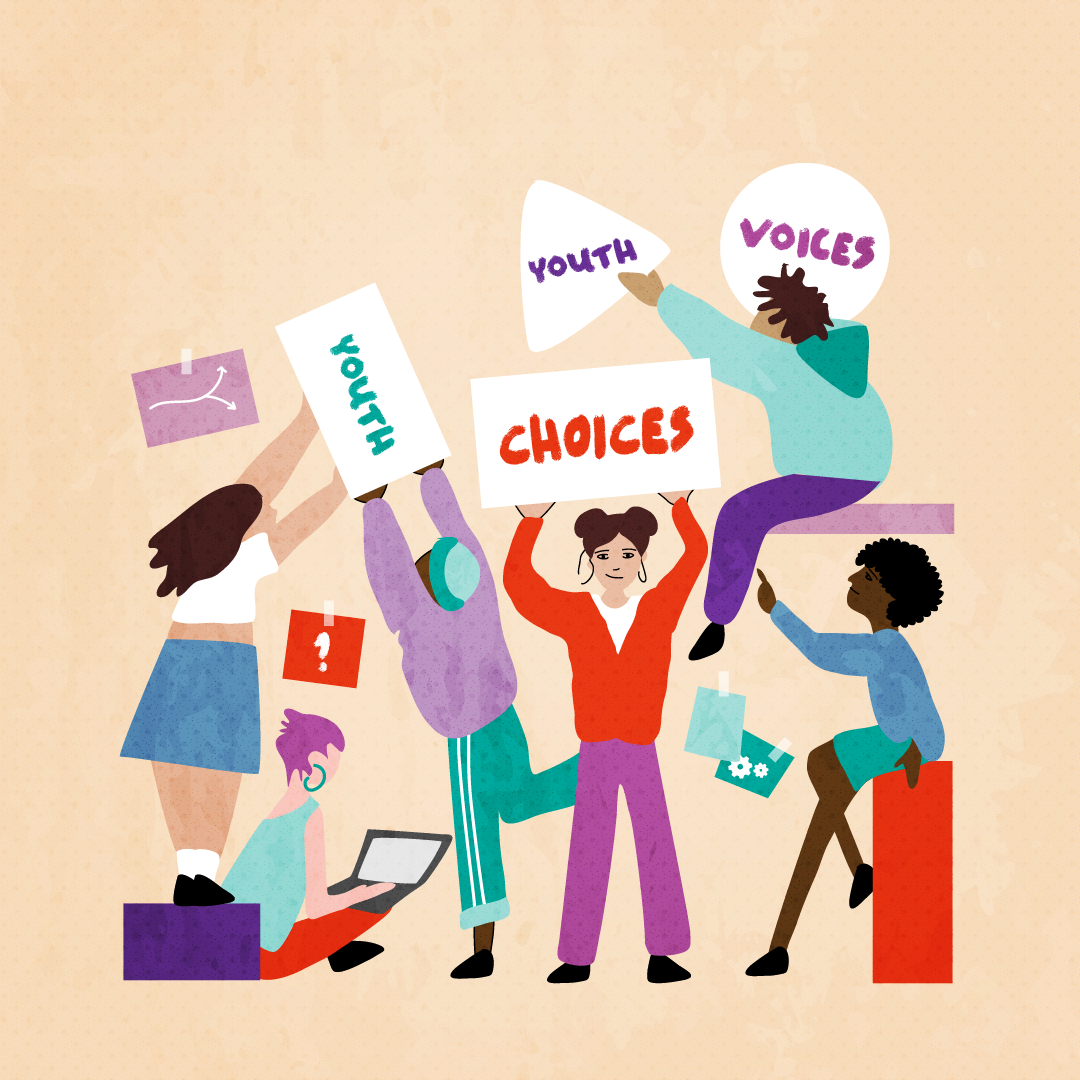
YVYC illustration of young people
25 October 2022

"The internet can sometimes be an obstacle to health and wellbeing. We need doctors to give us the right information."

We spoke to young people from the Western Balkans about how their access to sexual and reproductive health and rights was affected by the COVID pandemic, and asked them about their vision for re-designing a more youth-friendly future in which young people can flourish.  Tarin Husic is a 21-year-old student from Sarajevo, Bosnia and Herzegovina. Tarin, describe your experience of access to SRHR* education, information and care before and during COVID. Before COVID I was in high school where we had a few different education sessions and lectures about this topic. As we were not that familiar with a lot of things regarding SRHR, that was the time we should have been learning about it. After the pandemic started, life turned upside down and everything strived to be held online. During COVID, I had some problems relating to SRHR, so I wanted to inform myself more and more. One of the ways was to surf the internet and find all the necessary information. Doctors were better options, as we can take them more seriously. They would always draw my attention to SRHR-related issues, and in that way, I was able to gain knowledge and more information.   Did anything change for the better for you during the pandemic in terms of access to SRHR? During the pandemic, I had a lot of time to think about things like SRHR and to pay more attention to my health in general. The internet was full of different information, including SRHR. I think that education, especially after the peak of the pandemic, should be taken more seriously, since there is a chance that people will pay much more attention to their health and how to improve it, or how to protect themselves, after surviving all those moments of isolation and restrictions.   What was the biggest obstacle to your SRHR during the pandemic? How could decision-makers/medical professionals have removed this obstacle?   Honestly, the internet sometimes can be an obstacle. You always find the harshest facts and information, besides what is useful. As you read all those things, your thoughts become more negative, and you start thinking in the wrong direction. Doctors' role is to give us the right information - otherwise we get carried away. We need them to be available and able to explain things, as well as drawing our attention to what is most important.   What lessons should governments and professionals who work with youth learn from the pandemic about how to look after young people’s health and wellbeing in a crisis? I think the best way is to talk to young people and to see in which direction they are thinking, to try changing their perspectives to be as positive as possible. Young people are very often afraid to freely express themselves about something they need or about anything that is in their thoughts, and that should be taken into consideration. Sometimes they need to be given space to relax and talk about SRHR openly, since it is not yet a common topic in our surroundings.   What is your number 1 recommendation on what is needed to make services more youth-friendly? I think that workshops, projects, and educational programs could be very useful to raise young people’s the awareness, knowledge and skills, since this topic tends to be avoided at our age. It would be important to try and organize some kind of education or just workshops that would keep young people interested. Then the topic would become less taboo and people would talk more openly about it, because in our country not many people have developed a culture of talking about topics like SRHR.   * SRHR = sexual and reproductive health and rights Interview conducted by Ajla-Ena Burnazovic, a member of the regional youth group of the IPPF EN project Youth Voices, Youth Choices, funded by MSD for Mothers

YVYC illustration of young people
25 October 2022

"Care providers need more training so that they have the knowledge to answer young people's questions."

We spoke to young people from the Western Balkans about how their access to sexual and reproductive health and rights was affected by the COVID pandemic, and asked them about their vision for re-designing a more youth-friendly future in which young people can flourish.  This 23-year-old LGBTIQ man from Bosnia and Herzegovina is a medical worker and an activist for youth SRHR*. As a volunteer peer educator, he supports other young people to learn and develop crucial life skills relating to their sexual and reproductive health.   Describe your experience of access to SRHR education, information and care before and during COVID. Before COVID, I received information through some NGOs and if I went directly to the doctor. Very little was said about these topics in our country and information was only visible if I searched for it myself. Then during the pandemic everything moved to the internet and a lot of information started to be shared on social networks.   Did anything change for the better for you during the pandemic in terms of access to SRHR? The pandemic has helped a lot in terms of better content and more accurate information on the internet. A new trend has been born, where influencers started to create content and dedicate their profiles to these topics. Thanks to the excellent response, this trend continued even after COVID and became part of everyday life. We forgot how to do things in person, so we left a lot of it to online platforms. I think that no matter how many shortcomings there are, it is very good because of the availability of information to everyone.   What was the biggest obstacle to your SRHR during the pandemic? How could decision-makers/medical professionals have improved this?   Unfortunately, during the pandemic, SRHR was not always in focus because of the “war” response to the virus. The high death rate and people’s fear of COVID meant that there was not much focus on the topic, and little media attention. People sadly still don’t understand the importance of SRHR. What could have changed is that doctors and politicians should have spoken more publicly about this topic and raised people’s awareness, but unfortunately they didn't do that.   What lessons should governments and professionals who work with youth learn from the pandemic about how to look after young people’s health and wellbeing in a crisis? A very important lesson they should have learned is that they were not taking the right approach towards young people. If we have interesting and educational content, peer educators and youth leaders can easily reach them. It’s important to talk about taboo topics that every young person faces. We can only achieve change by changing the approach and understanding their needs.   What is your number 1 recommendation on what is needed to make services more youth-friendly? I recommend that more workshops be held to provide information to health workers and people who work directly with young people so that they can provide answers to their questions. Care and support providers are often prevented from providing young people with accurate information because they themselves learn and receive information in an old-fashioned way. Lack of knowledge is the key to the problem.   * SRHR = sexual and reproductive health and rights Interview conducted by Azra Mehmedovic, a member of the regional youth group of the IPPF EN project Youth Voices, Youth Choices, funded by MSD for Mothers

YVYC illustration of group of young people
25 October 2022

"I have managed to help people feel happier with themselves and in their bodies."

We spoke to young people from the Western Balkans about how their access to sexual and reproductive health and rights was affected by the COVID pandemic, and asked them about their vision for re-designing a more youth-friendly future in which young people can flourish.  Lana is a 17-year-old from Bosnia and Herzegovina who works as a volunteer peer educator, supporting other young people to develop crucial life skills relating to SRHR*.   Lana, describe your experience of access to SRHR education, information and care before and during COVID. In terms of overall SRHR education before and during COVID-19, I was very uneducated. At the beginning, I was 14 years old, so personally, I considered talking about SRHR topics very embarrassing and taboo. I was a kid and did not know that it is totally normal and important to talk about SRHR at that age. I live in a country where it is usually seen as “weird” to talk about SRHR, especially at my age at the time, so I felt like I shouldn’t participate in discussions on the topic. I was very uninformed and took minimal care of myself as regards SRHR, especially during COVID. It was a very hard time for everyone, and I was still finding myself, so it was really difficult for me to put priorities in the right place, especially with everything closed down; I had no access to any kind of SRHR education.   Did anything change for the better for you during the pandemic in terms of access to SRHR? How are things now? Sadly, nothing changed for the better during the pandemic. I was still just a kid and SRHR was a taboo topic for me and I was very uninformed. Luckily, after the pandemic, I started to realize that it’s totally normal and important to talk about sexual and reproductive health. Now I tend to help everyone who feels unsafe talking about it to realize that it is not taboo, as I used to think, and actually very important. I feel safe in my own body and I make sure I access education about SRHR as much as I need to. I make sure to take care of myself as regards to healthcare and I have been feeling a lot better, happier and safer since.   What was the biggest obstacle/challenge to your SRHR during the pandemic? How could decision-makers/medical professionals have removed this obstacle?   My biggest challenge was overcoming the fact that SRHR is not seen as a normal topic to talk about and cover, especially for a 14 year old. Speaking to a professional, either a medical professional or my parents, would have helped a lot. I would have felt safer talking about the topic and would have realized from a young age that it is a totally normal topic to cover and is important for keeping myself healthy and happy.   What lessons should governments and professionals who work with youth learn from the pandemic about how to look after young people’s health and wellbeing in a crisis? Listening. A lot of young people, including me, were afraid to open up. I lacked in-person communication and it has affected my SRHR education a lot. Personally, a heartfelt recommendation to professionals working with young people on this topic is to talk with them as much as they need to and as much as those young people feel the need to talk. I think it is very important for us to get heard and someone listening to our insecurities about talking over a specific topic would help youngsters open up and understand that it is not a taboo topic. COVID has made me realize that, if I have a question or a problem as regards to SRHR, I would want myself to be heard and for a professional to really listen to me and help me. I think it would help other young people a lot.   What is your number 1 recommendation on what is needed to make services more youth-friendly? What difference would this make in the life of a young person like you? Again, greater availability of professionals in health centres. It is very important for our voices and thoughts to be heard. It is a great way of helping us and making us understand that people really do listen to us and really do want to help us. It would help a lot, like it helped me.   What helped you to become engaged as a peer educator on SRHR? How has this experience been so far? I have been through a lot of things in life. I want to help people understand that it is okay if we all have our problems but I also want to help people lead their life in the right direction, overcoming those problems. I love helping people. I love seeing smiles on their faces after something that they thought might ruin their day and then overcoming it. It is the most beautiful thing ever. I want to educate people on various topics and help them understand that we, young people, are as much of a person as adults are. We have our own problems too. We also want to be heard. We also want to get educated on topics that are socially labelled as “inappropriate to youngsters”, but are as a matter of fact, just put that way by society and are totally normal to be addressed from teenage years. My experience as an educator has been wonderful. I had managed to help people open up, feel happier with themselves and in their bodies and realize that life is beautiful if you make it your own utopia. I love this hobby of mine and hope to continue it as long as I can.   * SRHR = sexual and reproductive health and rights Interview conducted by the Institute for Population and Development, IPPF's member in BiH, as part of the project  Youth Voices, Youth Choices, funded by MSD for Mothers

YVYC illustration of young people
25 October 2022

"It's so important in a crisis like COVID that nobody gets left behind."

We spoke to young people from the Western Balkans about how their access to sexual and reproductive health and rights was affected by the COVID pandemic, and asked them about their vision for re-designing a more youth-friendly future in which young people can flourish.  Timur is a 17-year-old from Bosnia and Herzegovina who works as a volunteer peer educator, supporting other young people to develop crucial life skills relating to SRHR*.   Timur, describe your experience of access to SRHR education, information and care before and during COVID.  Before COVID, it was much easier to work on trainings and projects related to SRHR. Everything was done live and with the mutual interaction of participants and lecturers. Although we quickly adjusted during the pandemic, communication was difficult without live contact, but we successfully kept things going. As a peer educator and a young person, I had great access to information about SRHR. I knew who to turn to, but most other young people didn't. During COVID it was very difficult to find accurate information about SRHR.   Did anything change for the better during the pandemic in terms of access to SRHR? If so, has this continued since COVID is no longer an urgent crisis?  Yes, the pandemic has allowed us to get to know online tools better, and this enables us to process some topics in a much more interesting way. We have continued to use some methods we discovered in the first phase of COVID because we saw that they were easier but also better or more interesting for the participants themselves.    What was the biggest obstacle to your SRHR during the pandemic? The biggest challenge for peer educators was how to reach young people to provide information about SRHR. But even for me as a young person it was very difficult to find information and to reach professionals in health centres who deal with SRHR. The next challenge was that most of the NGOs in my vicinity closed their open centers and youth centers. Before the pandemic, young people could find all relevant information in these places. Now, most youth centres are open again, though some are working at reduced capacity.   What lessons should governments and professionals who work with youth learn from the pandemic about how to look after young people’s health and wellbeing in a crisis? I think it's important that authorities and health professionals learn how important it is to have a ready response to crisis situations. And how important it is that in situations like this, they "leave no one behind". They should focus even more on health and ensure the availability of services for vulnerable groups. The next thing that governments and health professionals could learn is that online tools are very important and can be useful.   What is your number 1 recommendation on what is needed to make services more youth-friendly? What difference would this make in the life of a young person like you? I think it is important to introduce many more online platforms that offer answers to young people's questions. That way we have access to accurate information. It would make a difference because young people would use accurate information they got from qualified people via the internet, where they spend a lot of time today, and not the false information they find on portals, written by people who are not experts in these topics.   What helped you to become engaged as a peer educator and activist for SRHR? How has this experience been so far? It helped me to get more involved when I saw how much benefit and importance it has, both for me and for all those who participate. With small steps, we change the consciousness of society and educate people about topics that are present in their environment.   * SRHR = sexual and reproductive health and rights Interview conducted by the Institute for Population and Development, IPPF's member in BiH, as part of the project  Youth Voices, Youth Choices, funded by MSD for Mothers  

Youth Voices, Youth Choices research report front cover
30 March 2022

Youth access to SRH information, education and care in the Balkans in COVID times

COVID-19 created the largest health and socio-economic crisis of our generation. Many health systems were pushed to the brink by restrictive measures rushed in to respond to the pandemic, resulting in the deprioritisation of some existing healthcare services. In almost all European countries, COVID-19 had a negative impact on the delivery of vital sexual and reproductive healthcare, including maternal health and family planning, for women and groups that face barriers to accessing care, including young people. The pandemic also uncovered weaknesses within our systems and exposed the fact that countries are not adequately prepared to deal with health emergencies. To help bring about positive change for young people, IPPF European Network is working to strengthen healthcare systems through the project Youth Voices, Youth Choices, and to remove all kinds of barriers preventing youth from accessing essential care in five Balkan countries: Albania; Bosnia & Herzegovina; Bulgaria, Kosovo and North Macedonia. We are focusing particularly on the needs of those living in remote areas, as well as those from communities that face challenging social conditions, such as the Roma. POLICY RECOMMENDATIONS In October 2022, IPPF EN launched a set of regional policy recommendations that call on decision-makers to listen to young people and uphold their SRHR as they build back health and social systems in the wake of the pandemic. Presented at the European Parliament on 26 October by youth advocates and experts, with the support of MEP Fred Matić, the recommendations were developed by a group of specialists who came together to develop a blueprint for designing systems that prioritise access to youth-friendly SRH care, and better support of young people’s health and well-being. The policy recommendations are available for download below. RESEARCH REPORT  As a basis for this work, in 2021 and early 2022, we conducted a study to provide us with a clearer picture of the impact of the pandemic on young people’s SRHR. The data was published in a series of reports presenting the findings of the study, carried out by and among youth in five Balkan countries. The reports, available for download below, document young people’s SRH needs and experiences and the perspectives of healthcare providers and other relevant stakeholders on these needs. They also capture the latter’s needs as they deliver services, information and education to young people, building on their experience of COVID-19. YOUTH VOICES Young people are at the heart of this work. They were part of the teams that carried out the research presented in the reports below. They participated in the expert groups that developed our regional recommendations for policy change (below) at national and regional level, and they are being supported and empowered to advocate for these changes. Youth were also in the lead at our 'Healthy Youth – Healthy Future' multi-stakeholder meeting in Tirana in spring 2023, where together with staff from our partner organisations they held discussions with decision-makers and experts from the field, concluding with the signing of a joint declaration on protecting the health and social wellbeing of young people during and beyond moments of crisis - available for download below.     Young people also carried out a series of interviews among their peers to share stories of how the pandemic affected their access to SRHR, and what their vision is for a more youth-friendly future that listens to the younger generations and upholds their SRHR.

Association XY
21 October 2019

"I found out that I can say sorry, in a different way. And it became my mission"

We talked with Feđa Mehmedović, Programme Leader at Association XY (IPPF’s Member Association in Bosnia and Herzegovina) about his experiences providing and advocating for relationship and sexuality education in his country.   Could you talk to me about the context for relationship and sexuality education in Bosnia & Herzegovina?  Bosnia & Herzegovina is divided into two entities - we have the Federation of Bosnia & Herzegovina and the entity of the Republika Srpska. It's quite a traditional country, with three key religious groups (Catholics, Muslims, Orthodox) that are each involved in the politics of the country. Almost two decades ago, just after the war, the Minister of Education introduced religious classes in primary and high schools. But parents raised their voices and wanted to have an alternative. The Ministry introduced a second subject, which was also a religious one, and then parents raised their voices again. So the Ministry agreed that it needed to introduce a third subject – this was the entry point for healthy lifestyles, the first time relationship and sexuality education entered formal education. So the political context in Bosnia & Herzegovina is influenced by religious groups, can you talk about your experiences working with these groups to advance relationship and sexuality education? We wanted to introduce relationship and sexuality education in religious communities, but when we tried to collaborate it was impossible. We were blacklisted as an NGO that was promoting sexual and reproductive health and rights because they link these rights to LGBT groups, which they perceive as harmful to society. But we then identified two people from Islamic religious communities who are Imams, and who are really open-minded. I have found out that we - all of us - have a lot of prejudice from both sides. Religious communities found that NGOs avoid collaboration with them. We are talking offensively from both sides, and we don’t provide enough space where we can meet each other and work together. Did you receive relationship and sexuality education when you were growing up? No. No it was a horrible experience in primary and secondary school because not even puberty was covered – we talked only about the physical change; that we will get hair, that the voice will change, and that was it. I had a stressful puberty because I had problems understanding myself. I asked for almost one year, every day – ‘am I normal? am I different?’ And I didn't have anyone to respond or to provide me with answers to these questions. Puberty for young people is so important because it's not about growing hair – it's about you, it’s about your self-image, social norms, gender norms, gender identity, pleasure, relationships – healthy relationships, unhealthy relationships, having sex. It's about everything. There are so many questions and you have to find answers to these questions. But in a society like ours parents are not open to talking about it – they didn't receive support to build the capacity to talk about it. And that's why education on puberty is something we are fighting for. What motivated you to become a champion for sexuality education? When I was growing up, I had a lot of prejudice towards the LGBTQI population. I didn't understand them, but my attitudes weren’t driven by information or personal experience. It's like when you rent an attitude from someone else – you take it from someone else, you don't have a critical understanding of it or know why you believe something like that. Then, at the end of high school, I became a peer educator and started teaching people and having contact with people who were gay or lesbian, and I started understanding that they are completely the same as I am. I found out that I can say sorry, in a different way - by working on relationship and sexuality education. And it became my mission. If you could imagine the perfect future for relationship and sexuality education in Bosnia and Herzegovina, what would it look like? That every young person can get information relevant for their health, for themselves. Information not only from a health perspective, but from a personal perspective – so that they can express themselves. Every person is unique, different, there is no reason for all of us to be the same. All bodies are beautiful and all people are beautiful, sometimes we just don't understand each other.    Interview conducted by Eimear Sparks, IPPF EN

patrick-tomasso-Oaqk7qqNh_c-unsplash.jpg

Responsibility for sexual health brings happiness in Bosnia and Herzegovina

Borislav is a 22-year-old gay man living in Sarajevo. Bosnia and Herzegovina is a country with deep-rooted patriarchal values in many segments of society, very resistant to change, especially when it comes to sexual orientation. Negative attitudes and harassment towards the LGBTI community remains an issue. Association XY provides services to marginalized populations, including LGBTI individuals. “Noticing how people spoke about homosexuals, I came to the conclusion that being gay was bad. I decided to shut it out, forget about it. What else could I do? I couldn't change and was terrified of revealing my secret. I became introverted and kept a low profile, so as not to draw attention to myself. My main anxiety was the prospect of telling my parents that I was gay. Recently, I came out to my family. Since then my life has turned upside down. My parents didn’t deal with it very well, and they think it’s an illness. They have been controlling almost every move I make since then and they even had taken me to the psychologist. Apparently, no one noticed my depression, no one noticed my sadness. I felt alone. I started to feel depressed and I desperately needed someone to talk with. And one day on social network for gay people, I saw a profile for Association XY.  After some time, I decided to go to the drop-in-centre in Sarajevo. Their welcome was very warm, friendly; they offered me coffee and some refreshment. Then I had strictly confidential talk with coordinator of the drop-in-centre. I talked to this guy and he helped me realize a few very important things. He helped me to bring out happiness in me that I thought I lost. I know I have a long way ahead of me but this guy helped me to find a right way to go. Further, I’ve found myself ready to test myself on HIV and, thanks to Association XY, I feel like a more responsible and aware person when it comes to my health. In some way, they helped me to help myself and I am thankful for that.” Association XY is a non-governmental, non-political, non-profitable organization which works to improve sexual and reproductive health for all in Bosnia and Herzegovina, including the LGBTI community. It runs one main clinic which promotes equal access to SRH information, education and services, and it advocates at government level for the adoption of improved SRH policies.

Institute for Population and Development

The Institute for Population and Development is a non-governmental, non-political, non-profitable organization which works to improve sexual and reproductive health (SRH) in Bosnia and Herzegovina.

Its main clinic promotes equal access to SRH information, education and services, and it advocates at government level for the adoption of improved SRH policies.

Through widespread information programmes, it raises public awareness of family planning and SRH rights.

Contact: Youtube

#IDAHOT2015 - Stories from LGBTI youth across the Federation. 'LGBTI youth' is the focus of this year's International Day Against Homophobia, Transphobia and Biphobia
18 May 2015

Responsibility for sexual health brings happiness in Bosnia and Herzegovina

#IDAHOT2015 - Stories from LGBTI youth across the Federation. 'LGBTI youth' is the focus of this year's International Day Against Homophobia, Transphobia and Biphobia   The IPPF Sexual Diversity Network has published a compilation of stories to mark the International Day Against Homophobia, Transphobia and Biphobia (IDAHOT) on 17 May 2015. In recognition of this year's global campaign focus on ‘LGBTI Youth’, these stories highlight the commitment of the IPPF Member Associations that directly support and uphold the sexual rights of young people of diverse sexual and gender identities, including lesbian, gay, bisexual, transgender and intersex (LGBTI) young people.   The broad breadth of their work include partnering with the LGBTI community, including young people; creating safe spaces for LGBTI young people; making services accessible and appropriate for LGBTI young people; and increasing public awareness and advocacy of LGBTI issues, including comprehensive sexuality education. Each story is from the voice of a young person involved in the Member Association's work with LGBTI youth, and describes the impact this support has had on their lives, as well as other young people    Here is the story of Borislav   Borislav is a 22-year-old gay man living in Sarajevo. Bosnia and Herzegovina is a country with deep-rooted patriarchal values in many segments of society, very resistant to change, especially when it comes to sexual orientation. Negative attitudes and harassment towards the LGBTI community remains an issue. Association XY provides services to marginalized populations, including LGBTI individuals. “Noticing how people spoke about homosexuals, I came to the conclusion that being gay was bad. I decided to shut it out, forget about it. What else could I do? I couldn't change and was terrified of revealing my secret. I became introverted and kept a low profile, so as not to draw attention to myself. My main anxiety was the prospect of telling my parents that I was gay. Recently, I came out to my family. Since then my life has turned upside down. My parents didn’t deal with it very well, and they think it’s an illness. They have been controlling almost every move I make since then and they even had taken me to the psychologist. Apparently, no one noticed my depression, no one noticed my sadness. I felt alone. I started to feel depressed and I desperately needed someone to talk with. And one day on social network for gay people, I saw a profile for Association XY.  After some time, I decided to go to the drop-in-centre in Sarajevo. Their welcome was very warm, friendly; they offered me coffee and some refreshment. Then I had strictly confidential talk with coordinator of the drop-in-centre. I talked to this guy and he helped me realize a few very important things. He helped me to bring out happiness in me that I thought I lost. I know I have a long way ahead of me but this guy helped me to find a right way to go. Further, I’ve found myself ready to test myself on HIV and, thanks to Association XY, I feel like a more responsible and aware person when it comes to my health. In some way, they helped me to help myself and I am thankful for that.”   Association XY is a non-governmental, non-political, non-profitable organization which works to improve sexual and reproductive health for all in Bosnia and Herzegovina, including the LGBTI community. It runs one main clinic which promotes equal access to SRH information, education and services, and it advocates at government level for the adoption of improved SRH policies. All young people, including young lesbian, gay, bisexual, transgender & intersex people, have the right to grow up in safe and welcoming environments, where they can develop their personalities and talents respectfully of their individualities. This right is guaranteed under international human rights law, however young people are specifically at high risk of being exposed to homophobic, transphobic or biphobic attitudes and expressions within the family, educational institutions, the health system, and social settings. Health issues are also an area of concern for young LGBTI people, including sexual and reproductive health. Often information and services are not inclusive of diverse sexual orientations or gender identities, denying access to the information and support required to maintain health and well-being. Young transgender and intersex people face particular challenges, including access to appropriate treatment.  For more information about IDAHOT and the global focus on LGBTI youth:   http://dayagainsthomophobia.org/in-2015-take-action-for-lgbti-youth/  
Youth Voices, Youth Choices youth group
01 June 2023

Youth Voices, Youth Choices

Young people and groups with vulnerabilities in the Western Balkans face a great many barriers to accessing sexual and reproductive healthcare. Throughout the COVID-19 pandemic, they bore the brunt of additional obstacles to accessing information, support and care. COVID-19 demonstrated how fragile national health systems are and highlighted countries’ unpreparedness to deal with health emergencies. But it also stimulated creativity by civil society and other actors to counter these barriers, with digital outreach and support playing an expanding, crucial role. Youth Voices, Youth Choices is a project dedicated to learning from the COVID-19 experience in the Western Balkans to ensure sexual and reproductive health services, information and education become more accessible and youth-friendly in the long term, especially for marginalised groups. Running from 2020 until 2023, it brings together IPPF members and partners in Albania, Bosnia and Herzegovina, Bulgaria, North Macedonia and Kosovo, supported by IPPF EN’s Regional Office. Project partners have conducted research into the impact of the pandemic on young people’s SRH needs and access to services and information, and the role of integrated digital services, with a focus on communities living in remote areas and unfavourable social conditions. They are sharing good practices and empowering young people as campaigners and advocates using digital and offline education tools. And working in multi-stakeholder partnerships, they are developing policy recommendations to support advocacy and youth-led campaigns for stronger health systems and increased access to care, in and beyond emergency situations. In October 2022, IPPF EN launched a set of regional policy recommendations based on our research into how the pandemic affected young people. All partners also created national recommendations. Collectively, we built upon these through regional and national advocacy campaigns and actions. Check out our YVYC resources page! Take a look at our series of interviews carried out by young people with their peers on how COVID affected their access to SRHR information, education and care, and their vision for the future. RESEARCH REPORT  As a basis for this work, in 2021 and early 2022, we conducted a study to provide us with a clearer picture of the impact of the pandemic on young people’s SRHR. The data was published in a series of reports presenting the findings of the study, carried out by and among youth in five Balkan countries. The reports, available for download below, document young people’s SRH needs and experiences and the perspectives of healthcare providers and other relevant stakeholders on these needs. They also capture the latter’s needs as they deliver services, information and education to young people, building on their experience of COVID-19. POLICY RECOMMENDATIONS In October 2022, IPPF EN launched a set of regional policy recommendations that call on decision-makers to listen to young people and uphold their SRHR as they build back health and social systems in the wake of the pandemic. Presented at the European Parliament on 26 October by youth advocates and experts, with the support of MEP Fred Matić, the recommendations were developed by a group of specialists who came together to develop a blueprint for designing systems that prioritise access to youth-friendly SRH care, and better support of young people’s health and well-being. The policy recommendations are available for download below. The policy recommendations were used to set advocacy priorities for further actions and campaigning. YOUTH VOICES Young people are at the heart of this work: as researchers, as members of the expert groups that developed policy recommendations, and as advocates and campaigners for change. They were also in the lead at the 'Healthy Youth – Healthy Future' multi-stakeholder meeting in Tirana in spring 2023, where youth representatives and staff from our partner organisations came together with decision-makers and experts from the field - see Tirana joint declaration on protecting the health and social wellbeing of young people. The young participants presented advocacy campaigns carried out at regional and national levels, and shared their needs and experiences at an event held in the Albanian parliament. For more information about this work, please contact us at: [email protected]           This work is funded by MSD for Mothers.

YVYC illustration of young people
25 October 2022

"The internet can sometimes be an obstacle to health and wellbeing. We need doctors to give us the right information."

We spoke to young people from the Western Balkans about how their access to sexual and reproductive health and rights was affected by the COVID pandemic, and asked them about their vision for re-designing a more youth-friendly future in which young people can flourish.  Tarin Husic is a 21-year-old student from Sarajevo, Bosnia and Herzegovina. Tarin, describe your experience of access to SRHR* education, information and care before and during COVID. Before COVID I was in high school where we had a few different education sessions and lectures about this topic. As we were not that familiar with a lot of things regarding SRHR, that was the time we should have been learning about it. After the pandemic started, life turned upside down and everything strived to be held online. During COVID, I had some problems relating to SRHR, so I wanted to inform myself more and more. One of the ways was to surf the internet and find all the necessary information. Doctors were better options, as we can take them more seriously. They would always draw my attention to SRHR-related issues, and in that way, I was able to gain knowledge and more information.   Did anything change for the better for you during the pandemic in terms of access to SRHR? During the pandemic, I had a lot of time to think about things like SRHR and to pay more attention to my health in general. The internet was full of different information, including SRHR. I think that education, especially after the peak of the pandemic, should be taken more seriously, since there is a chance that people will pay much more attention to their health and how to improve it, or how to protect themselves, after surviving all those moments of isolation and restrictions.   What was the biggest obstacle to your SRHR during the pandemic? How could decision-makers/medical professionals have removed this obstacle?   Honestly, the internet sometimes can be an obstacle. You always find the harshest facts and information, besides what is useful. As you read all those things, your thoughts become more negative, and you start thinking in the wrong direction. Doctors' role is to give us the right information - otherwise we get carried away. We need them to be available and able to explain things, as well as drawing our attention to what is most important.   What lessons should governments and professionals who work with youth learn from the pandemic about how to look after young people’s health and wellbeing in a crisis? I think the best way is to talk to young people and to see in which direction they are thinking, to try changing their perspectives to be as positive as possible. Young people are very often afraid to freely express themselves about something they need or about anything that is in their thoughts, and that should be taken into consideration. Sometimes they need to be given space to relax and talk about SRHR openly, since it is not yet a common topic in our surroundings.   What is your number 1 recommendation on what is needed to make services more youth-friendly? I think that workshops, projects, and educational programs could be very useful to raise young people’s the awareness, knowledge and skills, since this topic tends to be avoided at our age. It would be important to try and organize some kind of education or just workshops that would keep young people interested. Then the topic would become less taboo and people would talk more openly about it, because in our country not many people have developed a culture of talking about topics like SRHR.   * SRHR = sexual and reproductive health and rights Interview conducted by Ajla-Ena Burnazovic, a member of the regional youth group of the IPPF EN project Youth Voices, Youth Choices, funded by MSD for Mothers

YVYC illustration of young people
25 October 2022

"Care providers need more training so that they have the knowledge to answer young people's questions."

We spoke to young people from the Western Balkans about how their access to sexual and reproductive health and rights was affected by the COVID pandemic, and asked them about their vision for re-designing a more youth-friendly future in which young people can flourish.  This 23-year-old LGBTIQ man from Bosnia and Herzegovina is a medical worker and an activist for youth SRHR*. As a volunteer peer educator, he supports other young people to learn and develop crucial life skills relating to their sexual and reproductive health.   Describe your experience of access to SRHR education, information and care before and during COVID. Before COVID, I received information through some NGOs and if I went directly to the doctor. Very little was said about these topics in our country and information was only visible if I searched for it myself. Then during the pandemic everything moved to the internet and a lot of information started to be shared on social networks.   Did anything change for the better for you during the pandemic in terms of access to SRHR? The pandemic has helped a lot in terms of better content and more accurate information on the internet. A new trend has been born, where influencers started to create content and dedicate their profiles to these topics. Thanks to the excellent response, this trend continued even after COVID and became part of everyday life. We forgot how to do things in person, so we left a lot of it to online platforms. I think that no matter how many shortcomings there are, it is very good because of the availability of information to everyone.   What was the biggest obstacle to your SRHR during the pandemic? How could decision-makers/medical professionals have improved this?   Unfortunately, during the pandemic, SRHR was not always in focus because of the “war” response to the virus. The high death rate and people’s fear of COVID meant that there was not much focus on the topic, and little media attention. People sadly still don’t understand the importance of SRHR. What could have changed is that doctors and politicians should have spoken more publicly about this topic and raised people’s awareness, but unfortunately they didn't do that.   What lessons should governments and professionals who work with youth learn from the pandemic about how to look after young people’s health and wellbeing in a crisis? A very important lesson they should have learned is that they were not taking the right approach towards young people. If we have interesting and educational content, peer educators and youth leaders can easily reach them. It’s important to talk about taboo topics that every young person faces. We can only achieve change by changing the approach and understanding their needs.   What is your number 1 recommendation on what is needed to make services more youth-friendly? I recommend that more workshops be held to provide information to health workers and people who work directly with young people so that they can provide answers to their questions. Care and support providers are often prevented from providing young people with accurate information because they themselves learn and receive information in an old-fashioned way. Lack of knowledge is the key to the problem.   * SRHR = sexual and reproductive health and rights Interview conducted by Azra Mehmedovic, a member of the regional youth group of the IPPF EN project Youth Voices, Youth Choices, funded by MSD for Mothers

YVYC illustration of group of young people
25 October 2022

"I have managed to help people feel happier with themselves and in their bodies."

We spoke to young people from the Western Balkans about how their access to sexual and reproductive health and rights was affected by the COVID pandemic, and asked them about their vision for re-designing a more youth-friendly future in which young people can flourish.  Lana is a 17-year-old from Bosnia and Herzegovina who works as a volunteer peer educator, supporting other young people to develop crucial life skills relating to SRHR*.   Lana, describe your experience of access to SRHR education, information and care before and during COVID. In terms of overall SRHR education before and during COVID-19, I was very uneducated. At the beginning, I was 14 years old, so personally, I considered talking about SRHR topics very embarrassing and taboo. I was a kid and did not know that it is totally normal and important to talk about SRHR at that age. I live in a country where it is usually seen as “weird” to talk about SRHR, especially at my age at the time, so I felt like I shouldn’t participate in discussions on the topic. I was very uninformed and took minimal care of myself as regards SRHR, especially during COVID. It was a very hard time for everyone, and I was still finding myself, so it was really difficult for me to put priorities in the right place, especially with everything closed down; I had no access to any kind of SRHR education.   Did anything change for the better for you during the pandemic in terms of access to SRHR? How are things now? Sadly, nothing changed for the better during the pandemic. I was still just a kid and SRHR was a taboo topic for me and I was very uninformed. Luckily, after the pandemic, I started to realize that it’s totally normal and important to talk about sexual and reproductive health. Now I tend to help everyone who feels unsafe talking about it to realize that it is not taboo, as I used to think, and actually very important. I feel safe in my own body and I make sure I access education about SRHR as much as I need to. I make sure to take care of myself as regards to healthcare and I have been feeling a lot better, happier and safer since.   What was the biggest obstacle/challenge to your SRHR during the pandemic? How could decision-makers/medical professionals have removed this obstacle?   My biggest challenge was overcoming the fact that SRHR is not seen as a normal topic to talk about and cover, especially for a 14 year old. Speaking to a professional, either a medical professional or my parents, would have helped a lot. I would have felt safer talking about the topic and would have realized from a young age that it is a totally normal topic to cover and is important for keeping myself healthy and happy.   What lessons should governments and professionals who work with youth learn from the pandemic about how to look after young people’s health and wellbeing in a crisis? Listening. A lot of young people, including me, were afraid to open up. I lacked in-person communication and it has affected my SRHR education a lot. Personally, a heartfelt recommendation to professionals working with young people on this topic is to talk with them as much as they need to and as much as those young people feel the need to talk. I think it is very important for us to get heard and someone listening to our insecurities about talking over a specific topic would help youngsters open up and understand that it is not a taboo topic. COVID has made me realize that, if I have a question or a problem as regards to SRHR, I would want myself to be heard and for a professional to really listen to me and help me. I think it would help other young people a lot.   What is your number 1 recommendation on what is needed to make services more youth-friendly? What difference would this make in the life of a young person like you? Again, greater availability of professionals in health centres. It is very important for our voices and thoughts to be heard. It is a great way of helping us and making us understand that people really do listen to us and really do want to help us. It would help a lot, like it helped me.   What helped you to become engaged as a peer educator on SRHR? How has this experience been so far? I have been through a lot of things in life. I want to help people understand that it is okay if we all have our problems but I also want to help people lead their life in the right direction, overcoming those problems. I love helping people. I love seeing smiles on their faces after something that they thought might ruin their day and then overcoming it. It is the most beautiful thing ever. I want to educate people on various topics and help them understand that we, young people, are as much of a person as adults are. We have our own problems too. We also want to be heard. We also want to get educated on topics that are socially labelled as “inappropriate to youngsters”, but are as a matter of fact, just put that way by society and are totally normal to be addressed from teenage years. My experience as an educator has been wonderful. I had managed to help people open up, feel happier with themselves and in their bodies and realize that life is beautiful if you make it your own utopia. I love this hobby of mine and hope to continue it as long as I can.   * SRHR = sexual and reproductive health and rights Interview conducted by the Institute for Population and Development, IPPF's member in BiH, as part of the project  Youth Voices, Youth Choices, funded by MSD for Mothers

YVYC illustration of young people
25 October 2022

"It's so important in a crisis like COVID that nobody gets left behind."

We spoke to young people from the Western Balkans about how their access to sexual and reproductive health and rights was affected by the COVID pandemic, and asked them about their vision for re-designing a more youth-friendly future in which young people can flourish.  Timur is a 17-year-old from Bosnia and Herzegovina who works as a volunteer peer educator, supporting other young people to develop crucial life skills relating to SRHR*.   Timur, describe your experience of access to SRHR education, information and care before and during COVID.  Before COVID, it was much easier to work on trainings and projects related to SRHR. Everything was done live and with the mutual interaction of participants and lecturers. Although we quickly adjusted during the pandemic, communication was difficult without live contact, but we successfully kept things going. As a peer educator and a young person, I had great access to information about SRHR. I knew who to turn to, but most other young people didn't. During COVID it was very difficult to find accurate information about SRHR.   Did anything change for the better during the pandemic in terms of access to SRHR? If so, has this continued since COVID is no longer an urgent crisis?  Yes, the pandemic has allowed us to get to know online tools better, and this enables us to process some topics in a much more interesting way. We have continued to use some methods we discovered in the first phase of COVID because we saw that they were easier but also better or more interesting for the participants themselves.    What was the biggest obstacle to your SRHR during the pandemic? The biggest challenge for peer educators was how to reach young people to provide information about SRHR. But even for me as a young person it was very difficult to find information and to reach professionals in health centres who deal with SRHR. The next challenge was that most of the NGOs in my vicinity closed their open centers and youth centers. Before the pandemic, young people could find all relevant information in these places. Now, most youth centres are open again, though some are working at reduced capacity.   What lessons should governments and professionals who work with youth learn from the pandemic about how to look after young people’s health and wellbeing in a crisis? I think it's important that authorities and health professionals learn how important it is to have a ready response to crisis situations. And how important it is that in situations like this, they "leave no one behind". They should focus even more on health and ensure the availability of services for vulnerable groups. The next thing that governments and health professionals could learn is that online tools are very important and can be useful.   What is your number 1 recommendation on what is needed to make services more youth-friendly? What difference would this make in the life of a young person like you? I think it is important to introduce many more online platforms that offer answers to young people's questions. That way we have access to accurate information. It would make a difference because young people would use accurate information they got from qualified people via the internet, where they spend a lot of time today, and not the false information they find on portals, written by people who are not experts in these topics.   What helped you to become engaged as a peer educator and activist for SRHR? How has this experience been so far? It helped me to get more involved when I saw how much benefit and importance it has, both for me and for all those who participate. With small steps, we change the consciousness of society and educate people about topics that are present in their environment.   * SRHR = sexual and reproductive health and rights Interview conducted by the Institute for Population and Development, IPPF's member in BiH, as part of the project  Youth Voices, Youth Choices, funded by MSD for Mothers  

Youth Voices, Youth Choices research report front cover
30 March 2022

Youth access to SRH information, education and care in the Balkans in COVID times

COVID-19 created the largest health and socio-economic crisis of our generation. Many health systems were pushed to the brink by restrictive measures rushed in to respond to the pandemic, resulting in the deprioritisation of some existing healthcare services. In almost all European countries, COVID-19 had a negative impact on the delivery of vital sexual and reproductive healthcare, including maternal health and family planning, for women and groups that face barriers to accessing care, including young people. The pandemic also uncovered weaknesses within our systems and exposed the fact that countries are not adequately prepared to deal with health emergencies. To help bring about positive change for young people, IPPF European Network is working to strengthen healthcare systems through the project Youth Voices, Youth Choices, and to remove all kinds of barriers preventing youth from accessing essential care in five Balkan countries: Albania; Bosnia & Herzegovina; Bulgaria, Kosovo and North Macedonia. We are focusing particularly on the needs of those living in remote areas, as well as those from communities that face challenging social conditions, such as the Roma. POLICY RECOMMENDATIONS In October 2022, IPPF EN launched a set of regional policy recommendations that call on decision-makers to listen to young people and uphold their SRHR as they build back health and social systems in the wake of the pandemic. Presented at the European Parliament on 26 October by youth advocates and experts, with the support of MEP Fred Matić, the recommendations were developed by a group of specialists who came together to develop a blueprint for designing systems that prioritise access to youth-friendly SRH care, and better support of young people’s health and well-being. The policy recommendations are available for download below. RESEARCH REPORT  As a basis for this work, in 2021 and early 2022, we conducted a study to provide us with a clearer picture of the impact of the pandemic on young people’s SRHR. The data was published in a series of reports presenting the findings of the study, carried out by and among youth in five Balkan countries. The reports, available for download below, document young people’s SRH needs and experiences and the perspectives of healthcare providers and other relevant stakeholders on these needs. They also capture the latter’s needs as they deliver services, information and education to young people, building on their experience of COVID-19. YOUTH VOICES Young people are at the heart of this work. They were part of the teams that carried out the research presented in the reports below. They participated in the expert groups that developed our regional recommendations for policy change (below) at national and regional level, and they are being supported and empowered to advocate for these changes. Youth were also in the lead at our 'Healthy Youth – Healthy Future' multi-stakeholder meeting in Tirana in spring 2023, where together with staff from our partner organisations they held discussions with decision-makers and experts from the field, concluding with the signing of a joint declaration on protecting the health and social wellbeing of young people during and beyond moments of crisis - available for download below.     Young people also carried out a series of interviews among their peers to share stories of how the pandemic affected their access to SRHR, and what their vision is for a more youth-friendly future that listens to the younger generations and upholds their SRHR.

Association XY
21 October 2019

"I found out that I can say sorry, in a different way. And it became my mission"

We talked with Feđa Mehmedović, Programme Leader at Association XY (IPPF’s Member Association in Bosnia and Herzegovina) about his experiences providing and advocating for relationship and sexuality education in his country.   Could you talk to me about the context for relationship and sexuality education in Bosnia & Herzegovina?  Bosnia & Herzegovina is divided into two entities - we have the Federation of Bosnia & Herzegovina and the entity of the Republika Srpska. It's quite a traditional country, with three key religious groups (Catholics, Muslims, Orthodox) that are each involved in the politics of the country. Almost two decades ago, just after the war, the Minister of Education introduced religious classes in primary and high schools. But parents raised their voices and wanted to have an alternative. The Ministry introduced a second subject, which was also a religious one, and then parents raised their voices again. So the Ministry agreed that it needed to introduce a third subject – this was the entry point for healthy lifestyles, the first time relationship and sexuality education entered formal education. So the political context in Bosnia & Herzegovina is influenced by religious groups, can you talk about your experiences working with these groups to advance relationship and sexuality education? We wanted to introduce relationship and sexuality education in religious communities, but when we tried to collaborate it was impossible. We were blacklisted as an NGO that was promoting sexual and reproductive health and rights because they link these rights to LGBT groups, which they perceive as harmful to society. But we then identified two people from Islamic religious communities who are Imams, and who are really open-minded. I have found out that we - all of us - have a lot of prejudice from both sides. Religious communities found that NGOs avoid collaboration with them. We are talking offensively from both sides, and we don’t provide enough space where we can meet each other and work together. Did you receive relationship and sexuality education when you were growing up? No. No it was a horrible experience in primary and secondary school because not even puberty was covered – we talked only about the physical change; that we will get hair, that the voice will change, and that was it. I had a stressful puberty because I had problems understanding myself. I asked for almost one year, every day – ‘am I normal? am I different?’ And I didn't have anyone to respond or to provide me with answers to these questions. Puberty for young people is so important because it's not about growing hair – it's about you, it’s about your self-image, social norms, gender norms, gender identity, pleasure, relationships – healthy relationships, unhealthy relationships, having sex. It's about everything. There are so many questions and you have to find answers to these questions. But in a society like ours parents are not open to talking about it – they didn't receive support to build the capacity to talk about it. And that's why education on puberty is something we are fighting for. What motivated you to become a champion for sexuality education? When I was growing up, I had a lot of prejudice towards the LGBTQI population. I didn't understand them, but my attitudes weren’t driven by information or personal experience. It's like when you rent an attitude from someone else – you take it from someone else, you don't have a critical understanding of it or know why you believe something like that. Then, at the end of high school, I became a peer educator and started teaching people and having contact with people who were gay or lesbian, and I started understanding that they are completely the same as I am. I found out that I can say sorry, in a different way - by working on relationship and sexuality education. And it became my mission. If you could imagine the perfect future for relationship and sexuality education in Bosnia and Herzegovina, what would it look like? That every young person can get information relevant for their health, for themselves. Information not only from a health perspective, but from a personal perspective – so that they can express themselves. Every person is unique, different, there is no reason for all of us to be the same. All bodies are beautiful and all people are beautiful, sometimes we just don't understand each other.    Interview conducted by Eimear Sparks, IPPF EN

patrick-tomasso-Oaqk7qqNh_c-unsplash.jpg

Responsibility for sexual health brings happiness in Bosnia and Herzegovina

Borislav is a 22-year-old gay man living in Sarajevo. Bosnia and Herzegovina is a country with deep-rooted patriarchal values in many segments of society, very resistant to change, especially when it comes to sexual orientation. Negative attitudes and harassment towards the LGBTI community remains an issue. Association XY provides services to marginalized populations, including LGBTI individuals. “Noticing how people spoke about homosexuals, I came to the conclusion that being gay was bad. I decided to shut it out, forget about it. What else could I do? I couldn't change and was terrified of revealing my secret. I became introverted and kept a low profile, so as not to draw attention to myself. My main anxiety was the prospect of telling my parents that I was gay. Recently, I came out to my family. Since then my life has turned upside down. My parents didn’t deal with it very well, and they think it’s an illness. They have been controlling almost every move I make since then and they even had taken me to the psychologist. Apparently, no one noticed my depression, no one noticed my sadness. I felt alone. I started to feel depressed and I desperately needed someone to talk with. And one day on social network for gay people, I saw a profile for Association XY.  After some time, I decided to go to the drop-in-centre in Sarajevo. Their welcome was very warm, friendly; they offered me coffee and some refreshment. Then I had strictly confidential talk with coordinator of the drop-in-centre. I talked to this guy and he helped me realize a few very important things. He helped me to bring out happiness in me that I thought I lost. I know I have a long way ahead of me but this guy helped me to find a right way to go. Further, I’ve found myself ready to test myself on HIV and, thanks to Association XY, I feel like a more responsible and aware person when it comes to my health. In some way, they helped me to help myself and I am thankful for that.” Association XY is a non-governmental, non-political, non-profitable organization which works to improve sexual and reproductive health for all in Bosnia and Herzegovina, including the LGBTI community. It runs one main clinic which promotes equal access to SRH information, education and services, and it advocates at government level for the adoption of improved SRH policies.

Institute for Population and Development

The Institute for Population and Development is a non-governmental, non-political, non-profitable organization which works to improve sexual and reproductive health (SRH) in Bosnia and Herzegovina.

Its main clinic promotes equal access to SRH information, education and services, and it advocates at government level for the adoption of improved SRH policies.

Through widespread information programmes, it raises public awareness of family planning and SRH rights.

Contact: Youtube

#IDAHOT2015 - Stories from LGBTI youth across the Federation. 'LGBTI youth' is the focus of this year's International Day Against Homophobia, Transphobia and Biphobia
18 May 2015

Responsibility for sexual health brings happiness in Bosnia and Herzegovina

#IDAHOT2015 - Stories from LGBTI youth across the Federation. 'LGBTI youth' is the focus of this year's International Day Against Homophobia, Transphobia and Biphobia   The IPPF Sexual Diversity Network has published a compilation of stories to mark the International Day Against Homophobia, Transphobia and Biphobia (IDAHOT) on 17 May 2015. In recognition of this year's global campaign focus on ‘LGBTI Youth’, these stories highlight the commitment of the IPPF Member Associations that directly support and uphold the sexual rights of young people of diverse sexual and gender identities, including lesbian, gay, bisexual, transgender and intersex (LGBTI) young people.   The broad breadth of their work include partnering with the LGBTI community, including young people; creating safe spaces for LGBTI young people; making services accessible and appropriate for LGBTI young people; and increasing public awareness and advocacy of LGBTI issues, including comprehensive sexuality education. Each story is from the voice of a young person involved in the Member Association's work with LGBTI youth, and describes the impact this support has had on their lives, as well as other young people    Here is the story of Borislav   Borislav is a 22-year-old gay man living in Sarajevo. Bosnia and Herzegovina is a country with deep-rooted patriarchal values in many segments of society, very resistant to change, especially when it comes to sexual orientation. Negative attitudes and harassment towards the LGBTI community remains an issue. Association XY provides services to marginalized populations, including LGBTI individuals. “Noticing how people spoke about homosexuals, I came to the conclusion that being gay was bad. I decided to shut it out, forget about it. What else could I do? I couldn't change and was terrified of revealing my secret. I became introverted and kept a low profile, so as not to draw attention to myself. My main anxiety was the prospect of telling my parents that I was gay. Recently, I came out to my family. Since then my life has turned upside down. My parents didn’t deal with it very well, and they think it’s an illness. They have been controlling almost every move I make since then and they even had taken me to the psychologist. Apparently, no one noticed my depression, no one noticed my sadness. I felt alone. I started to feel depressed and I desperately needed someone to talk with. And one day on social network for gay people, I saw a profile for Association XY.  After some time, I decided to go to the drop-in-centre in Sarajevo. Their welcome was very warm, friendly; they offered me coffee and some refreshment. Then I had strictly confidential talk with coordinator of the drop-in-centre. I talked to this guy and he helped me realize a few very important things. He helped me to bring out happiness in me that I thought I lost. I know I have a long way ahead of me but this guy helped me to find a right way to go. Further, I’ve found myself ready to test myself on HIV and, thanks to Association XY, I feel like a more responsible and aware person when it comes to my health. In some way, they helped me to help myself and I am thankful for that.”   Association XY is a non-governmental, non-political, non-profitable organization which works to improve sexual and reproductive health for all in Bosnia and Herzegovina, including the LGBTI community. It runs one main clinic which promotes equal access to SRH information, education and services, and it advocates at government level for the adoption of improved SRH policies. All young people, including young lesbian, gay, bisexual, transgender & intersex people, have the right to grow up in safe and welcoming environments, where they can develop their personalities and talents respectfully of their individualities. This right is guaranteed under international human rights law, however young people are specifically at high risk of being exposed to homophobic, transphobic or biphobic attitudes and expressions within the family, educational institutions, the health system, and social settings. Health issues are also an area of concern for young LGBTI people, including sexual and reproductive health. Often information and services are not inclusive of diverse sexual orientations or gender identities, denying access to the information and support required to maintain health and well-being. Young transgender and intersex people face particular challenges, including access to appropriate treatment.  For more information about IDAHOT and the global focus on LGBTI youth:   http://dayagainsthomophobia.org/in-2015-take-action-for-lgbti-youth/