




Articles about Sexual and Gender-Based Violence

25 September 2023
EU negotiations on bill to Combat Violence Against Women: Joint civil society position
In the final months of 2023, the EU institutions will hold a series of "trialogues" - negotiations between the EU Council (national governments), European Parliament and European Commission aiming to agree on the final wording of the draft EU Directive on Combating Violence Against Women. This is a crucial moment in the legislative process, since both the Council and the Parliament adopted their initial negotiating positions in June: MEPs voting to strengthen key provisions of the European Commission's ambitious original proposal, but Member States inexcusably proposing to water down vital elements of the bill, notably by failing to support the criminalisation of rape. At this key moment, IPPF EN and our civil society partners have prepared a joint position setting out a clear call to action to the EU institutions if they are to ensure this landmark proposal becomes a truly effective tool in our shared fight to end gender-based violence and create more gender equal societies for all. Download the joint position below.

28 June 2023
European Parliament Committees support and strengthen EU bill on gender-based violence
IPPF EN welcomes today’s vote on the draft EU Directive to combat Violence Against Women and Domestic Violence by the European Parliament's Committees for Women's Rights and Gender Equality and Justice. MEPs overwhelmingly backed the Commission’s ambitious original proposal by 71 votes to 5 with 7 abstentions. Their move ensures this vital law will go even further in protecting the rights and safety of women, girls and people affected to live free from gender-based violence. Crucially, MEPs have supported the European Commission's proposal to ensure EU-wide criminalisation of rape with a definition based on the absence of consent.* "This is a strong signal that the Parliament, as a representative of EU citizens, wants a consent-based definition of rape to be the standard throughout Europe. This is in line with the language of the Istanbul Convention, which is now 15 years old, but was only recently ratified by the EU after years of stalemate," said Camille Butin for IPPF EN. "Now we strongly urge the EU institutions to adopt ambitious and robust final wording that truly centres the objective of the Directive, which is to help combat violence against women and uphold gender equality in Europe. In particular, we call on Member States to find the political will to take effective action against rape, after they failed to back a consent-based definition in their recent preliminary position," added Butin. IPPF EN welcomes MEPs' backing today of the following vital amendments to the original draft Directive: Addition of criminalisation of sexual assault, genital mutilation of intersex people and forced sterilisation. MEPs also backed the criminalisation of female genital mutilation and various forms of online violence. Inclusion of full range of sexual and reproductive healthcare, including abortion care, in support services for victims of sexual violence. Robust wording on including comprehensive sexuality and relationship education in gender-based violence prevention measures. This requires EU countries to increase awareness of the concept of consent, promote gender equality and challenge harmful gender stereotypes, particularly working with men and boys. Clear focus on intersectionality in wording on discrimination faced by victims of gender-based violence, including LGBTIQ people. IPPF EN regrets MEPs’ decision to replace the wording ‘women sex workers’ with ‘women in prostitution’ as sex workers themselves perceive this term as demeaning and linked with criminality. IPPF EN stands with sex workers, and rejects stigmatisation that has devastating consequences for them. The next step in this legislative process will be for the European Parliament and Council to negotiate on the basis of their preliminary positions in order to reach agreement on the final text of the Directive. Media contact : Camille Butin, Advocacy Advisor, [email protected] --- *14 EU Member States still have laws with outdated definitions of rape based on use of force or the threat of force by the perpetrator, as opposed to absence of consent by the victim. These laws fail to meet international human rights standards, including the 2008 Istanbul Convention, to which the EU recently acceded. They ignore the realities that many survivors face in the context of rape, overlook the fact that a person can rape without using physical force or violence, and enable significant impunity for perpetrators.

09 June 2023
IPPF EN condemns Member States' failure to back EU action against rape
Today the EU Council agreed a preliminary position on the European Commission’s bold proposal for an EU Directive to Combat Violence Against Women and Domestic Violence. IPPF EN deeply regrets that the Council’s General Approach reveals a decision by Member States to cut from the draft law a requirement for all EU countries to criminalise rape using a strong and harmonised definition based on the absence of consent by the victim*. The progressive definition in the European Commission’s proposal was fully aligned with the Istanbul Convention, to which the EU recently acceded after years of stalling by national governments. "Women, girls and minorities across the EU face widespread sexual violence, and this goes largely unpunished. It is inexcusable that the Council has today failed to find the political will to take effective action against rape. Member States are jeopardising a unique opportunity for the EU to adopt a law that guarantees equal rights for all women and girls to access justice and live safe from sexual violence," says Camille Butin for IPPF EN. Member States and the European Parliament will need to reach an agreement on the final text of the Directive in the coming months. MEPs are expected to support the European Commission’s proposal to harmonise the criminalisation of rape.

19 April 2023
For an inclusive feminist Europe: recommendations for the EU election campaign
The European Union (EU) is facing many obstacles in upholding its core values. Challenges such as the COVID pandemic, the Russian war against Ukraine, and the climate crisis have created unprecedented uncertainty around our common future, and have increased existing inequalities, particularly for women and girls in all their diversity. The rise of authoritarian regimes and populist movements has led to growing opposition against EU values such as: the rule of law, democracy, human rights, and equality, including a backlash against gender equality and women’s rights. Ahead of the pivotal moment that are the European elections, political parties must take a bold stand in the defence of EU values. The EU should actively tackle intersecting systems of oppression such as patriarchy, racism, neo-colonialism, and neo-liberalism. It should strive towards a world where everyone can enjoy the same rights, and lead free and safe private and family lives, free from sexism, coercion, and violence. We call on European political parties to put inclusive feminism at the heart of their electoral programmes, and to commit to further advancing gender equality and women’s rights, including sexual and reproductive health and rights (SRHR), in the EU and beyond. Read below our recommendations on how we can create together an inclusive feminist Europe that promotes gender equality, women’s human rights and SRHR in all fields; that puts an end to sexual and gender-based violence; and that counters the threats against its values.

22 November 2022
Gynaecological and Obstetric Violence - a form of gender-based violence
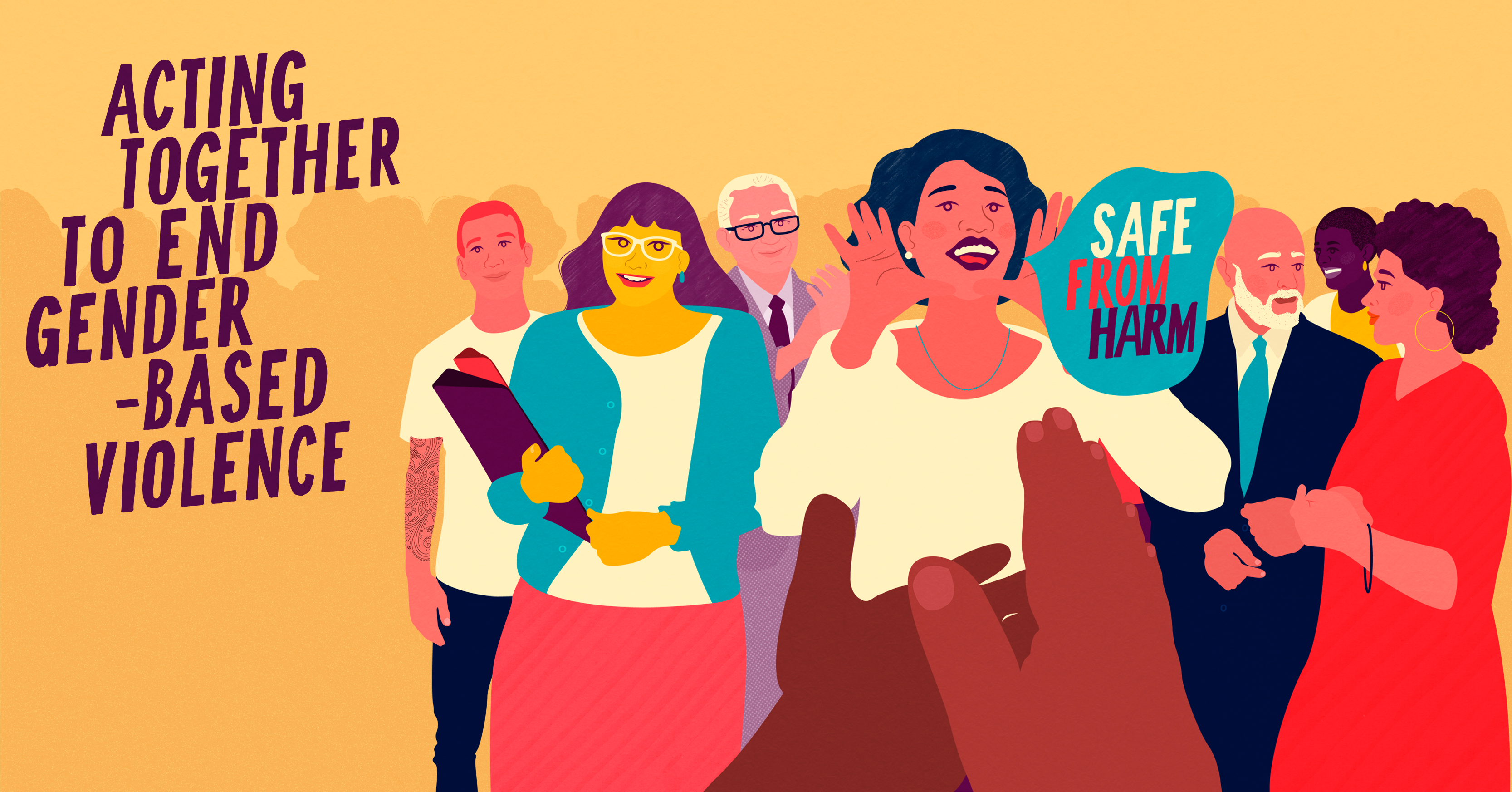
The widespread and systemic mistreatment and violence against women experienced during childbirth and other reproductive health services has gained international visibility in recent years, following pioneering work in several Latin American countries to recognise and criminalise this form of gender-based violence. International institutions have also spoken out on the issue. In 2014, gynaecological and obstetric violence was acknowledged by the World Health Organisation, and in 2019 the UN Special Rapporteur on Violence against Women described it as a “serious violation of women’s human rights occurring across all geographical and income-level settings”. In Europe, the parliaments of the Council of Europe and of the European Union have very recently adopted resolutions drawing attention to this phenomenon and calling for national and European measures to tackle it. But to date, no national government has put in place legislation specifically to criminalise gynaecological and obstetric violence. This means that currently, people living in EU Member States have few legal protections or means of redress. With this in mind, IPPF EN produced this research and policy paper to provide an outline of the systemic and widespread nature of gynaecological and obstetric violence across many countries in Europe, and make recommendations to European and national decision-makers to tackle this form of gender-based violence. On this page you can download our full research and policy paper, as well as a short summary of the report. Check out IPPF EN's Safe From Harm campaign, highlighting the EU action we support to combat gender-based violence. *** This work was funded by the European Union through the Citizens, Equality, Rights and Values Programme. Disclaimer: Views and opinions expressed are those of IPPF EN and do not necessarily reflect those of the European Union or the European Commission. Neither the European Union or the European Commission can be held responsible for them.
24 November 2022
Anything less than yes is rape: the campaign for a consent-based rape law in Sweden
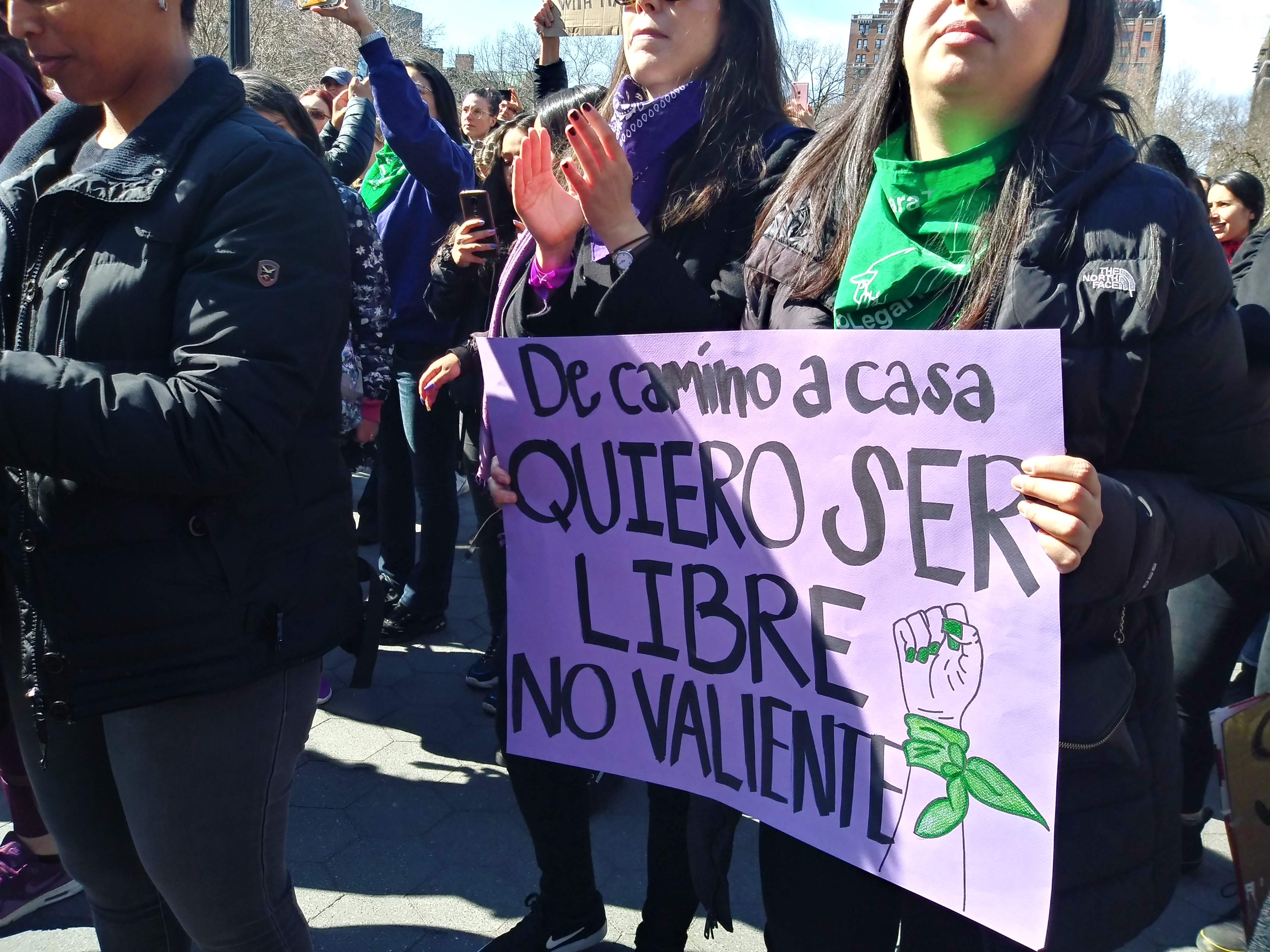
The absence of a ‘no’ is not an implicit yes. This is the overarching principle of a long-fought Swedish ‘consent law’ aimed at dismantling the ‘no means no’ framework; a system rooted in the idea that a person needed to explicitly resist for it to constitute rape. Women’s rights activist Demet Ergun is hopeful the law, which came into force in 2018, will facilitate understanding of consent but adds dryly that ‘People don’t pay enough attention to the fact that sex should be something done ‘with’ someone, not ‘to’ them.’ As President of the women’s rights coalition Fatta, Demet knows all too well the time-worn path to legislative change. It was Fatta that spearheaded the campaign to reform Swedish rape laws. The movement for change was sparked when the acquittal of three 19-year-old men accused of raping a 15-year-old* girl with a glass bottle in 2013 provoked mass protests. From the ashes of this horrifying rape case, feminist resistance rose up. Fed up with having women’s and girls’ experiences of sexual violence minimised by society and courts of law, the founders of what was to become Fatta began to gather together, collecting women’s stories and raising public awareness, before formally establishing the organisation. Under the new law, rape survivors no longer have to prove there was threat, force, or that they were taken advantage of in a vulnerable situation. The law states that consent can never be freely given by people who are intoxicated, incapacitated, under duress, or in a situation of unequal power dynamics or dependency, such as sex between a teacher and their student. After the law was implemented, Sweden saw rape conviction rates rise by 75% between 2019 and 2020. Four years ago, many of these cases wouldn’t legally have constituted rape; a shocking indictment of just how many survivors of sexual violence have never received justice. Gender-based violence expertise or training is still not required to be a juror in a rape trial, which Demet says must change. Sweden’s consent law also introduced a new, lesser offence of ‘negligent rape’ to make it possible to get justice for survivors in cases where courts found that while the intent to knowingly disregard the victim’s lack of consent could not be proven, the perpetrator had failed to clarify whether or not consent was being given, and therefore should have stopped and asked. The law’s acknowledgment that rape can still happen in the absence of force or threat is important to dismantling the myth that most rape is perpetrated by strangers. It also rejects the notion that prior consent is ‘forever’ consent and includes situations in which the victim ‘freezes’ or is taken by surprise and does not have time to react. Demet explains that the presumption of innocence until proven guilty hasn’t been replaced, but now the court has to decide whether or not consent was given: ‘Previously the victim had to prove that there was a strong indication of resistance. Now the accused has to show they received consent and how this was interpreted. A key difference is that physical evidence is no longer required. This is important because of the 'frozen fight' situation; often people can’t fight off perpetrators or control how their body reacts.’ Opponents of the law argue consent can’t be proven, but sexual violence campaigners insist that it can be expressed clearly either verbally or through nonverbal cues, such as positive body language like smiling, maintaining eye contact, and nodding. We have been taught that sex is about setting a silent ambiance and that talking can ‘break the mood’. However, questions can facilitate a positive sexual experience in myriad ways from creating comfort to establishing intimacy.
24 November 2022
Legislating the path to consent: Spain's Yes Means Yes law
‘Everyone has the right to live without violence. You can have sex without love, but always with care’. This is the message Filomena Ruggiero wants people to take away. For her, broadening the concept of violence and placing the focus on ‘yes’ contributes to a better understanding about sex as an encounter that is wanted and not one of obligation. A long-time women’s rights champion, Filomena, who is policy adviser and advocacy lead at SEDRA-Spanish Federation for Family Planning (SEDRA-FPFE), says the collective trauma resulting from a shocking rape case in 2016 was the catalyst for change and provoked a wave of feminist action across the country. Spain’s ‘yes means yes’ consent law, which came into effect in October 2022, was sparked by the acquittal of five men who raped an 18-year-old woman during the 2016 Pamplona bull-running festival. Dubbed ‘the wolf pack’ case, there was widespread outrage after the court argued footage showing the woman motionless with her eyes closed, was proof of consent. Again, four years after the rape in Pamplona, a group of men who gang raped a 14-year-old girl in Catalonia were convicted of the lesser charge of sexual abuse, this time because the victim was intoxicated. Both cases highlighted the abject inadequacy of Spanish rape legislation, which previously stated violence or coercion had to be present for it to be considered rape. Relics of a patriarchal system, previous rape laws in Spain were steeped in sexist assumptions about consent and so-called ‘acceptable’ behaviour. Cases so often hinged on the behaviour of the victim, as if this had somehow contributed to or excused rape. What the survivor was wearing, drinking or doing at the time was put under the spotlight, and not the actions of the accused. The legal changes mean victims will no longer have to provide proof of violence or threat of violence, coercion or resistance against their attacker(s) in court. Plying someone with drugs or alcohol to coerce them into sex is a criminal offence, and digital violence, such as threats or non-consensual sharing of images, has also been criminalised. The new law maintains the presumption that the accused is innocent until proven guilty. But going forward it is the defendant who will have to prove there was consent and the victim will have to prove there was no consent. The law also aims to avoid secondary victimisation that results when institutions and individuals acting on their behalf, for example lawyers, the judiciary and the public prosecutor’s office, seek to discredit the victim by asking unnecessary and intrusive questions about her private life that are rooted in gender stereotypes and prejudices. An alliance of feminist organisations, which included SEDRA-FPFE, played an integral part in drafting the new law. They ensured the introduction of 50 crisis centres and 24-hour support for victims, as well as financial support. But Filomena says the issue now lies in resources. The national law needs to be implemented at the regional level, which means its application will be unequal. Nevertheless, the law reform sends a very clear message: nobody is entitled to your body, and consent is never given through coercion, intimidation, violence or incapacitation. Consent must now be freely given and expressed. If it is not, this is rape. Encouraging men to step up Street harassment – the provocative comments, whistling or gestures women are so often subjected to – is now also a criminal offence. This marks a paradigm shift to seeing sexual harassment as an issue of social justice. Despite this, the public outcry has galvanised the extreme right who view the reform as a threat to their regressive anti-feminist agenda. Opponents of the new law claim street harassment is part of Latin culture and something to be celebrated. Filomena rebuffs this arguing it defines women as sexual objects: ‘Catcalling is often viewed by men as something positive in Spain but the comments are of a sexual nature, which provokes insecurity and fear. It can limit women’s freedom in their choice of clothing, how they act or behave.’ Filomena believes men need to do more to end violence: ‘Social norms don’t change through laws alone but are constructed through a long cultural process. Boys and men are also victims of macho social norms. We must encourage men to stop other men from doing this and raise awareness.’ Filomena is adamant the role of men as peer educators is fundamental to the law: ‘We need to have a reflection in society on gender roles, and we cannot let macho groups distort and weaponize the debate. There is a lot of misinformation around the legislation. Male influencers should tackle this by speaking out about how this is really about putting desire at the centre, about sex being wanted and enjoyed. This would contribute to a better understanding of the law and of its consequences, which are very positive for men.’

24 November 2022
Belgium’s consent law is clear: Absence of no doesn’t mean yes
‘Rape isn’t always something that happens when you are dragged into an alleyway’, says Heleen Heysse, Policy Officer at Sensoa, the Flemish centre of expertise on sexual health. ‘The subtle ways in which coercion can take place, as well as the many ways consent can be freely given, is within this law. It recognises people’s experiences and their trauma’. Heleen says the consent law which came into effect in June 2022 in Belgium is a victory for survivors and campaigners. The legislation unequivocally states: non-consensual sex is rape. Rape cases will now no longer hinge on whether a survivor said ‘no’ or fought back. Instead, it is an offence when consent is lacking, withdrawn or when advantage is taken of a victim’s vulnerable state. The consent-based definition also applies to other forms of sexual violence. Sensoa has been at the forefront of campaigning for reform of the outdated sexual criminal law for many years. They say that within the new law, the absence of struggle or reaction can no longer be taken as implicit consent as it takes into account the freeze response – when a person is unable to react. Heleen stresses the presumption of innocence until proven guilty remains one of the core tenets of the Belgian justice system and investigations are just as rigorous. This, she says, contradicts the myth spread by opponents of consent-based legislation that women will use the law to falsely report rape; complaints of which are grossly overestimated. Previously, an assault could only be legally considered rape if coercion, physical force or verbal threats took place, or a person was unable to defend themselves. Like in many countries across the EU, rape victims had to prove that there had been violence or that they had explicitly said ‘no.’ Alongside this law, Belgium has also become the first country in Europe to decriminalise sex work, which Heleen and her colleague Julia Day say makes it easier for sex workers to report sexual violence. Training prevents victim blaming Up to 90% of rape cases in Belgium go unreported and only 4% of people file a complaint with the police. Julia and Heleen say this is due to the hurdles survivors face when reporting sexual violence, not to mention the trauma associated with interrogations and pervasive victim blaming. Julia says adequate training is essential: ‘It’s important police know and understand the law so when conducting an interview, they have guidelines on questioning to establish whether the victim consented freely.’ Reporting a rape is a big ordeal. Victims of sexual violence often blame themselves and are afraid they won’t be believed. Even under the new law, in Belgium, when someone reports a rape to the police, the legal process is kickstarted immediately. This can discourage people from reporting sexual crimes. Fortunately, the introduction of Sexual Assault Centres has vastly reduced reporting obstacles; 68% of survivors who came to a centre went on to file a complaint, significantly higher than the national average. This is largely because the support offered at the centres is focused on providing confidential care to survivors and helping them to rebuild their lives; it includes forensic analysis, trauma care, specially trained inspectors, psychologists and case managers in one place. It also enables marginalised groups, such as transgender people and sex workers to report rape in a safer environment. Currently, there are seven centres across Belgium and Julia says they hope to have one in every province: ‘Five years ago, we had nothing. It’s a good step forward. There’s a lot that needs to be in place to open a centre. They must be linked to other hospital services, there needs to be an HIV clinic and counselling as well.’ As regards the reporting process, the centres support survivors in a way that is sensitive to the extreme stress they are experiencing, and the impact it has on the ability to process information and form memories. Victims are filmed telling their stories and can decide later on if they want to press charges or not. Heleen believes filming is vital to avoid retraumatisation: ‘It minimises how many times questions are asked, which reduces the emotional burden of the process.’ For Julia, it gives rape survivors a sense of control: ‘You get lost in the legal system with no idea what to expect and that’s scary, especially when the control has already been taken from you. When you have to repeat your story, it’s normal that it changes, and this can be used against you. Filming limits victim-blaming and puts them in a more powerful position.’

29 September 2022
Combatting harmful gender norms through innovative education
Rigid gender norms or stereotypes limit people’s ability to pursue their professional careers and make choices about their lives. Gender norms not only limit people’s freedom and choices, but they end up condoning gender-based violence and perpetuating inequalities rooted in unbalanced power dynamics. As a result, people are coerced by collective expectations into taking up gender roles that stop them from pursuing the careers and relationships they want, or even being themselves. For example, young men are often expected to suppress their emotions so that they can conform to damaging understandings of strength and masculinity. This leaves men illequipped to express or navigate through their emotions, which can later on cause issues for their mental health. Equally, young women are often expected to be polite and accommodating to others - even in situations where they are made to feel uncomfortable. Conforming to this expectation can make it more difficult for women to assert themselves and can lead to their enduring discrimination or abuse without possessing the skills or confidence to address it. But relationship and sexuality education can play a crucial role in dismantling and challenging harmful gender norms, thus preventing gender-based violence and giving young people the skills needed to lead more equal and safe lives. Furthermore, training of adults and educators is key to raising their awareness around existing gender stereotypes that they may inadvertently perpetuate. Civil society organisations in Serbia, Estonia, Romania and Latvia came together under the Youth SpectActors project to do just that. The main purpose of the project was to educate and empower young people between 12-25 years of age to question gender norms, attitudes and stereotypes that contribute or could lead to gender-based-violence (GBV) through organising theatrical plays that deal with typical situations where gender identity and expression occur. Read about the results of our project on people's lives in the below factsheet.

23 May 2022
Five ways to address gynaecological and obstetric violence in Europe (and why you should care)
Happy Mother’s Day…? Some weeks ago, many of us around Europe celebrated our mothers, often as strong women, always sacrificing their interests for the greater good, the pillars and foundation of our society (with all the usual – often harmful - gender stereotypes annexed). But beyond the clichés and catchphrases, how much are we truly ready to respect and honour motherhood from Day One - or even better, from Day Zero? Is choosing to become a mother only to be celebrated as instrumental to counter the ‘demographic winter’ of a continent growing older? Or should we ensure - as society, politicians and advocates for sexual and reproductive health and rights (SRHR) - that any (non)reproductive decision, including the experience of becoming mothers, is fully centred on choice, (self)love, respect, dignity and empowerment? Ahead of May 28th, International Day of Action for Women’s Health (intended as a state of complete physical, mental and social well-being), I’d like to share some thoughts around the circumstances of what is stereotypically considered as one of the ‘most important’ and ‘happiest’ events in a woman’s life: giving birth. I’ll leave for another time the dismantling of common myths, idealizations and taboos around such a moment (and what comes after that), to concentrate here on another still-too-silenced subject: the violence that many women experience around childbirth, also called gynaecological and obstetric violence.
25 September 2023
EU negotiations on bill to Combat Violence Against Women: Joint civil society position
In the final months of 2023, the EU institutions will hold a series of "trialogues" - negotiations between the EU Council (national governments), European Parliament and European Commission aiming to agree on the final wording of the draft EU Directive on Combating Violence Against Women. This is a crucial moment in the legislative process, since both the Council and the Parliament adopted their initial negotiating positions in June: MEPs voting to strengthen key provisions of the European Commission's ambitious original proposal, but Member States inexcusably proposing to water down vital elements of the bill, notably by failing to support the criminalisation of rape. At this key moment, IPPF EN and our civil society partners have prepared a joint position setting out a clear call to action to the EU institutions if they are to ensure this landmark proposal becomes a truly effective tool in our shared fight to end gender-based violence and create more gender equal societies for all. Download the joint position below.
28 June 2023
European Parliament Committees support and strengthen EU bill on gender-based violence
IPPF EN welcomes today’s vote on the draft EU Directive to combat Violence Against Women and Domestic Violence by the European Parliament's Committees for Women's Rights and Gender Equality and Justice. MEPs overwhelmingly backed the Commission’s ambitious original proposal by 71 votes to 5 with 7 abstentions. Their move ensures this vital law will go even further in protecting the rights and safety of women, girls and people affected to live free from gender-based violence. Crucially, MEPs have supported the European Commission's proposal to ensure EU-wide criminalisation of rape with a definition based on the absence of consent.* "This is a strong signal that the Parliament, as a representative of EU citizens, wants a consent-based definition of rape to be the standard throughout Europe. This is in line with the language of the Istanbul Convention, which is now 15 years old, but was only recently ratified by the EU after years of stalemate," said Camille Butin for IPPF EN. "Now we strongly urge the EU institutions to adopt ambitious and robust final wording that truly centres the objective of the Directive, which is to help combat violence against women and uphold gender equality in Europe. In particular, we call on Member States to find the political will to take effective action against rape, after they failed to back a consent-based definition in their recent preliminary position," added Butin. IPPF EN welcomes MEPs' backing today of the following vital amendments to the original draft Directive: Addition of criminalisation of sexual assault, genital mutilation of intersex people and forced sterilisation. MEPs also backed the criminalisation of female genital mutilation and various forms of online violence. Inclusion of full range of sexual and reproductive healthcare, including abortion care, in support services for victims of sexual violence. Robust wording on including comprehensive sexuality and relationship education in gender-based violence prevention measures. This requires EU countries to increase awareness of the concept of consent, promote gender equality and challenge harmful gender stereotypes, particularly working with men and boys. Clear focus on intersectionality in wording on discrimination faced by victims of gender-based violence, including LGBTIQ people. IPPF EN regrets MEPs’ decision to replace the wording ‘women sex workers’ with ‘women in prostitution’ as sex workers themselves perceive this term as demeaning and linked with criminality. IPPF EN stands with sex workers, and rejects stigmatisation that has devastating consequences for them. The next step in this legislative process will be for the European Parliament and Council to negotiate on the basis of their preliminary positions in order to reach agreement on the final text of the Directive. Media contact : Camille Butin, Advocacy Advisor, [email protected] --- *14 EU Member States still have laws with outdated definitions of rape based on use of force or the threat of force by the perpetrator, as opposed to absence of consent by the victim. These laws fail to meet international human rights standards, including the 2008 Istanbul Convention, to which the EU recently acceded. They ignore the realities that many survivors face in the context of rape, overlook the fact that a person can rape without using physical force or violence, and enable significant impunity for perpetrators.
09 June 2023
IPPF EN condemns Member States' failure to back EU action against rape
Today the EU Council agreed a preliminary position on the European Commission’s bold proposal for an EU Directive to Combat Violence Against Women and Domestic Violence. IPPF EN deeply regrets that the Council’s General Approach reveals a decision by Member States to cut from the draft law a requirement for all EU countries to criminalise rape using a strong and harmonised definition based on the absence of consent by the victim*. The progressive definition in the European Commission’s proposal was fully aligned with the Istanbul Convention, to which the EU recently acceded after years of stalling by national governments. "Women, girls and minorities across the EU face widespread sexual violence, and this goes largely unpunished. It is inexcusable that the Council has today failed to find the political will to take effective action against rape. Member States are jeopardising a unique opportunity for the EU to adopt a law that guarantees equal rights for all women and girls to access justice and live safe from sexual violence," says Camille Butin for IPPF EN. Member States and the European Parliament will need to reach an agreement on the final text of the Directive in the coming months. MEPs are expected to support the European Commission’s proposal to harmonise the criminalisation of rape.
19 April 2023
For an inclusive feminist Europe: recommendations for the EU election campaign
The European Union (EU) is facing many obstacles in upholding its core values. Challenges such as the COVID pandemic, the Russian war against Ukraine, and the climate crisis have created unprecedented uncertainty around our common future, and have increased existing inequalities, particularly for women and girls in all their diversity. The rise of authoritarian regimes and populist movements has led to growing opposition against EU values such as: the rule of law, democracy, human rights, and equality, including a backlash against gender equality and women’s rights. Ahead of the pivotal moment that are the European elections, political parties must take a bold stand in the defence of EU values. The EU should actively tackle intersecting systems of oppression such as patriarchy, racism, neo-colonialism, and neo-liberalism. It should strive towards a world where everyone can enjoy the same rights, and lead free and safe private and family lives, free from sexism, coercion, and violence. We call on European political parties to put inclusive feminism at the heart of their electoral programmes, and to commit to further advancing gender equality and women’s rights, including sexual and reproductive health and rights (SRHR), in the EU and beyond. Read below our recommendations on how we can create together an inclusive feminist Europe that promotes gender equality, women’s human rights and SRHR in all fields; that puts an end to sexual and gender-based violence; and that counters the threats against its values.
22 November 2022
Gynaecological and Obstetric Violence - a form of gender-based violence
The widespread and systemic mistreatment and violence against women experienced during childbirth and other reproductive health services has gained international visibility in recent years, following pioneering work in several Latin American countries to recognise and criminalise this form of gender-based violence. International institutions have also spoken out on the issue. In 2014, gynaecological and obstetric violence was acknowledged by the World Health Organisation, and in 2019 the UN Special Rapporteur on Violence against Women described it as a “serious violation of women’s human rights occurring across all geographical and income-level settings”. In Europe, the parliaments of the Council of Europe and of the European Union have very recently adopted resolutions drawing attention to this phenomenon and calling for national and European measures to tackle it. But to date, no national government has put in place legislation specifically to criminalise gynaecological and obstetric violence. This means that currently, people living in EU Member States have few legal protections or means of redress. With this in mind, IPPF EN produced this research and policy paper to provide an outline of the systemic and widespread nature of gynaecological and obstetric violence across many countries in Europe, and make recommendations to European and national decision-makers to tackle this form of gender-based violence. On this page you can download our full research and policy paper, as well as a short summary of the report. Check out IPPF EN's Safe From Harm campaign, highlighting the EU action we support to combat gender-based violence. *** This work was funded by the European Union through the Citizens, Equality, Rights and Values Programme. Disclaimer: Views and opinions expressed are those of IPPF EN and do not necessarily reflect those of the European Union or the European Commission. Neither the European Union or the European Commission can be held responsible for them.
24 November 2022
Anything less than yes is rape: the campaign for a consent-based rape law in Sweden
The absence of a ‘no’ is not an implicit yes. This is the overarching principle of a long-fought Swedish ‘consent law’ aimed at dismantling the ‘no means no’ framework; a system rooted in the idea that a person needed to explicitly resist for it to constitute rape. Women’s rights activist Demet Ergun is hopeful the law, which came into force in 2018, will facilitate understanding of consent but adds dryly that ‘People don’t pay enough attention to the fact that sex should be something done ‘with’ someone, not ‘to’ them.’ As President of the women’s rights coalition Fatta, Demet knows all too well the time-worn path to legislative change. It was Fatta that spearheaded the campaign to reform Swedish rape laws. The movement for change was sparked when the acquittal of three 19-year-old men accused of raping a 15-year-old* girl with a glass bottle in 2013 provoked mass protests. From the ashes of this horrifying rape case, feminist resistance rose up. Fed up with having women’s and girls’ experiences of sexual violence minimised by society and courts of law, the founders of what was to become Fatta began to gather together, collecting women’s stories and raising public awareness, before formally establishing the organisation. Under the new law, rape survivors no longer have to prove there was threat, force, or that they were taken advantage of in a vulnerable situation. The law states that consent can never be freely given by people who are intoxicated, incapacitated, under duress, or in a situation of unequal power dynamics or dependency, such as sex between a teacher and their student. After the law was implemented, Sweden saw rape conviction rates rise by 75% between 2019 and 2020. Four years ago, many of these cases wouldn’t legally have constituted rape; a shocking indictment of just how many survivors of sexual violence have never received justice. Gender-based violence expertise or training is still not required to be a juror in a rape trial, which Demet says must change. Sweden’s consent law also introduced a new, lesser offence of ‘negligent rape’ to make it possible to get justice for survivors in cases where courts found that while the intent to knowingly disregard the victim’s lack of consent could not be proven, the perpetrator had failed to clarify whether or not consent was being given, and therefore should have stopped and asked. The law’s acknowledgment that rape can still happen in the absence of force or threat is important to dismantling the myth that most rape is perpetrated by strangers. It also rejects the notion that prior consent is ‘forever’ consent and includes situations in which the victim ‘freezes’ or is taken by surprise and does not have time to react. Demet explains that the presumption of innocence until proven guilty hasn’t been replaced, but now the court has to decide whether or not consent was given: ‘Previously the victim had to prove that there was a strong indication of resistance. Now the accused has to show they received consent and how this was interpreted. A key difference is that physical evidence is no longer required. This is important because of the 'frozen fight' situation; often people can’t fight off perpetrators or control how their body reacts.’ Opponents of the law argue consent can’t be proven, but sexual violence campaigners insist that it can be expressed clearly either verbally or through nonverbal cues, such as positive body language like smiling, maintaining eye contact, and nodding. We have been taught that sex is about setting a silent ambiance and that talking can ‘break the mood’. However, questions can facilitate a positive sexual experience in myriad ways from creating comfort to establishing intimacy.
24 November 2022
Legislating the path to consent: Spain's Yes Means Yes law
‘Everyone has the right to live without violence. You can have sex without love, but always with care’. This is the message Filomena Ruggiero wants people to take away. For her, broadening the concept of violence and placing the focus on ‘yes’ contributes to a better understanding about sex as an encounter that is wanted and not one of obligation. A long-time women’s rights champion, Filomena, who is policy adviser and advocacy lead at SEDRA-Spanish Federation for Family Planning (SEDRA-FPFE), says the collective trauma resulting from a shocking rape case in 2016 was the catalyst for change and provoked a wave of feminist action across the country. Spain’s ‘yes means yes’ consent law, which came into effect in October 2022, was sparked by the acquittal of five men who raped an 18-year-old woman during the 2016 Pamplona bull-running festival. Dubbed ‘the wolf pack’ case, there was widespread outrage after the court argued footage showing the woman motionless with her eyes closed, was proof of consent. Again, four years after the rape in Pamplona, a group of men who gang raped a 14-year-old girl in Catalonia were convicted of the lesser charge of sexual abuse, this time because the victim was intoxicated. Both cases highlighted the abject inadequacy of Spanish rape legislation, which previously stated violence or coercion had to be present for it to be considered rape. Relics of a patriarchal system, previous rape laws in Spain were steeped in sexist assumptions about consent and so-called ‘acceptable’ behaviour. Cases so often hinged on the behaviour of the victim, as if this had somehow contributed to or excused rape. What the survivor was wearing, drinking or doing at the time was put under the spotlight, and not the actions of the accused. The legal changes mean victims will no longer have to provide proof of violence or threat of violence, coercion or resistance against their attacker(s) in court. Plying someone with drugs or alcohol to coerce them into sex is a criminal offence, and digital violence, such as threats or non-consensual sharing of images, has also been criminalised. The new law maintains the presumption that the accused is innocent until proven guilty. But going forward it is the defendant who will have to prove there was consent and the victim will have to prove there was no consent. The law also aims to avoid secondary victimisation that results when institutions and individuals acting on their behalf, for example lawyers, the judiciary and the public prosecutor’s office, seek to discredit the victim by asking unnecessary and intrusive questions about her private life that are rooted in gender stereotypes and prejudices. An alliance of feminist organisations, which included SEDRA-FPFE, played an integral part in drafting the new law. They ensured the introduction of 50 crisis centres and 24-hour support for victims, as well as financial support. But Filomena says the issue now lies in resources. The national law needs to be implemented at the regional level, which means its application will be unequal. Nevertheless, the law reform sends a very clear message: nobody is entitled to your body, and consent is never given through coercion, intimidation, violence or incapacitation. Consent must now be freely given and expressed. If it is not, this is rape. Encouraging men to step up Street harassment – the provocative comments, whistling or gestures women are so often subjected to – is now also a criminal offence. This marks a paradigm shift to seeing sexual harassment as an issue of social justice. Despite this, the public outcry has galvanised the extreme right who view the reform as a threat to their regressive anti-feminist agenda. Opponents of the new law claim street harassment is part of Latin culture and something to be celebrated. Filomena rebuffs this arguing it defines women as sexual objects: ‘Catcalling is often viewed by men as something positive in Spain but the comments are of a sexual nature, which provokes insecurity and fear. It can limit women’s freedom in their choice of clothing, how they act or behave.’ Filomena believes men need to do more to end violence: ‘Social norms don’t change through laws alone but are constructed through a long cultural process. Boys and men are also victims of macho social norms. We must encourage men to stop other men from doing this and raise awareness.’ Filomena is adamant the role of men as peer educators is fundamental to the law: ‘We need to have a reflection in society on gender roles, and we cannot let macho groups distort and weaponize the debate. There is a lot of misinformation around the legislation. Male influencers should tackle this by speaking out about how this is really about putting desire at the centre, about sex being wanted and enjoyed. This would contribute to a better understanding of the law and of its consequences, which are very positive for men.’
24 November 2022
Belgium’s consent law is clear: Absence of no doesn’t mean yes
‘Rape isn’t always something that happens when you are dragged into an alleyway’, says Heleen Heysse, Policy Officer at Sensoa, the Flemish centre of expertise on sexual health. ‘The subtle ways in which coercion can take place, as well as the many ways consent can be freely given, is within this law. It recognises people’s experiences and their trauma’. Heleen says the consent law which came into effect in June 2022 in Belgium is a victory for survivors and campaigners. The legislation unequivocally states: non-consensual sex is rape. Rape cases will now no longer hinge on whether a survivor said ‘no’ or fought back. Instead, it is an offence when consent is lacking, withdrawn or when advantage is taken of a victim’s vulnerable state. The consent-based definition also applies to other forms of sexual violence. Sensoa has been at the forefront of campaigning for reform of the outdated sexual criminal law for many years. They say that within the new law, the absence of struggle or reaction can no longer be taken as implicit consent as it takes into account the freeze response – when a person is unable to react. Heleen stresses the presumption of innocence until proven guilty remains one of the core tenets of the Belgian justice system and investigations are just as rigorous. This, she says, contradicts the myth spread by opponents of consent-based legislation that women will use the law to falsely report rape; complaints of which are grossly overestimated. Previously, an assault could only be legally considered rape if coercion, physical force or verbal threats took place, or a person was unable to defend themselves. Like in many countries across the EU, rape victims had to prove that there had been violence or that they had explicitly said ‘no.’ Alongside this law, Belgium has also become the first country in Europe to decriminalise sex work, which Heleen and her colleague Julia Day say makes it easier for sex workers to report sexual violence. Training prevents victim blaming Up to 90% of rape cases in Belgium go unreported and only 4% of people file a complaint with the police. Julia and Heleen say this is due to the hurdles survivors face when reporting sexual violence, not to mention the trauma associated with interrogations and pervasive victim blaming. Julia says adequate training is essential: ‘It’s important police know and understand the law so when conducting an interview, they have guidelines on questioning to establish whether the victim consented freely.’ Reporting a rape is a big ordeal. Victims of sexual violence often blame themselves and are afraid they won’t be believed. Even under the new law, in Belgium, when someone reports a rape to the police, the legal process is kickstarted immediately. This can discourage people from reporting sexual crimes. Fortunately, the introduction of Sexual Assault Centres has vastly reduced reporting obstacles; 68% of survivors who came to a centre went on to file a complaint, significantly higher than the national average. This is largely because the support offered at the centres is focused on providing confidential care to survivors and helping them to rebuild their lives; it includes forensic analysis, trauma care, specially trained inspectors, psychologists and case managers in one place. It also enables marginalised groups, such as transgender people and sex workers to report rape in a safer environment. Currently, there are seven centres across Belgium and Julia says they hope to have one in every province: ‘Five years ago, we had nothing. It’s a good step forward. There’s a lot that needs to be in place to open a centre. They must be linked to other hospital services, there needs to be an HIV clinic and counselling as well.’ As regards the reporting process, the centres support survivors in a way that is sensitive to the extreme stress they are experiencing, and the impact it has on the ability to process information and form memories. Victims are filmed telling their stories and can decide later on if they want to press charges or not. Heleen believes filming is vital to avoid retraumatisation: ‘It minimises how many times questions are asked, which reduces the emotional burden of the process.’ For Julia, it gives rape survivors a sense of control: ‘You get lost in the legal system with no idea what to expect and that’s scary, especially when the control has already been taken from you. When you have to repeat your story, it’s normal that it changes, and this can be used against you. Filming limits victim-blaming and puts them in a more powerful position.’
29 September 2022
Combatting harmful gender norms through innovative education
Rigid gender norms or stereotypes limit people’s ability to pursue their professional careers and make choices about their lives. Gender norms not only limit people’s freedom and choices, but they end up condoning gender-based violence and perpetuating inequalities rooted in unbalanced power dynamics. As a result, people are coerced by collective expectations into taking up gender roles that stop them from pursuing the careers and relationships they want, or even being themselves. For example, young men are often expected to suppress their emotions so that they can conform to damaging understandings of strength and masculinity. This leaves men illequipped to express or navigate through their emotions, which can later on cause issues for their mental health. Equally, young women are often expected to be polite and accommodating to others - even in situations where they are made to feel uncomfortable. Conforming to this expectation can make it more difficult for women to assert themselves and can lead to their enduring discrimination or abuse without possessing the skills or confidence to address it. But relationship and sexuality education can play a crucial role in dismantling and challenging harmful gender norms, thus preventing gender-based violence and giving young people the skills needed to lead more equal and safe lives. Furthermore, training of adults and educators is key to raising their awareness around existing gender stereotypes that they may inadvertently perpetuate. Civil society organisations in Serbia, Estonia, Romania and Latvia came together under the Youth SpectActors project to do just that. The main purpose of the project was to educate and empower young people between 12-25 years of age to question gender norms, attitudes and stereotypes that contribute or could lead to gender-based-violence (GBV) through organising theatrical plays that deal with typical situations where gender identity and expression occur. Read about the results of our project on people's lives in the below factsheet.
23 May 2022
Five ways to address gynaecological and obstetric violence in Europe (and why you should care)
Happy Mother’s Day…? Some weeks ago, many of us around Europe celebrated our mothers, often as strong women, always sacrificing their interests for the greater good, the pillars and foundation of our society (with all the usual – often harmful - gender stereotypes annexed). But beyond the clichés and catchphrases, how much are we truly ready to respect and honour motherhood from Day One - or even better, from Day Zero? Is choosing to become a mother only to be celebrated as instrumental to counter the ‘demographic winter’ of a continent growing older? Or should we ensure - as society, politicians and advocates for sexual and reproductive health and rights (SRHR) - that any (non)reproductive decision, including the experience of becoming mothers, is fully centred on choice, (self)love, respect, dignity and empowerment? Ahead of May 28th, International Day of Action for Women’s Health (intended as a state of complete physical, mental and social well-being), I’d like to share some thoughts around the circumstances of what is stereotypically considered as one of the ‘most important’ and ‘happiest’ events in a woman’s life: giving birth. I’ll leave for another time the dismantling of common myths, idealizations and taboos around such a moment (and what comes after that), to concentrate here on another still-too-silenced subject: the violence that many women experience around childbirth, also called gynaecological and obstetric violence.